Venues with No Corkage in London
Find London venues with zero corkage fees for company receptions, dinners and parties, allowing you to bring your own drinks and control your event budget.
3,697 Venues with No Corkage in venues in London



















































































































No venues match these filters
Try widening your capacity, luxury level or event type.
Don't have time to search? We'll find it for you.
For business events that need human judgement, talk to our team. Free for events of 100+ people, budgets over £10k or ongoing programmes.




Explore more venues in London

















Frequently asked questions
How do I manage drinks at a dry hire venue?
Are community centres good for no corkage?
Can I bring my own alcohol to a gallery event?
What size venue do I need for my event?
What should I consider for no corkage venues?
Other platforms search their database. We search everything.
Tell us what you need. Our deep research finds any venue, whether it's in our marketplace or not. No one else does this.
About with No Corkage in London
Understanding no corkage terms and drink policies
Securing a venue with no corkage gives an organisation considerable control over its hospitality budget. In standard venue packages, wine markups can push beverage line items beyond the catering cost itself. Bringing your own wine, Champagne or craft beer allows you to serve premium bottles bought directly from merchants, or showcase client gifts without paying a penalty on every opened bottle. However, the phrase no corkage means very different things across central London properties.
Before signing a contract, confirm whether the corkage waiver covers all alcohol or only still wine and sparkling options. Many properties lift fees on table wine during dinner, but impose corkage charges or minimum spend thresholds on spirits, cocktails and post-dinner bar service. Clarify whether the policy applies across the entire schedule:
- Does the waiver include the welcome drinks reception, the seated meal and evening socialising, or does it apply only while dinner is being served?
- Are you permitted to supply spirits for mixed drinks, or does the venue bar take over once dinner concludes?
- What are the rules regarding beer, cider and soft drinks?
- Is there a fee for recycling or disposing of empty glass bottles after the event?
Clarifying these points early prevents unexpected service charges on your final invoice. Livery halls and historic institutions often have formal operational boundaries. For instance, Goldsmiths' Hall in the City accommodates standing groups of up to 70 in its Exhibition Room, offering a grand setting where catering and beverage agreements must follow exact conservation and service standards. Similarly, Saddlers' Hall offers a secluded courtyard setting for up to 200 guests standing near St Paul's. In spaces of this heritage, bringing your own alcohol requires careful coordination with the venue's approved catering teams, who manage the pouring and protect delicate historic interiors.
Ask whether the venue insists on an approved caterer to pour the drinks you bring. Many London properties require client-supplied alcohol to be received, chilled and poured exclusively by their panel of vetted caterers. This requirement ensures that safety standards, hygiene regulations and premises licences remain protected. It also means you must account for staffing, glassware hire and ice provision, which can offset some of the savings made on retail wine.
Dry hire logistics, service staffing and refrigeration
When you choose a dry hire or no-corkage arrangement, you take ownership of an operational supply chain that an in-house beverage team usually manages behind the scenes. Delivering two hundred bottles of wine to an event space is only the beginning. You must also organise chilling, presentation, pouring, bottle clearing and recycling.
Refrigeration is the most common operational pinch point. Historic spaces, galleries and converted industrial locations rarely have commercial cellar space to spare for external stock. For large gatherings, such as hiring the ground floor of Electrowerkz in Angel, which can accommodate up to 650 standing across its courtyard, glasshouse and cage, the volume of bottles required for an evening reception is substantial. A venue with late licensing and an industrial warehouse layout offers immense flexibility for contemporary corporate entertainment, but you must confirm whether cold-storage rooms, freestanding commercial fridges or ice-filled tubs will be provided on site.
| Operational element | Who usually provides it | Key questions to confirm |
|---|---|---|
| Glassware and bar tools | External caterer or hire company | Are multiple glass types included for receptions and dinner? |
| Chilling and ice supply | External caterer or venue | How much ice is required, and is freezer storage available on site? |
| Service and waiting staff | Caterer or specialist agency | What is the staff-to-guest ratio for tray service and bar management? |
| Waste and bottle removal | Hirer, caterer or venue cleaning crew | Does the venue charge an additional fee for private glass recycling? |
| Delivery handling and intake | Venue operations team or caterer | Can stock arrive the day before, or only within a set loading window? |
Staffing ratios must be calculated carefully. When drinks are free-flowing and self-supplied, guests naturally approach bars more frequently than they would at a cash bar. We advise planning for at least one bartender for every 40 guests during a standing reception, along with dedicated floor staff to clear empty glasses. If guests find empty bars or clutter on tables, the quality of the evening declines rapidly.
Glassware breakages are another cost to anticipate. Dry hire spaces and external bar companies calculate breakages on a replacement cost basis. Make sure your team has a clear process for handling spillages, clearing glassware from side tables and securing unserved stock at the end of the night.
Venue types and how they handle self-supplied alcohol
Different venue categories across London handle client-supplied alcohol in distinct ways. Understanding these institutional styles helps you match your corporate format to the right physical space.
Historic and cultural landmarks
Historic properties and museums offer extraordinary atmospheres for company entertainment, but they carry the strictest conservation rules. At Cutty Sark in Greenwich, guests can gather for receptions of up to 400 people in the Dry Berth beneath the ship's copper-clad hull. In spaces with valuable artefacts or delicate architectural structures, open red wine may be restricted to seated dining tables to avoid staining historic surfaces. The National Army Museum in Chelsea features an intimate boardroom suitable for up to 50 guests for private dining and corporate meetings. Museum environments demand professional service personnel who understand the building's security protocols and exit routes, ensuring that self-supplied drinks do not compromise collections.
Versatile galleries and contemporary halls
Gallery and exhibition spaces give you a modern, neutral backdrop that you can dress to reflect your organisation's brand. The Gallery at Ladbroke Hall accommodates up to 100 guests for standing receptions. While contemporary galleries offer visual freedom, you cannot assume that bringing your own alcohol is straightforward. Galleries frequently set strict boundaries around where drinks can be taken, especially when delicate artwork or temporary installations share the floor. Supplying alcohol to guests in a private gallery can still trigger premises licensing conditions. Confirm in writing whether your caterer holds the necessary licence or whether a separate notification is required.
Dedicated event complexes and academic centres
Educational venues, student unions and non-profit conference centres frequently offer fair room hire rates and open catering policies. ISH Venues on Great Portland Street provides flexible multi-room configurations, including The Thirsty Scholar space for up to 200 people standing. Properties of this kind often have dedicated loading bays, goods lifts and clear logistics channels, making the delivery and storage of wine crates far more straightforward than at older, listed buildings.
Private clubhouses and central institutions
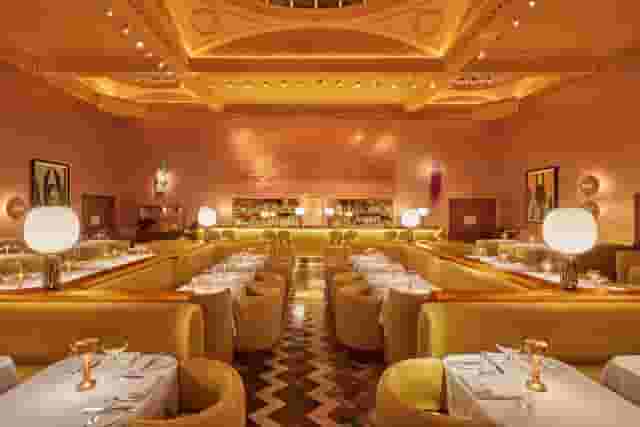
Institutions in central districts like Westminster combine historic grandeur with polished corporate service. The Champagne Bar at 116 Pall Mall holds up to 150 guests standing beneath its vaulted ceilings. In established clubhouses, bringing your own specialty wine or vintage Champagne can be arranged for specific corporate milestones, though you must always confirm whether standard glassware hire and corkage waivers apply to all cellar labels or only specific vintages agreed in advance.
Budgeting, real costs and quote breakdowns
Evaluating a no-corkage venue requires looking past the headline room hire rate. While avoiding bottle markups reduces the direct retail spend on alcohol, self-supplying drinks introduces peripheral operational costs that do not appear on standard dry hire quotes.
Indicative pricing for corporate events in London venues of this nature typically ranges from £140 to £250 per head. This estimate is based on 13 quotes from the venues on this page and assumes a party size of about 50 guests.
At the lower end of that range, towards £140 per head, you are generally looking at straightforward dry hire where the base fee covers the room, utilities and standard security, while your organisation supplies the drinks, hires external bar staff and appoints a flexible independent caterer. At the upper end, towards £250 per head, the venue package tends to cover exclusive evening access to high-profile spaces, dedicated facilities support, security teams, commercial kitchen access and an experienced operations manager on site throughout the hire period. Hire Space is an event planning and venue booking platform with a dedicated team of real people beside you to guide the search. It provides instant price estimates drawn from historical booking figures so you can evaluate realistic costs before making contact, while surfacing comparable venues at lower rates if your preferred setting exceeds your budget.
To determine whether a no-corkage arrangement offers better value than a standard catered package, prepare an itemised comparison:
| Standard venue package | No corkage dry hire |
|---|---|
| Fixed per-head drinks charge | Retail cost of wine and beer |
| Glassware and chilling included | Ice, refrigeration hire costs |
| Venue bar team included | External staffing agency costs |
| Breakage allowance included | Glass hire and loss deposits |
| In-house bottle recycling included | Waste collection charges |
Beyond the drinks themselves, watch for auxiliary costs that venues charge when external stock enters the building. Ask whether there is a storage fee if your wine merchant delivers goods the morning before the event. Inquire whether the venue's cleaning team handles bottle disposal, or whether your external team must take all empty bottles away at the end of the night. In London, commercial waste disposal requires certified carriers, and leaving crates of empty bottles behind can result in deductions from your security deposit.
Payment schedules also differ between dry hire and inclusive packages. Standard packages usually require a 50 percent deposit with the balance due closer to the event date. Dry hire contracts often demand a substantial refundable security deposit to cover accidental damage, overrunning setup times or extra cleaning. Ensure your finance department accounts for these bonded sums when approving initial purchase orders. Hire Space 360 is enterprise venue and hotel procurement for companies spending £1m or more a year on meetings and events: a managed meetings and events programme, the kind procurement teams call strategic meetings management. It places every venue agreement, supplier deposit and catering fee under one master contract with consolidated invoicing, keeping all expenditure compliant with corporate event policy. Explore how Hire Space 360 works for procurement to see how finance teams gain live spend tracking and full audit reporting across all company events.
Licences, deliveries, timing and guest welfare
Managing your own beverage supply means you must operate within legal frameworks governing the sale and distribution of alcohol. Even when alcohol is provided free of charge to corporate guests, the premises must be licensed for the supply of alcohol, or the event must operate under a Temporary Event Notice (TEN) submitted to the local authority.
Review the venue's premises licence before committing to dates and timings:
- What is the terminal hour for alcohol service under the venue's licence?
- Is there a mandatory wind-down period between the last orders and guest departure?
- Does the licence permit live music or amplified sound alongside drink service?
- Are there strict boundaries dictating where alcohol can be consumed, such as keeping drinks indoors after 21:00 to prevent outdoor terrace noise?
Loading logistics present another critical challenge in central London. Narrow streets, red routes and congestion charges make daytime drop-offs difficult. Coordinate with your wine merchant to ensure delivery vehicles can access the loading bay within the venue's permitted delivery window. A delivery truck arriving without a booking slot may be turned away by venue dock marshals, leaving you without stock when the reception begins.
Plan the delivery and collection schedule in detail:
- Schedule drinks to arrive at least four hours before guest arrival to allow time for unboxing, inventory checks and thorough chilling.
- Ensure you have confirmed whether wine deliveries can be accepted the day before, or if same-day delivery is compulsory.
- Establish a secure, lockable room where wine cases can be held before and during the event, protecting stock from untracked consumption.
- Agree collection terms for unserved alcohol. Most London venues cannot hold left-over stock overnight and expect all crates cleared out immediately after the event ends.
Guest welfare must also remain central to your planning. When providing complimentary drinks, balance the bar menu by ordering premium non-alcoholic options, sparkling sodas and accessible water stations throughout the room. Ensure the service staff you hire are trained to recognise signs of intoxication and adhere to legal serving standards. A well-run event keeps guests comfortable, maintains professional decorum and protects your company's reputation from start to finish.
Structuring your reception and dinner timeline
A clear timeline keeps the evening moving smoothly and prevents service bottlenecks at the bar. When self-supplying drinks, the transition between reception and dinner requires deliberate coordination between front-of-house staff and the kitchen.
Begin standing receptions with pre-poured trays of sparkling wine and soft drinks positioned near the entrance. This reduces initial crowding around the main bar as guests arrive. Allow 45 to 60 minutes for the arrival reception before inviting guests to sit for dinner or speeches. During the meal, staff should manage table pours directly rather than leaving bottles unmonitored on tables, which helps conserve stock and maintains an orderly dining room.
If your event transitions into an evening party, plan a 15-minute buffer where bars are restocked with fresh glassware and chilled stock before the post-dinner service begins. This allows your team to clear dining tables, take stock of remaining bottles and adjust the bar menu for the rest of the night. Establishing a firm last-orders call 30 minutes before the venue's music curfew ensures guests can finish their drinks, collect coats and exit the building comfortably within contracted hire hours.
What our customers say
Inspiration and planning guides
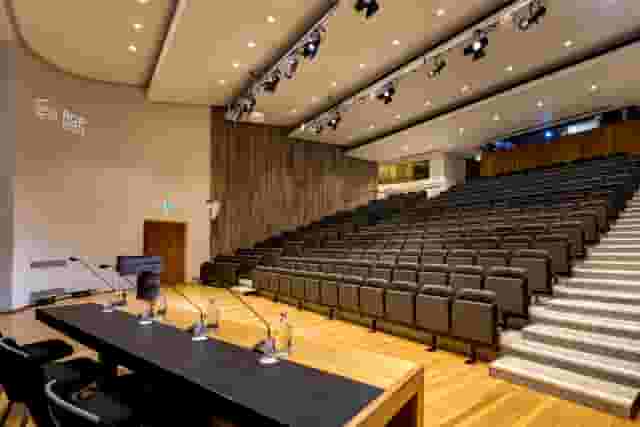
5 Conference Venues With Outside Space
Discover 5 standout London, UK conference venues with outside space. Compare capacities, amenities and layouts for summer conferences, outdoor networking and fresh-air breakouts. Plan your next corporate event with ease.

Unique Venue of the Month: Banqueting House
On a blustery winter's day in January 1649, the deposed King Charles I was beheaded by the victorious rebels of the Civil War. And the bloody execution took place just outside of our Unique Venue of the Month. Not many venues can claim to be of such historical significance, but Banqueting House [https://hirespace.com/Spaces/London/42821/Banqueting-House/Main-Hall/Weddings] – the only remaining part of the Palace of Whitehall, where English monarchs used to reside – played a major part in Briti

Sneak Peek: The Salters' Hall Refurbishment
Located in the heart of the City, Salters’ Hall combines the rich heritage of the salt trade of medieval London with contemporary surroundings. Rebuilt in 1972 by Basil Spence and now a Grade II listed building, it is a rare example of a post-war livery building and has remained largely untouched until now... Architects de Metz Forbes Knight [http://www.dmfk.co.uk/projects/load/salters-hall] (dMFK) were tasked with the project to upgrade the building whilst retaining its sense of history and al
One supplier. Every venue. Full visibility on what you spend.
Multiple venues and events. One agreement.