Hotel Meeting Rooms in London
Compare London hotel meeting rooms with private AV setups, on-site catering and clear indicative day rates to find the right space for your team.
1,620 Hotel Meeting Rooms in venues in London





















































































No venues match these filters
Try widening your capacity, luxury level or event type.
Don't have time to search? We'll find it for you.
For business events that need human judgement, talk to our team. Free for events of 100+ people, budgets over £10k or ongoing programmes.




Explore more venues in London














Frequently asked questions
What does it mean when a venue is quoting me a DDR?
How much does it cost to hire a hotel for a meeting?
What is included in a 24 hour conference package?
What are the busiest times for conferences in London?
Other platforms search their database. We search everything.
Tell us what you need. Our deep research finds any venue, whether it's in our marketplace or not. No one else does this.
About Hotel Meeting Rooms in London
Planning the four-hour agenda and room environment
A half-day meeting carries distinct operational demands compared to an all-day conference. With only four hours on the clock, every transition matters. A fifteen-minute delay at registration or an audio visual failure during the opening slide eats into a quarter of your working time. Whether you choose a morning session running from 08:30 to 12:30 or an afternoon block from 13:30 to 17:30, your room setup and timing need to support immediate focus.
Morning sessions usually work best for decision-heavy board sessions, financial reviews and strategic planning. Attendees arrive fresh, but they also bring morning commute friction. Planning tea, coffee and light breakfast items inside the room rather than out in a shared hotel lobby lets people settle at their desks, review briefing packs and start talking before the formal presentation begins. Afternoon sessions suit creative brainstorming, team updates and supplier pitches. However, afternoon energy dips around 15:00 are real. If you run post-lunch, schedule a firm twenty-minute break halfway through with fresh coffee and protein-led refreshments to keep attention levels high.
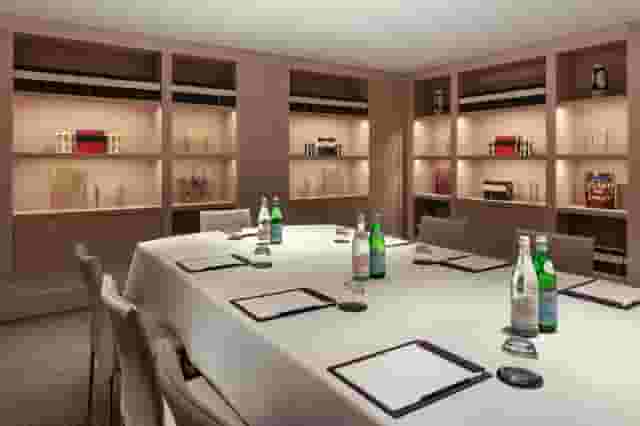
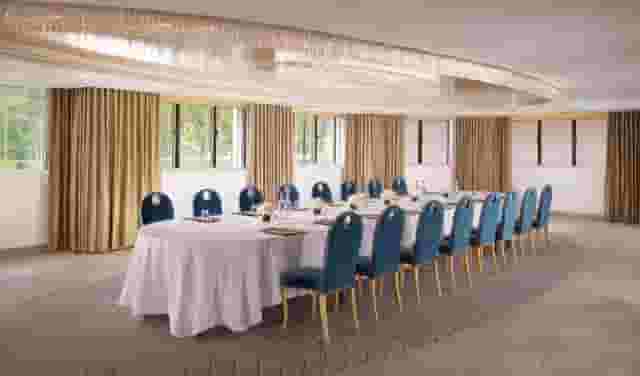
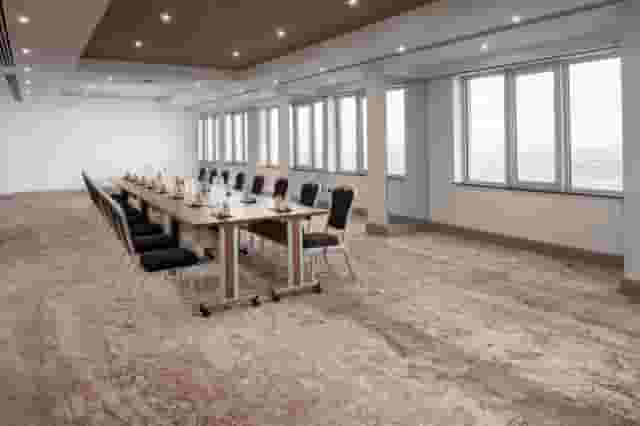
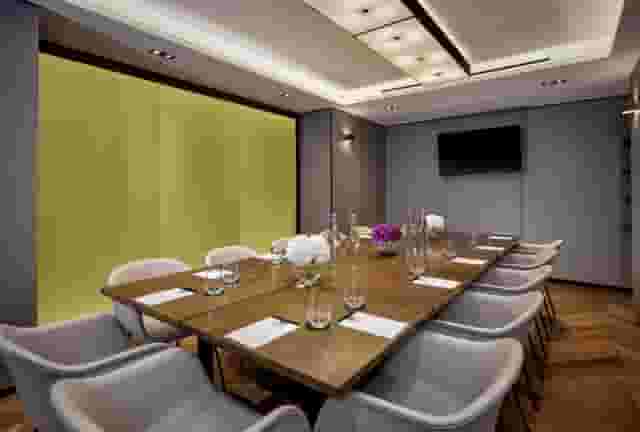
The physical layout dictates how your colleagues interact. A traditional boardroom configuration with a central table works well for up to twenty participants, giving everyone direct eye contact and equal standing. Once delegate numbers push past twenty, boardroom layouts become unwieldy because people at the far ends struggle to see shared presentation materials or hear quieter speakers. For groups between twenty and forty, a U-shape layout preserves clear lines of sight to the main screen while allowing two-way discussion between presenters and attendees. Cabaret setups, using small round tables of four to six people facing forward, work best if your half day combines presentations with group breakout tasks.
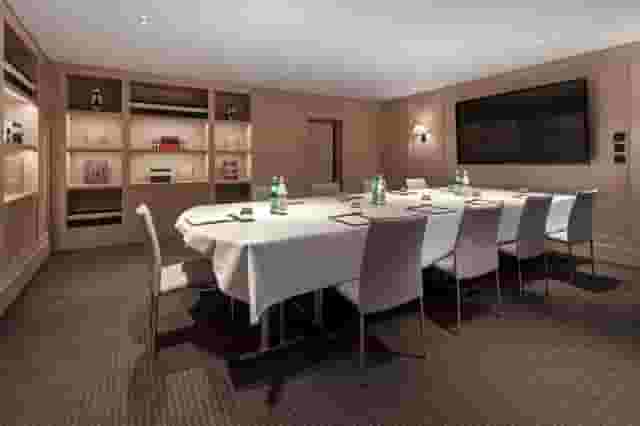
Natural daylight is essential for alertness, yet it introduces practical hurdles for presentations. South-facing rooms with large windows can wash out digital projection screens and warm up the space uncomfortably by mid-morning. When evaluating spaces, check whether the room has blackout blinds or anti-glare window treatments that can be adjusted without plunging the room into darkness. Spaces such as the Mayfair at Hotel Cafe Royal offer boardroom environments with natural daylight that balance privacy with a bright working atmosphere. For confidential executive sessions where external distraction must be eliminated entirely, dedicated suites like Private Suite 3 at The May Fair Hotel provide self-contained privacy for twenty attendees with dedicated access. If you are comparing styles across the capital, looking at 5 Lovely London Meeting Rooms can clarify how different hotel layouts support specific business goals.
Navigating hotel pricing, DDR structures and room hire costs
Budgeting for a private hotel meeting room requires understanding how commercial properties structure their charges. Across central London, meetings for about 20 guests typically sit between £75 to £185 per head. This indicative price band is estimated from what these venues have charged for similar events, based on 15 quotes from the venues on this page, and assumes a guest count of around twenty people.
Where your booking falls within that £75 to £185 per head bracket depends heavily on location, hotel classification and catering choices. Venues towards the £75 end of the range often provide straightforward packages in business-district properties, covering standard screen setups, filter coffee, biscuits and a working sandwich lunch. Properties towards the £185 end reflect five-star service standards in prime postcodes such as Mayfair or Knightsbridge, incorporating hot fork buffets, dedicated floor managers, upgraded tech support and fine teas. If you are assessing multiple options, using a venue booking platform like Hire Space provides instant, data-backed price estimates based on real booking data so you can see likely costs before making contact. Backed by a team of real people who oversee venue sourcing, it can also suggest comparable meeting rooms at lower rates if a preferred hotel exceeds your budget.
When sourcing quotes, you will encounter two main pricing structures: Day Delegate Rates (DDR) and Room Hire plus catering.
| Pricing Model | What Is Typically Included | Best Suited For |
|---|---|---|
| Half-Day DDR | Room hire for up to 4 hours, screen, flipchart, two coffee breaks, working lunch | Standard team sessions, training days and workshops where catering follows a fixed schedule |
| Room Hire + Minimum Spend | Exclusive room use fee, with catering ordered on consumption or against a food spend target | Senior board meetings, short briefings and afternoon sessions moving into evening drinks |
| 24-Hour Delegate Rate | Daytime meeting room, standard AV, lunch, three breaks, three course dinner, bedroom, breakfast | Regional team gatherings, client roadshows and international delegates needing overnight stays |
A Day Delegate Rate is a per-person meeting package designed to roll the essential components of a business gathering into a single charge. It usually covers the main room hire, standard refreshments, lunch and basic equipment such as an LED screen or flipchart. However, because half-day packages are not universally standardised, you must review what is excluded before comparing proposals.
Hotels rarely discount a half-day DDR to half the cost of a full day. A room occupied for a morning session cannot easily be re-let for the afternoon, because housekeeping teams require turnaround time between corporate bookings. Expect a half-day package to cost roughly 70% to 80% of a full day rate.
Always check whether the quoted figure includes VAT, service charges, Wi-Fi bandwidth upgrades and breakout rooms. Service charges in central London hotels typically add 12.5% to 15% to food and beverage elements, which changes your total invoice significantly if not factored in from the start. Hire Space 360 is enterprise venue and hotel procurement for companies spending £1m or more a year on meetings and events: a managed meetings and events programme, the kind procurement teams call strategic meetings management. It puts every meeting room, catering package and hotel stay onto one agreement with a single consolidated invoice, ensuring reservations align with your company event policy. Finance leaders also gain live spend reporting and transparent audit trails across every department and region.
For events involving regional directors or overseas colleagues, some hotels provide 24-hour conference packages. A 24-hour package combines the daytime meeting facilities, lunch and refreshments with an evening meal, overnight bedroom accommodation and breakfast the following morning. While daytime elements remain consistent, inclusions such as dinner menus, room tiers and extended checkout options vary widely between properties. Always request a clear written schedule detailing exact room handover times and catering allowances for every attendee.
Technical infrastructure, presentation screens and sound management
A successful meeting depends on reliable audio-visual equipment. For a half-day gathering, you do not have time to troubleshoot display cables or wait for an off-site technician to reset a router. The technology in the room must work the moment your team plugs in.
Modern hotel meeting rooms have largely moved away from ceiling-mounted digital projectors toward high-definition commercial display screens. Large LCD or LED displays mounted directly to the wall provide superior brightness, sharp text rendering and zero shadow casting when a presenter stands near the screen. For a room of twenty people, an 85-inch commercial display is usually the benchmark for readability from the back of the table.
Connectivity is the primary point of failure in corporate meetings. Hotel AV setups generally offer HDMI cables, but modern company laptops frequently lack HDMI ports, relying instead on USB-C connections. Ensure your event booking specifies that your group will require USB-C adapters, or bring a supply of tested dongles with you. Wireless screen-sharing systems are common in corporate hotels, but strict enterprise IT firewalls often prevent guest laptops from installing the third-party software or browser extensions required to transmit video wirelessly. Always insist on a hardwired cable option as your primary presentation method.
Sound insulation is another critical factor that planners overlook. Hotels are active environments with ambient noise from kitchens, guest corridors, service lifts and adjacent function rooms. If your agenda involves sensitive financial data, legal negotiations or confidential HR reviews, you cannot risk sound leakage through partition walls. Modern business hotels often build purpose-designed suites to eliminate this risk. For instance, spaces such as Remix 1 and 2 at The Cumberland Hotel feature soundproofed dining and meeting rooms built specifically to keep discussions private and external noise out.
For hybrid meetings where remote colleagues dial in via video conference, sound management becomes double the priority. A laptop microphone placed at the head of a twenty-person boardroom table will only pick up the person sitting next to it. Remote participants will hear distant, muffled audio whenever anyone else speaks. Check whether the hotel provides integrated ceiling-tile microphones or a tabletop conference audio bar with wide-angle camera framing. In corporate districts, venues like Tower Suites by Blue Orchid offer modern suites designed around contemporary AV requirements, allowing smooth digital handshakes for hybrid presentations.
Location, transport access and delegate flow
The geographical position of your chosen hotel sets the tone for your event and dictates whether your attendees arrive calm and on time. London transport patterns mean that picking a venue five minutes from a major hub saves substantial travel time for attendees coming from outside the capital.
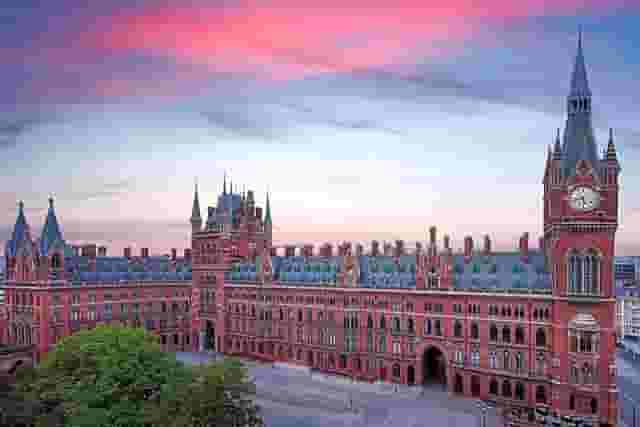
When gathering delegates arriving from different UK cities or via Eurostar, railway interchange locations are practical. Properties near King's Cross and St Pancras, such as St. Pancras London, eliminate the need for cross-city tube journeys, allowing participants to step off mainline platforms and into a meeting room within minutes. For teams based primarily within the financial sector or technology firms, venues adjacent to Liverpool Street such as Pan Pacific London offer central convenience alongside clear views over Bishopsgate Plaza.
| London District | Transport Strengths | Typical Meeting Character |
|---|---|---|
| City & Liverpool Street | Central, Elizabeth Line, regional rail links into East Anglia | Corporate, financial reviews, modern technical suites |
| King's Cross & St Pancras | Intercity rail, Eurostar, six London Underground lines | National strategy gatherings, transport interchange sessions |
| West End & Mayfair | Piccadilly, Central and Jubilee lines, private car access | High-touch executive boardrooms, private dining and client pitches |
| Bloomsbury & Holborn | Central Line, Piccadilly Line, walking distance to West End | Central, quiet working rooms, good proximity to universities |
If your objective is an intimate, high-level client meeting or discreet senior leadership alignment, the traditional West End and Knightsbridge districts provide refined environments away from corporate commuter corridors. The Wilton Room at The Berkeley offers an intimate business setting within a luxury environment, well suited for discreet discussions. In Bloomsbury, properties such as Radisson Blu Hotel, London Bloomsbury combine central transport connections with flexible meeting floors, supported by 175 guest bedrooms for teams requiring overnight rooms alongside their half-day booking. Many experienced planners rely on recommendations compiled by peers; reviewing guides such as 7 Corporate Venues Loved By London PAs can highlight venues with proven front-of-house track records.
Timing your booking against London seasonal patterns is equally critical for securing your preferred room and rate. Tuesday to Thursday are consistently the most sought-after weekdays across the London hotel market, as business travel concentrates mid-week. Mondays and Fridays regularly offer higher room availability and softer minimum spend requirements.
Seasonally, May to July and October to November represent the busiest periods for London corporate events. September also experiences heavy demand across specific commercial sectors. If your meeting dates are flexible, exploring dates in January, February or August will generally yield greater date choices and stronger negotiating positions. Be sure to check London exhibition calendars as well, as large city-wide conventions can compress hotel capacity across entire neighbourhoods.
Refreshments, dietary logistics and working lunches
Catering for a half-day meeting serves two practical purposes: hospitality and cognitive fuel. With four concentrated hours of work, delegates need sustaining food that keeps energy steady rather than heavy dishes that induce mid-session fatigue.
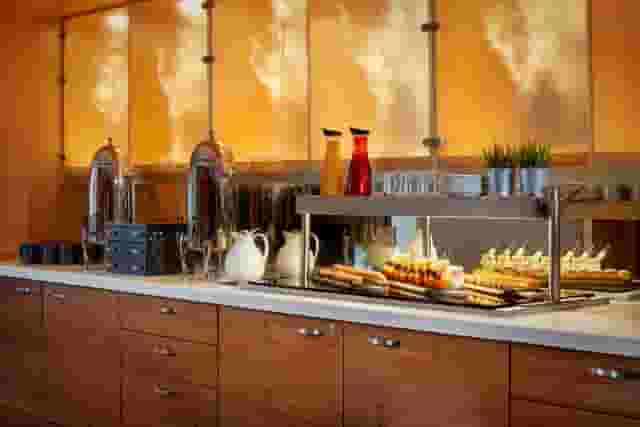
A standard meeting format requires at least two refreshment services. For a morning booking, provide arrival refreshments from 08:30 with fresh filter coffee, breakfast teas, fruit juices, warm pastries and fresh fruit. A second tea and coffee break should follow around 10:30, ideally accompanied by high-energy snacks such as nuts, granola bars or savoury bites. If you conclude the session at 12:30, you can transition attendees into a standing networking lunch or sit-down meal.
The style of lunch depends on what happens next in your delegates' calendars:
- Working sandwich lunch: Best if your team needs to review slides or continue conversation while eating. Sandwiches, wraps, crisps and sliced fruit can be set up at the back of the room without disrupting work.
- Standing bowl food or finger buffet: Encourages people to stand up, stretch and network after sitting down for three hours. It offers greater variety and feels more hospitable than sandwiches while maintaining speed.
- Two-course plated lunch: Suited to client-facing meetings or celebrations, usually served in the hotel restaurant after the meeting room concludes. Allow at least an hour for this service.
Managing dietary requirements demands proactive administration. Collect all dietary preferences, including vegetarian, vegan, gluten-free, dairy-free, halal and kosher requests, at least seven days before the booking date. Hotel kitchens cannot easily source specialist meals on the day without creating service delays.
Insist that all dietary meals are clearly labelled with the attendee's name or served directly to them by the banquet team. When buffet food is served without clear allergen markers, delegates with severe intolerances often skip eating entirely, which damages their experience.
Finally, keep hydration simple and accessible throughout the session. Place bottles of still and sparkling water alongside clean glasses on the boardroom table before delegates sit down. Ask hotel staff to refresh water jugs quietly during the mid-morning break rather than walking around the table while presentations are underway. Thoughtful handling of these small details ensures your colleagues can stay focused on the business at hand.
What our customers say
Inspiration and planning guides

6 Versatile Venues For Team-Building
The mention of 'team-building activities' can strike fear into the hearts of many. With visions of a drab meeting room, a flip chart and some awkward ice breakers; why is it always so hard to think of something interesting about yourself on the spot? In reality, team building can be huge amounts of fun, with the right venue, some activities (possibly involving inflatables), the day can be hilarious and memorable as well as strengthening teams and creating an opportunity to learn new skills. And

Good Hotel London: A (Really, Really) Good Venue
Those who remember Hire Space's very early days know that the original inspiration for breaking into the venue industry was to find uses for non-profit, charitable spaces. That's why it's great, four years on, to be humbly reminded of the original mission, and so when we come across venues [https://hirespace.com/Top/London/Unusual-Event-Venues-London] such as Good Hotel London [https://hirespace.com/Venues/London/76585/Good-Hotel-London], it truly inspires us even more. The work of the folks be

The Essence of East London at Town Hall Hotel
On entering Town Hall Hotel [https://hirespace.com/Venues/London/2563/Town-Hall-Hotel], you'll immediately be struck by the compatible marriage of Edwardian and Art-Deco styles – a result of its original establishment as a town hall in 1910 and its further development in the 1930s. You may catch a glimpse of the resident pets, a rescue greyhound named Dizzy and a cat called Cheeseburger. You'll see the bric-à-brac of quirky furnishings in the foyer: the Union-Jack-printed chair and the antique c
One supplier. Every venue. Full visibility on what you spend.
Multiple venues and events. One agreement.