Historic Venues in London
Explore historic London venues for company dinners, receptions and events, featuring private spaces, fine catering and heritage architecture.
1,158 Historic in venues in London































































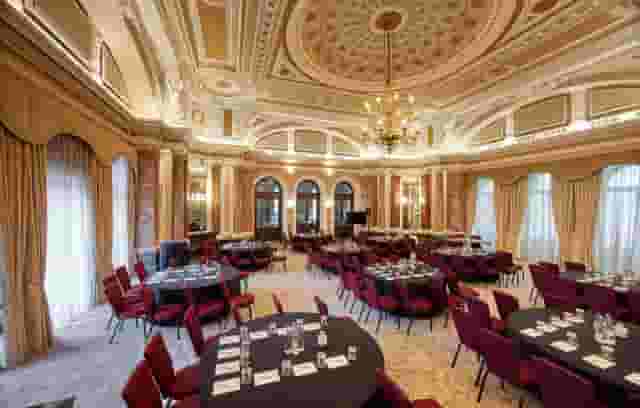
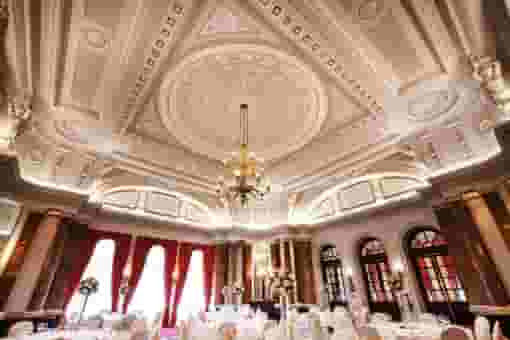
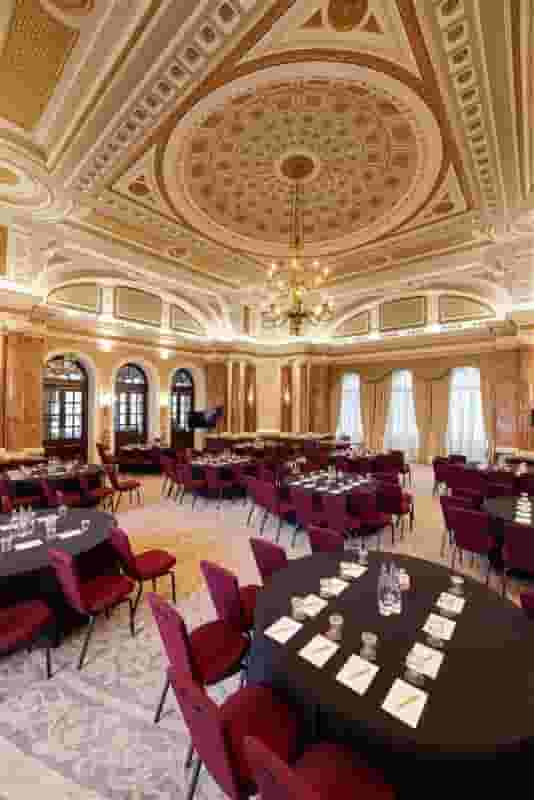
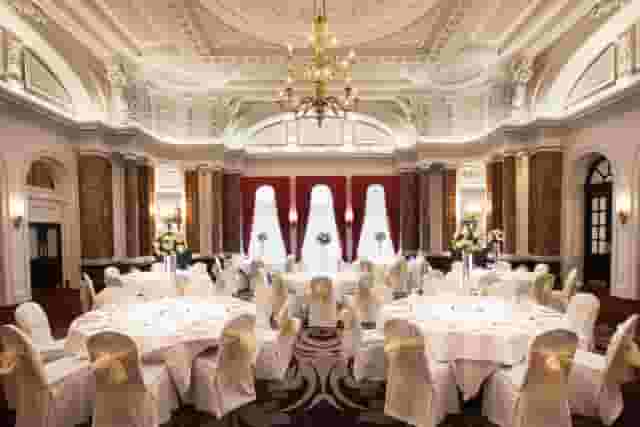





































No venues match these filters
Try widening your capacity, luxury level or event type.
Don't have time to search? We'll find it for you.
For business events that need human judgement, talk to our team. Free for events of 100+ people, budgets over £10k or ongoing programmes.




Explore more venues in London














Frequently asked questions
What are typical costs for London historic venues?
Can I use outdoor spaces at historic venues?
How to ensure accessibility at historic venues?
What defines a top historic venue in London?
How to align event tech with historic venues?
Other platforms search their database. We search everything.
Tell us what you need. Our deep research finds any venue, whether it's in our marketplace or not. No one else does this.
About Historic in London
Choosing the right historic setting for a corporate event
Booking a historic venue in London gives an immediate sense of occasion that a modern conference centre or hotel function room struggles to replicate. When clients or colleagues walk into a room with seventeenth-century plasterwork, centuries of political history or soaring stonework, the event registers as significant before the first speech begins. The challenge for an organiser is balancing that architectural presence with the practical requirements of a business gathering: hot food delivered at speed, clear sightlines for presentations, reliable audiovisual production and comfortable access for every guest.
Historic properties fall broadly into three categories, each bringing distinct operational advantages and constraints:
First are the royal palaces and national monuments. These spaces offer prestige that immediately drives attendance, making them effective for flagship annual dinners, international partner summits and high-stakes client entertainment. At Kensington Palace, the Orangery and State Apartments host seated dining for 200 people, providing private lawns and classical architecture. Closer to the river, Banqueting House in Whitehall accommodates up to 500 guests for standing receptions under Peter Paul Rubens' painted ceiling. The trade-off with buildings of this stature is conservation oversight. Setup windows are strictly enforced, red wine may be restricted in rooms with bare historic stone or untreated timber, and any production must be entirely freestanding.
Second are the traditional livery halls and institutional buildings concentrated in the City and Westminster. These buildings were conceived for assembly, debate and formal hospitality, meaning their layouts often handle corporate flow better than palaces do. Goldsmiths' Hall in the City accommodates standing receptions of up to 300 guests in the Livery Hall, pairing grand interiors with established banquet facilities. Similarly, 116 Pall Mall in Westminster offers rooms such as the Waterloo, which accommodates up to 140 standing guests for evening drinks and canapes in a Georgian setting designed specifically for networking and discussion.
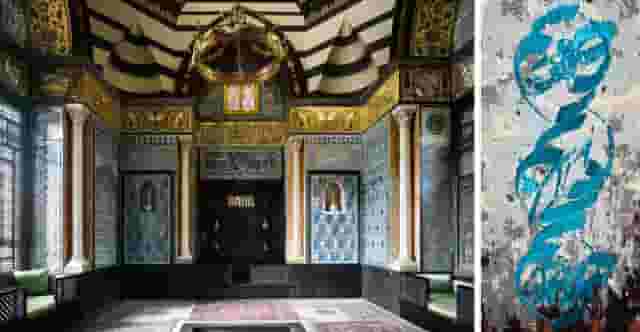
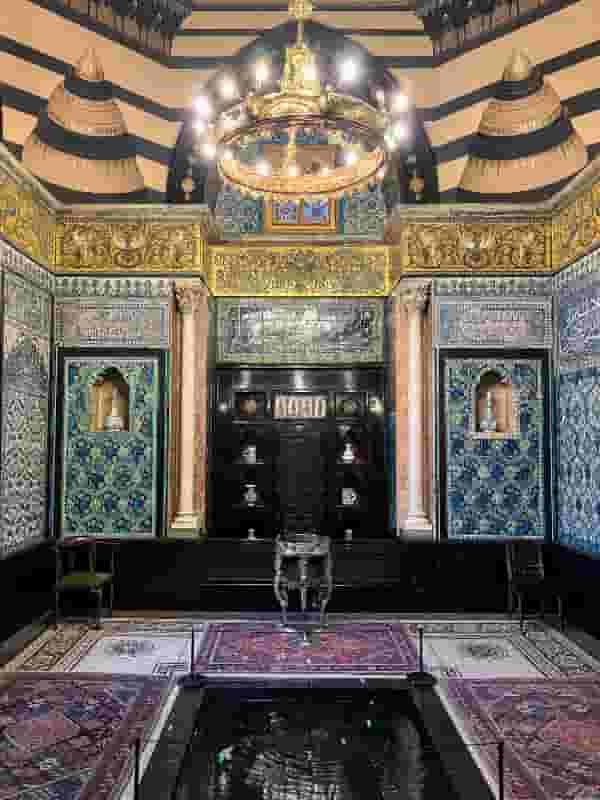
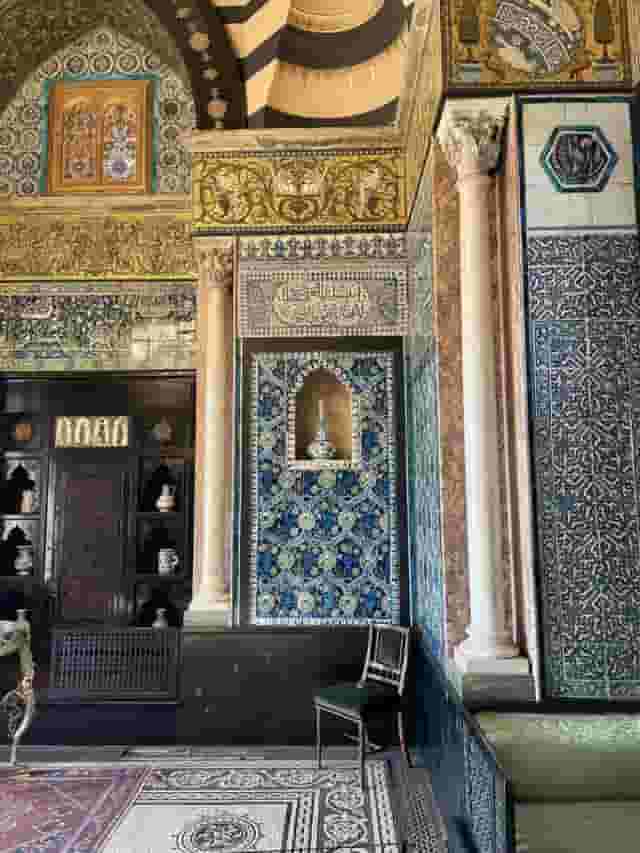
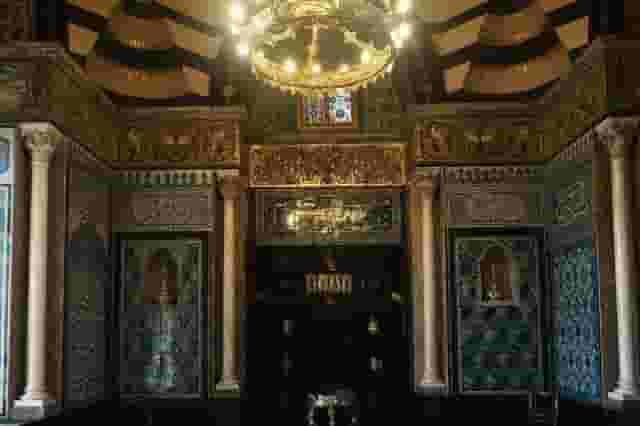
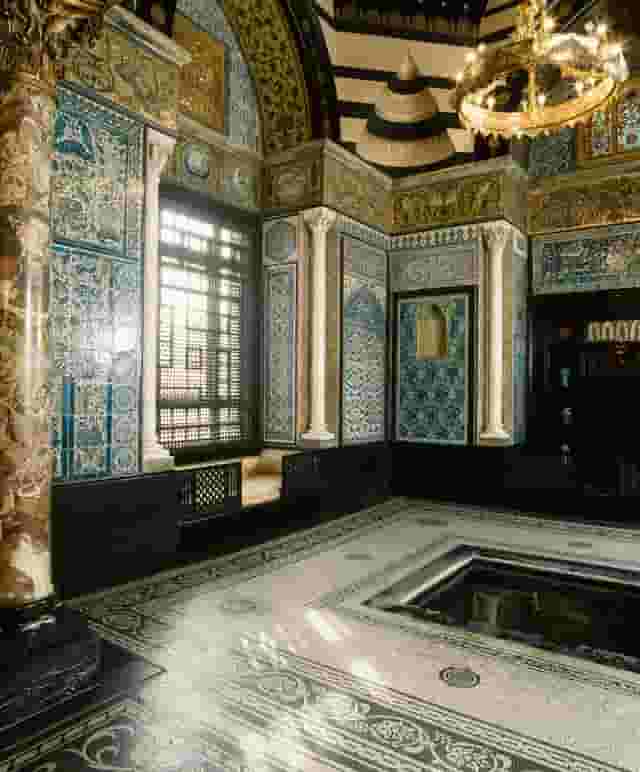
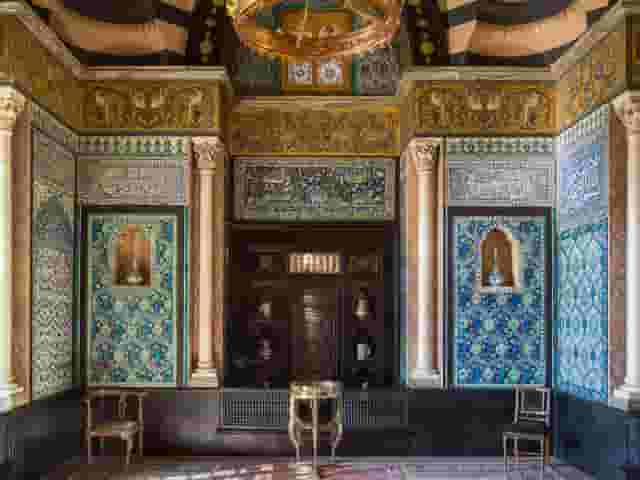
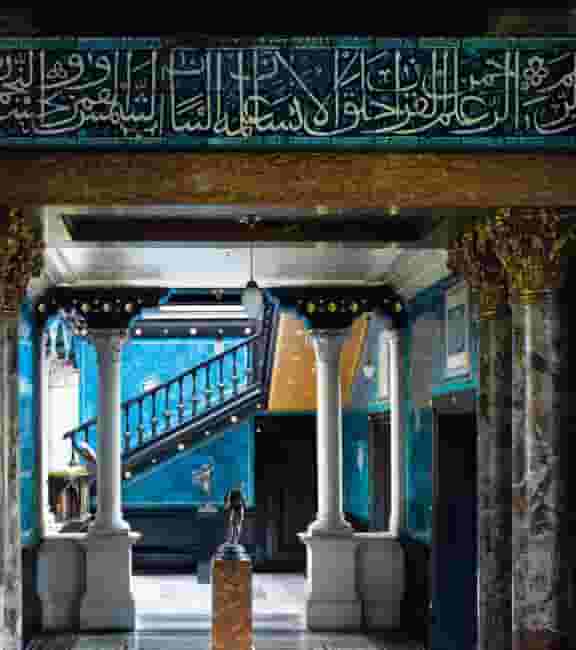
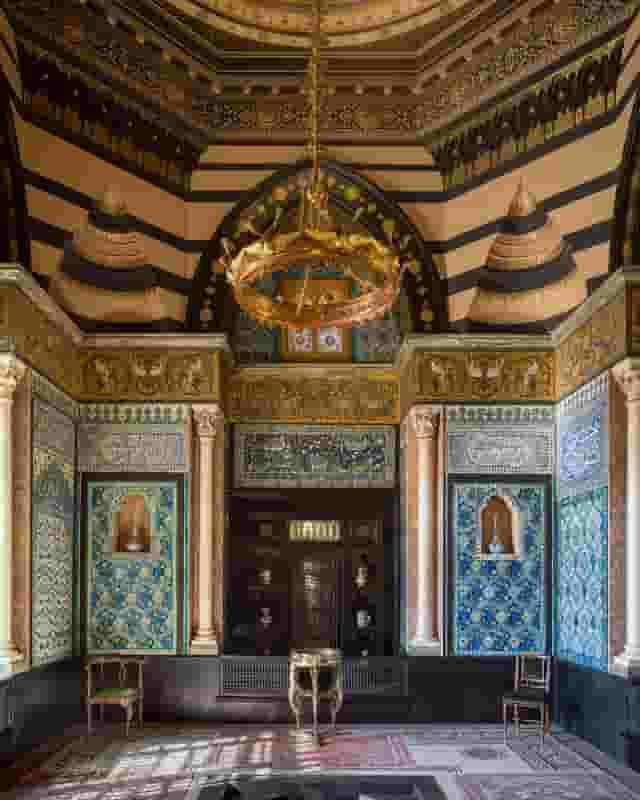
Third are cultural landmarks, museum galleries and converted heritage assets. These venues provide an architectural backdrop that feels less formal than a livery hall and less rigid than a royal palace. The British Museum offers the Great Court, handling standing receptions for up to 1000 people beneath its expansive glass roof once the galleries close to the public. For smaller gatherings with strong visual character, Leighton House in Kensington accommodates 100 reception guests in the Arab Hall, where elaborate decorative tilework and a central fountain create a focused environment for evening drinks. To discover similar heritage spaces across the capital, venue booking platform Hire Space pairs its team of event specialists with Deep Venue Research to search the entire market. For corporate events of 100 people or more, the team confirms live availability directly with venues for your specific date, delivering a qualified shortlist in minutes.
| Venue type | Best suited for | Key operational consideration | Example venue |
|---|---|---|---|
| Royal palaces and monuments | Prestigious client dinners and flagship receptions | Rigid conservation rules, tight load-in windows and fixed catering panels | Banqueting House |
| Livery halls and institutions | Formal awards dinners, corporate annual meetings and networking | Built-in banqueting logistics, fixed room layouts and traditional acoustics | Goldsmiths' Hall |
| Cultural landmarks and museums | Large receptions, summer gatherings and brand events | Public opening hours dictating late load-in and strict gallery protection | The British Museum |
Balancing conservation rules with event production and technology
The architectural character that makes a heritage building appealing often sits in direct tension with modern event production. Grade I and Grade II* listed buildings carry strict statutory protections designed to preserve historic fabric. As an organiser, understanding these limits before you sign a contract prevents expensive production redesigns later.
Sound design requires careful planning in heritage rooms. High barrel-vaulted ceilings, stone flagstones, marble pillars and wood-panelled walls cause sound to bounce, generating harsh echoes that make speeches unintelligible. Rather than bringing in two large, high-output speakers that pump volume down the length of the hall, professional sound engineers use distributed audio. This involves placing multiple smaller, low-volume speakers on discreet stands throughout the room, pointing sound directly at seated tables or standing clusters. It keeps speech clear without overloading the acoustic boundaries of the room.
Lighting requires an equally measured approach. Heritage venues rarely allow production teams to fix brackets, clamps or tape to walls, columns or ceilings. Everything brought on site must be ground-supported and self-weighted. Heavy lighting rigs must sit on heavy baseplates with protective padding beneath to prevent scratching polished parquet or cracking historic stone flags. Cable management is strictly monitored: venues will not allow standard adhesive gaffer tape on historic floors. Suppliers must use non-residue specialist tapes or rubber cable ramps that sit loose on the floor surface.
Power supply is another frequent surprise. Buildings dating from the seventeenth, eighteenth or early nineteenth centuries were not designed for high-draw stage lighting, LED video screens and commercial catering hot-boxes. Power points in the main hall may be sparse, low-amperage or fed from consumer circuits that trip easily. Ask the venue operations manager for a three-phase power map early in planning. If your production team needs substantial draw, confirm whether the building has dedicated commando sockets or if you will need to bring in external distribution boards.
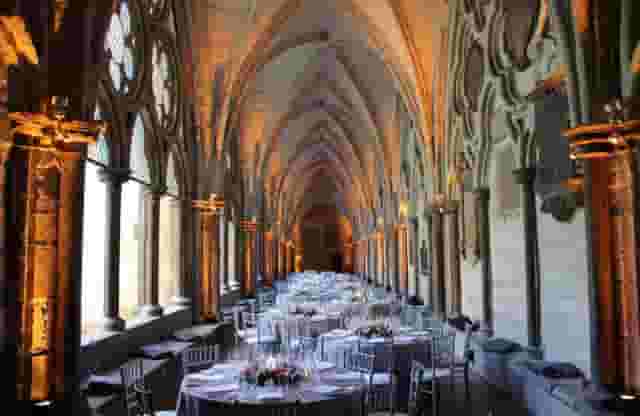
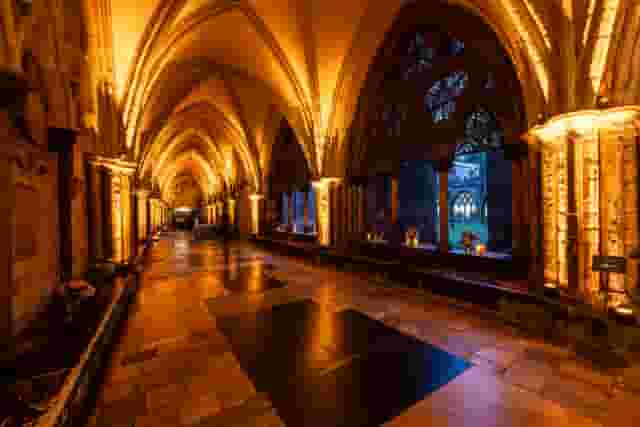
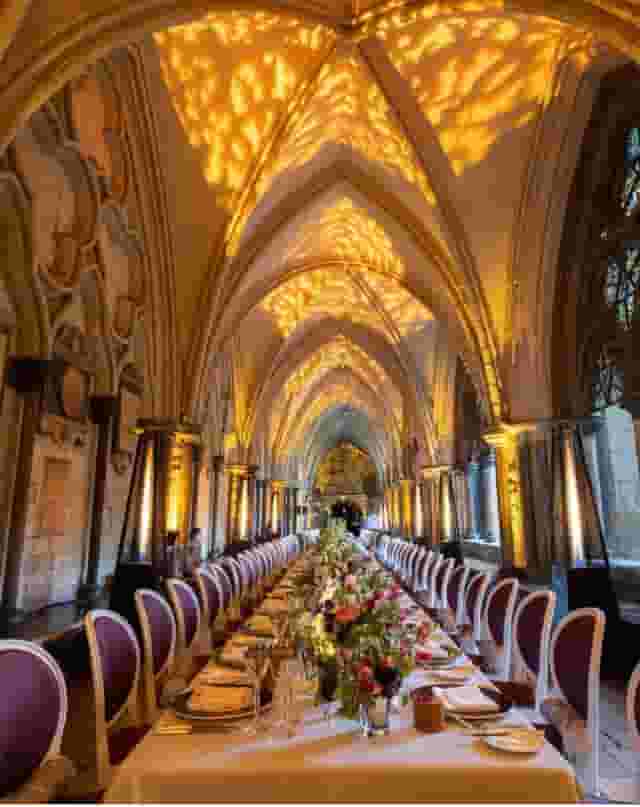
When outdoor spaces are part of the brief, conservation extends to lawns, stone paving and historic gardens. At Westminster Abbey, the East and North Cloisters host outdoor evening receptions for up to 400 guests, giving attendees open-air views of the Abbey church. Using spaces like this requires strict adherence to weather contingencies, as heritage paving cannot take standard marquee stakes, and open flames or outdoor cooking stations are rarely permitted directly adjacent to ancient masonry.
| Planning check for technical production in listed buildings | |---|---| | 1. Arrange a joint site visit with your AV lead and venue conservator before confirming design. | | 2. Confirm power distribution points, available amperage and distances to stage areas. | | 3. Establish acoustic boundaries and test speech intelligibility across all seating zones. | | 4. Verify cable routing paths and approved floor protection materials. | | 5. Check whether projection sightlines are obstructed by historic chandeliers or pillars. |
Structuring catering and drinks service in historic spaces
Food and beverage logistics in a heritage venue differ markedly from a modern hotel where industrial kitchens sit directly behind service doors. Many historic properties do not have plumbed, fully equipped commercial kitchens adjacent to their event spaces. Instead, caterers operate out of temporary back-of-house areas, service crypts or screened-off corridors using portable induction hobs, mobile holding ovens and refrigerated transport.
Because of this physical reality, choosing a caterer approved by the venue is non-negotiable. Most heritage venues operate a mandatory accredited suppliers list. These caterers know the loading docks, understand the staircase dimensions, know where grease traps can be placed and understand how to manage hot food transit across protected timber floors. Using an external caterer unfamiliar with the site regularly leads to delayed food service or penalty charges for damage.
Menu selection should mirror the physical limitations of the room. A delicate five-course plated dinner requiring pinpoint finishing at the pass is risky if the temporary plating kitchen sits two floors below via a service lift. Heartier, beautifully presented seasonal menus that hold temperature well in insulated hot boxes serve guests far more reliably. For standing drinks receptions, canapes should be clean and manageable in one bite. Avoid crumbly pastries, oily garnishes or dark sauces that risk dropping onto unprotected antique carpets or stone floor tiles.
Drinks service in historic properties also requires sensible policies:
Red wine bans are common in rooms containing historic tapestries, bare Portland stone, marble statues or delicate floor finishes. If red wine is prohibited, work with the sommelier to build a drinks package focusing on premium sparkling wines, crisp whites and characterful non-alcoholic alternatives such as botanical sodas.
Bar placement must guide guest movement away from fragile corners. If you place a central bar right in front of a delicate historic feature, you invite heavy foot traffic, spilled drinks and crowding against roped-off artifacts. Work with the operations team to anchor bars near resilient service areas, keeping walking routes open and well-lit.
Glass collection must be prompt and continuous. Empty champagne flutes left balanced on historic mantelpieces, radiator covers or display plinths present an immediate conservation hazard. Agree on higher staff-to-guest ratios with your caterer: one waiter per ten guests for seated dinners, and one per fifteen for standing receptions. This ensures glasses are cleared the moment they are put down.
Managing guest arrival, transport and accessibility
Transport and arrival logistics define the first thirty minutes of any corporate event. Many of London's prominent historic venues sit within historic street layouts or tight security perimeters, meaning coaches and taxis cannot simply pull up to the front doors and wait.
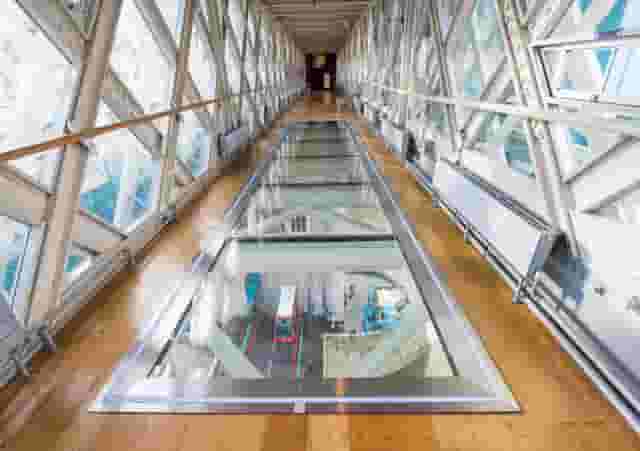
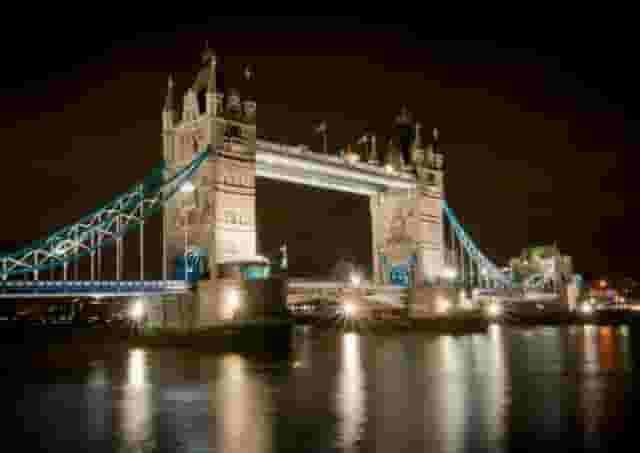
At the Tower of London, where spaces like The Walkways host standing evening receptions for up to 250 guests with panoramic views across the river, arrival involves passing through historic fortress gates and security checkpoints. Organisers must issue clear joining instructions well in advance, detailing exact entry gates, photo identification requirements and the shortest walking routes from nearby tube stations such as Tower Hill.
Accessibility requires honest, rigorous scrutiny. Because listed buildings were constructed centuries before modern building regulations, step-free access is rarely simple. Grand entrances frequently feature steep stone staircases, doorways can be narrow, and internal floor levels often change unexpectedly over thresholds.
Never take a general claim of full accessibility at face value. Conduct an access walk-through that tracks the exact route an attendee using a wheelchair or mobility aid will follow. Check:
- Is the step-free entrance the main public doorway, or does it require using a tradesmen's lift or side gate? If an alternative route is needed, ensure it is clean, dignified, well-signposted and staffed.
- Are internal lifts rated for modern powered wheelchairs, and do they provide direct access to the private dining room or reception area without needing security keys at every landing?
- Where are the accessible toilets situated? If they are on a different floor or require exiting into another wing of the building, factor that distance into the running order.
- Are lighting levels in historic corridors bright enough for guests with low vision, particularly during evening events where ambient lighting is turned down?
- Is there an operational hearing loop installed, or does your audiovisual team need to provide portable radio-frequency receiver headsets for presentations?
Navigating costs, contracts and realistic budgets
Budgeting for a historic venue requires looking well beyond the base room-hire charge. Because these properties carry significant upkeep expenses and operational constraints, quotes often contain line items that do not feature on standard hotel banquet packages.
Across the wider market, typical expenditure for this format is predictable: private company event with food and drinks: £150 to £350 per head (broad London corporate-event benchmark for a catered private event; varies with guest numbers, weekday or weekend, season, venue prestige, drinks, staffing, production, VAT and inclusions).
To understand where your brief sits within that spectrum, break down the individual components that drive quotes upward:
The timing of access is the most frequent source of unexpected expense. If a museum or state building remains open to the public until 17:00, your caterers, florists and AV technicians cannot begin loading in until 17:15. If your guests arrive at 18:30, your suppliers have just 75 minutes to build an entire event environment. Achieving that turnaround requires doubling production crew numbers, which directly inflates supplier invoices. Alternatively, paying the venue to close its public doors early costs substantial compensation fees.
Security and conservation supervision costs are routinely passed to the hirer. Because historic spaces contain irreplaceable art, woodwork and architecture, venues mandate dedicated security personnel, invigilators and conservators on duty throughout setup, the event itself and breakdown. These charges appear as mandatory hourly fees on your final settlement invoice.
Late finishing penalties can be severe. Listed buildings situated in residential boroughs such as Westminster or Kensington face strict local authority noise curfews, often requiring music to terminate at 23:00 and all guests to vacate by 23:30. Overstaying past contracted hours risks hefty council fines and venue penalty rates charged in half-hour increments.
| Cost category | Standard hotel or modern venue | Historic heritage property | Budget impact |
|---|---|---|---|
| Load-in access | Flexible morning or afternoon setup windows included in day rate | Restricted evening access after public closing, often starting after 17:00 | Higher crew costs to achieve fast setup |
| Technical install | Built-in rigging points, integrated sound and drop-down projectors | Strictly ground-supported trussing, padded baseplates and acoustic zoning | Custom production kit and specialist labour |
| Catering logistics | Permanent in-house kitchen directly adjacent to room | Pop-up back of house, mobile kitchens and long service routes | Higher equipment hire and increased waiting staff ratios |
| Staffing and protection | Basic venue manager and standard door security | Mandatory conservation invigilators, heritage supervisors and bag search teams | Additional line items billed per hour per guard |
| Cleaning and damage | Standard post-event clean included in facility hire | Specialist floor cleaning, stone conservation and strict damage deposit holding | Substantial deposits required against historical fabric |
When reviewing proposals, ask the venue sales team to itemise every charge outside the room hire: waste disposal, kitchen hire surcharges, power hook-up fees and corkage. A transparent quote protects your budget and ensures your event runs smoothly inside one of London's most memorable settings. Hire Space 360 is enterprise venue and hotel procurement for companies spending £1m or more a year on meetings and events: a managed meetings and events programme, the kind procurement teams call strategic meetings management. It routes every booking through a single master agreement with consolidated invoicing, ensuring complete adherence to company event policy. To explore how Hire Space 360 works for procurement, finance teams also get real-time spend reporting and audit tracking across all departments, guided by dedicated venue sourcing managers.
What our customers say
Inspiration and planning guides

Top 5 Historic London Venues
With modern marvels such as 'The Gherkin' and 'The Shard' now dominating London's skyline, we felt it was time to pay tribute to our older, yet equally impressive event spaces [https://hirespace.com/Browse/Unusual-Event-Venues-London]. James Roche brings you five historic London venues! Drapers Hall The original hall may have been destroyed by the fire of London but with the present incarnation dating back to 1772, this superb venue is (hold on while I take off my socks to count) still sixtee

Venue Review: Weddings at Hampton Court Palace
Standing on the grounds of Hampton Court Palace is truly like standing in the footsteps of the most important figures and captivating characters in British history. Cardinal Thomas Wolsey resided in the Palace from 1515, until the charming Henry VIII decided to make it his own, after making the building lavish and luxurious – fit for a king (and his six queens – separately, of course). James I threw late-night parties in the Great Hall, and Shakespeare's troupe of players performed for the ro

Unique Venue of the Month: Royal Liver Building
There's a myth about the iconic "Liver Birds" at the top of the stunning Royal Liver Building [https://hirespace.com/Spaces/Liverpool/53567/The-Venue-Royal-Liver-Building/The-Venue/Events] . It claims that if they ever fly away, Liverpool will sink into the River Mersey. Thankfully, this has never happened to the beautiful city of Liverpool. Proudly standing as the tallest building in Europe when it was erected in 1911, the Royal Liver Building was originally constructed as a home to a group
One supplier. Every venue. Full visibility on what you spend.
Multiple venues and events. One agreement.