Rooftop Bars in London
Find London rooftop bars with private hire spaces, skyline views and wet-weather contingencies for company receptions and client entertaining.
374 Rooftop Bars in venues in London







































































































No venues match these filters
Try widening your capacity, luxury level or event type.
Don't have time to search? We'll find it for you.
For business events that need human judgement, talk to our team. Free for events of 100+ people, budgets over £10k or ongoing programmes.




Explore more venues in London









Frequently asked questions
What happens if it rains during my event on the rooftop?
What food options are there for a corporate summer party on a rooftop?
How much does it cost to hire a rooftop for a summer party?
Other platforms search their database. We search everything.
Tell us what you need. Our deep research finds any venue, whether it's in our marketplace or not. No one else does this.
About Rooftop Bars in London
Planning a company event on a London rooftop sounds straightforward until you start looking at the mechanics. You need a space that impresses clients or rewards staff, but you also need to manage English weather, sound restrictions, lift capacities and catering that works ten storeys up. When done well, high-altitude venues deliver an energy that basement private dining rooms or windowless hotel suites cannot match. The horizon does the heavy lifting for your event decor, conversation starts easily and attendance rates are consistently higher than for standard indoor venues.
Getting it right comes down to treating a rooftop not just as a pretty vantage point, but as an operational environment with its own rules. Between unpredictable weather, strict local authority licences and complex access routes, taking your team or clients above the skyline requires firm decisions early in the process.
Wet-weather planning and terrace infrastructure
The first question every organiser asks about an outdoor event in London is what happens when it rains. Experienced planners know that hoping for clear skies is not a strategy. You must interrogate the physical setup of the terrace and understand exactly how the venue manages sudden downpours.
London rooftop venues handle wet weather in three distinct ways:
- Retractable glass canopies: These provide the most dependable protection. If a storm hits, motor-driven roofs seal the terrace in minutes without forcing guests to move indoors or interrupt speeches.
- Dedicated indoor backup rooms: The venue allocates an indoor bar or lounge adjacent to the terrace, allowing the party to migrate inside if rain settles in.
- Open-air terraces with partial canopies or parasols: These spaces rely on outdoor heaters, awnings and parasols. They can handle a light passing drizzle, but sustained rain requires moving into public bar areas unless an exclusive room has been contracted.
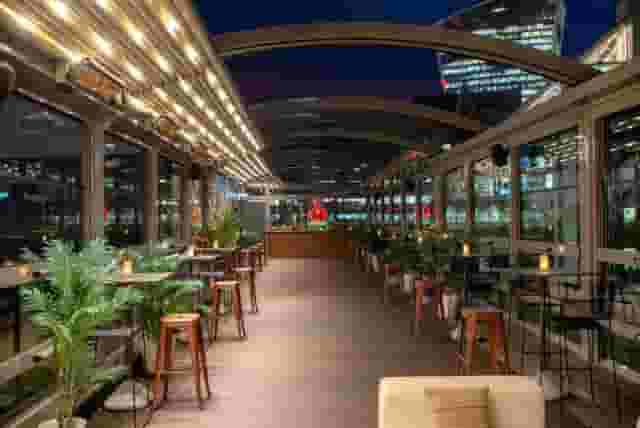
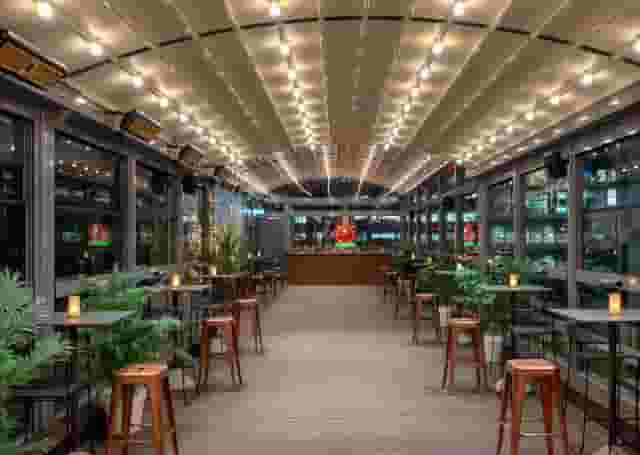
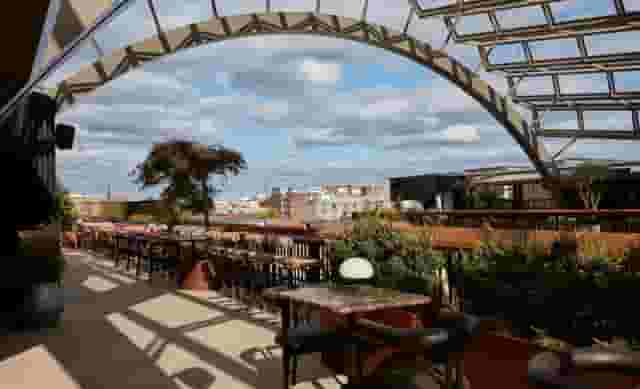
If you want the outdoors without the anxiety of weather checks, look for structures built specifically for year-round entertaining. Century Club in Soho features a rooftop terrace with a retractable glass roof and a capacity of 200 for a reception. Because the cover is fully integrated, you can host presentations and client networking without drafting an emergency indoor floor plan.
Other properties solve the issue by pairing outdoor terraces directly with adjoining indoor suites. At The Trafalgar St. James, which accommodates up to 200 guests for a dinner dance, the setup includes indoor space alongside the skyline terrace. This allows guests to step out for drinks while keeping food service and music secure under cover.
When you look at completely open spaces, operational questions become paramount. The Garden at 120, set in the City of London, holds 350 people standing in an open-air garden environment. For summer drinks with a DJ, an open garden platform creates a festival atmosphere, but you must ask the venue team at what time threshold a weather call is made. Most venues require a decision either 24 hours in advance or by midday on the event date. You need to establish whether the indoor option holds your full guest list, whether staff will physically transport your drinks and production inside, and whether the minimum spend alters if the outdoor terrace cannot be used.
Matching scale, geography and event format
A rooftop works best when the floor plate matches your guest count. A terrace that is too large leaves guests scattered and exposed to crosswinds, while an overcrowded terrace creates slow bar queues and blocks the viewing edges. To pinpoint the right capacity without weeks of back-and-forth, venue booking platform Hire Space pairs its team of real people with Deep Venue Research, searching every possible option across the city rather than a standard directory. For corporate events of 100 people or more, it also surfaces instant availability confirmed by the venues for your specific date, letting you build a qualified shortlist in minutes.
| Venue | Area | Capacity | Layout & Shelter Type |
|---|---|---|---|
| Sky Garden London | City of London (EC3M) | 700 reception | Enclosed glass dome with landscaped gardens |
| CÉ LA VI London | Paddington (W2) | 500 standing | Two-floor venue with indoor and outdoor coverage |
| The Garden at 120 | City of London (EC3M) | 350 standing | Open-air rooftop garden |
| Coq d'Argent | Bank (EC2R) | 300 reception | Terraces, heated pavilions and central lawn |
| Radio Rooftop London | Strand (WC2R) | 240 reception | Wrap-around terrace with city viewpoints |
| Century Club | Soho (W1D) | 200 reception | Retractable glass roof with full AV setup |
| Sea Containers Events | South Bank (SE1) | 200 standing | Open roof terrace overlooking the river |
| Wagtail | The City (EC4N) | 60 reception | Intimate West Terrace with historic vistas |
Large company gatherings and brand showcases
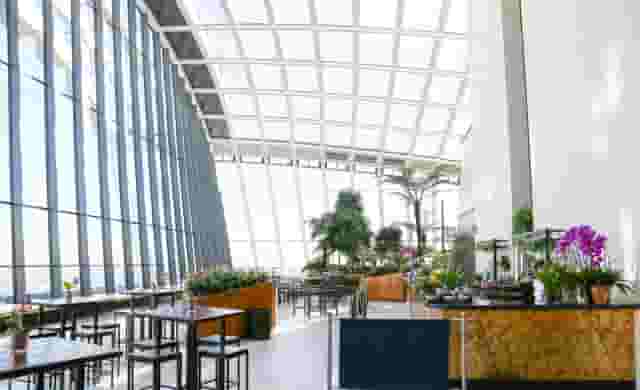
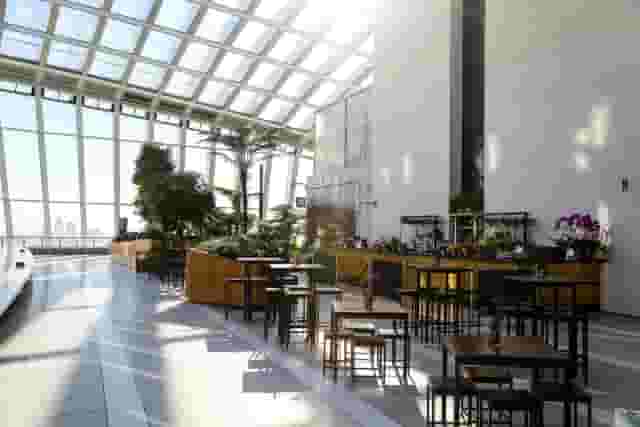
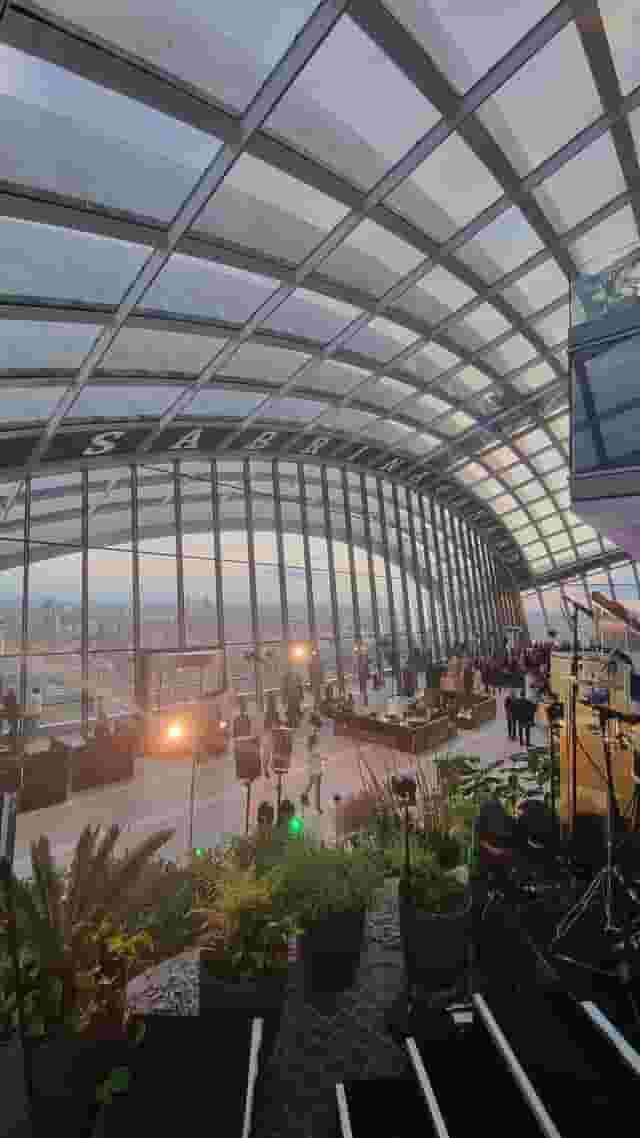
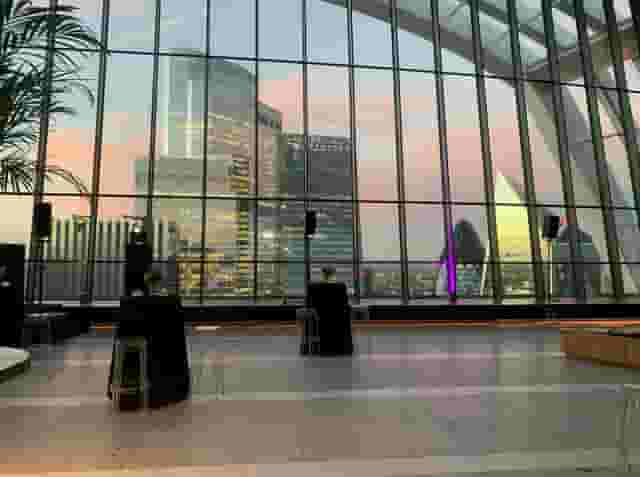
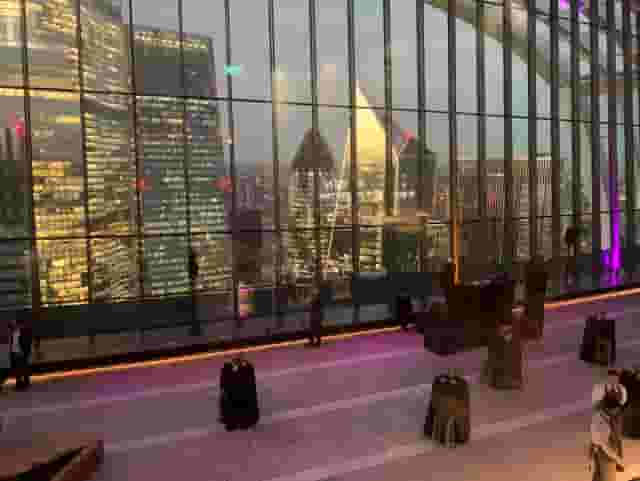
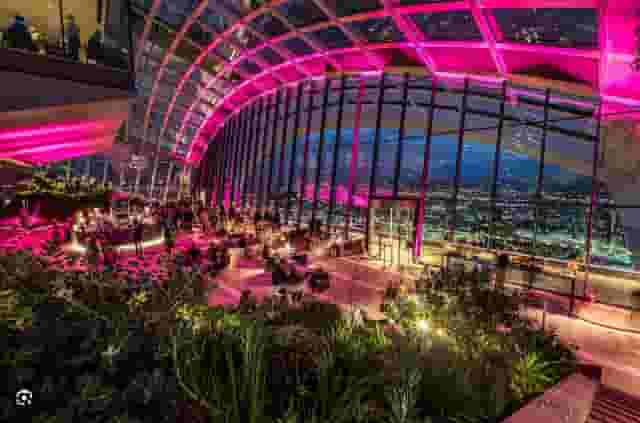
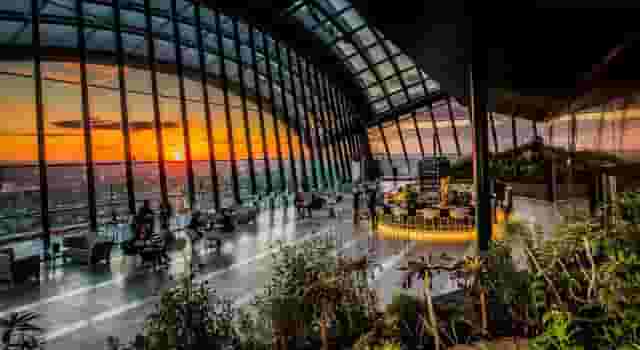
For guest lists running into the hundreds, you need high-capacity lifts, fast bar service and plenty of space to circulate. Sky Garden London atop the Walkie Talkie building offers exclusive hire for up to 700 guests at a reception. Its indoor landscape means guests get high views across the capital without exposure to the elements, making it suitable for corporate all-hands or major international client receptions.
In West London, CÉ LA VI London in Paddington accommodates 500 guests across two floors. A multi-level layout allows you to split the evening, hosting presentations or food service on one floor before moving attendees out to the terraces for drinks and networking later in the night.
Mid-sized summer parties and client receptions
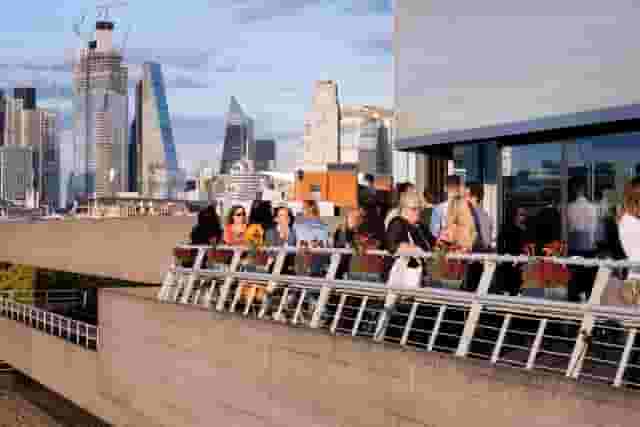
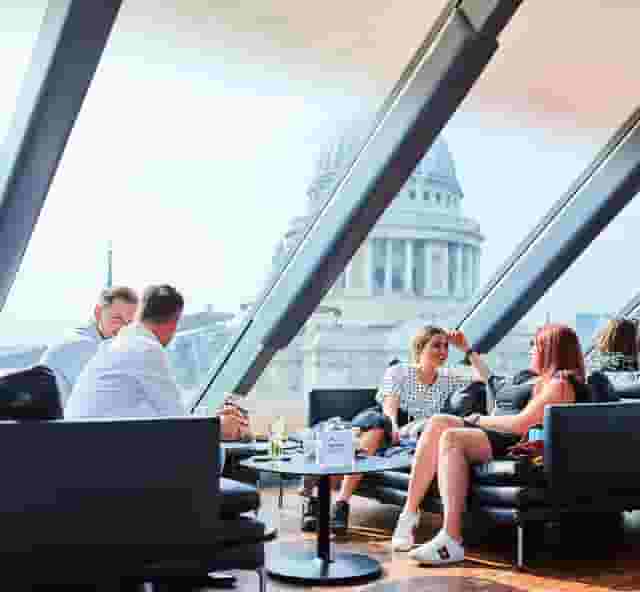
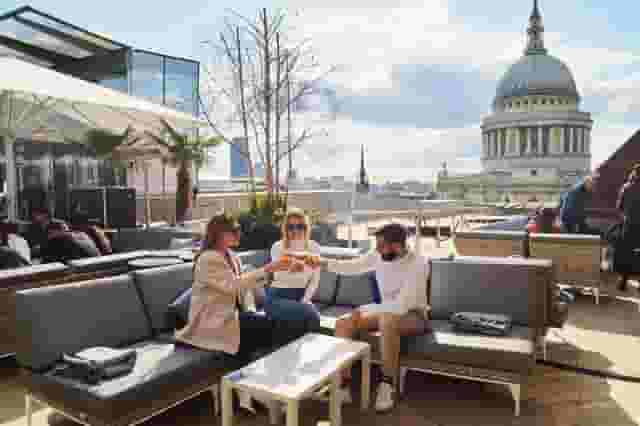
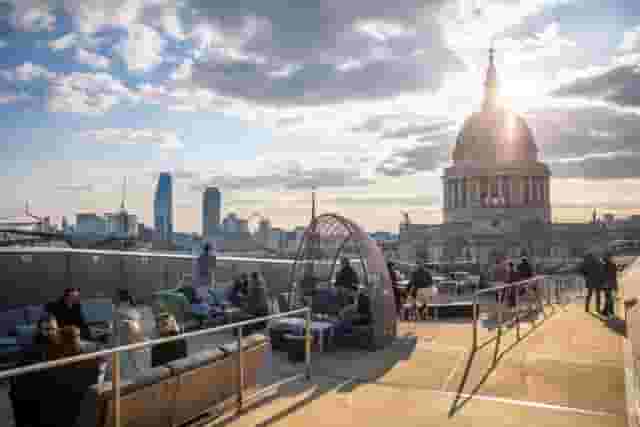
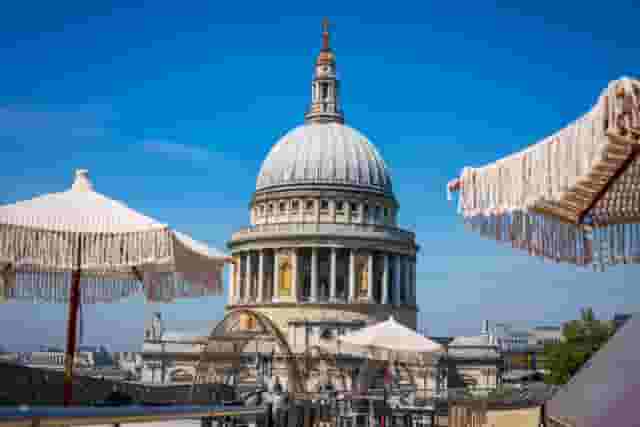
Groups of 150 to 300 guests fit comfortably onto mid-scale hotel and corporate terraces. Along the river, Sea Containers Events on the South Bank has a roof terrace holding 200 people standing. The position directly above the Thames gives guests a clear sightline of St Paul's Cathedral and the North Bank, which works particularly well for out-of-town clients or summer investor drinks.
In the financial district, Coq d'Argent at Bank holds up to 300 guests for a reception. Its combination of planted walkways, heated outdoor areas and traditional French hospitality makes it a proven choice for City firms hosting post-deal celebrations or summer partnership gatherings.
Focused team drinks and executive entertainment
When hosting 40 to 80 guests, booking a massive terrace leaves the group feeling lost. You want a defined space where your company has privacy and direct bar access. Wagtail, located near Monument, offers its West Terrace for private receptions of up to 60 people. An intimate footprint gives your guests private access to the terrace edge, keeping conversations focused without competition from public revellers.
For creative programming ideas on these terraces, take a look at our guide on 4 London Rooftop Bars For Summer Party Entertainment.
What London rooftop bars cost and how to budget
Budgeting for a rooftop requires understanding the pricing model. Very few commercial rooftop bars charge a dry hire fee alone. Instead, they operate on a minimum spend basis, a package rate per guest, or a combination of space hire plus food and beverage commitments. Hire Space 360 is enterprise venue and hotel procurement for companies spending £1m or more a year on meetings and events: a managed meetings and events programme, the kind procurement teams call strategic meetings management. It brings every venue contract, seasonal terrace hire and supplier payment onto one agreement, keeping event bookings aligned with company policy. Finance and procurement teams also receive consolidated invoicing and live spend reporting, providing full visibility and audit trails across all regional gatherings.
Based on 10 quotes from the venues on this page, the cost for corporate events typically sits between £113 to £208 per head. This figure assumes a party size of about 50 guests, which represents a standard company summer mixer or client networking reception.
| Budget Level | Typical Cost | What It Delivers |
|---|---|---|
| Lower band | Towards £113 per head | Midweek daytime or early evening hire, simple prosecco or wine packages, circulating finger food or standard canapés |
| Mid-range | Around £150 to £175 per head | Extended open bar with house spirits, substantial bowl food, dedicated service staff, basic sound system access |
| Upper band | Towards £208 per head | Peak Thursday or Friday evening, premium champagne reception, interactive food stations or barbecue menus, exclusive terrace use |
Where you land in that range depends on clear commercial levers:
- The day of the week: A Tuesday or Wednesday evening often requires half the minimum spend of a peak Thursday or Friday in June or July. If your dates are flexible, shifting to a Monday or lunchtime slot gives you significantly more negotiating leverage on catering upgrades.
- The drinks package: Basic wine and beer packages keep you towards the £113 end of the bracket. Upgrading to mixed spirits, signature cocktails and champagne will push you quickly towards the £208 end.
- Service charges and hidden costs: Standard London hospitality service charge runs between 12.5% and 15%. This is added to your final bill on top of agreed food and beverage minimums. Clarify whether your agreed minimum spend is inclusive or exclusive of VAT and service, as that distinction can swing your total liability by over 30%.
- AV and infrastructure add-ons: If you plan to make speeches, play a corporate video or hire a private DJ, check if the terrace has an installed PA system. Bringing external speakers onto a rooftop often requires health and safety sign-off, wind load calculations and venue-approved sound engineers, which can add £500 to £2,000 to your production costs.
Food and drink logistics at height
Catering an event ten or thirty floors above ground is an operational hurdle for venue kitchens. Food cools down rapidly in outdoor breezes, napkins and light plates blow away, and transporting heavy cases of glassware in shared service lifts takes planning.
When selecting menus for a terrace, avoid delicate cold items that dry out in the wind or light salads that catch the breeze. Instead, focus on hearty, easily managed formats:
- Substantial bowl food: Dishes like braised beef, thai curries, risotto or glazed pork belly retain their heat in ceramic bowls. Guests can eat them comfortably with a fork while standing up with a drink in hand.
- Live cooking stations and outdoor barbecues: Certain rooftops have licences for open-flame grills, planchas or paella pans. Having chefs prepare skewers, sliders or grilled seafood directly on the terrace creates visual interest and keeps hot food moving continuously.
- Circulating canapés: Best used as an arrival snack rather than the primary dinner. Plan on six to eight bites per person for a short reception, or ten to twelve pieces alongside bowl food if you are replacing an evening meal.
- Dietary logistics: Always insist that vegetarian, vegan and allergen-friendly options are prepared in equal quality. Ask how the kitchen identifies and serves guests with severe allergies when food is circulating on trays.
Bar service needs equal scrutiny. Rooftop bars often suffer from bottlenecking, with guests queuing three deep as staff prepare complex mixed cocktails. For company events, ask the venue to offer a focused cocktail menu of two pre-batched seasonal drinks alongside beer, wine and non-alcoholic options. Pre-batching lets bartenders pour drinks in seconds rather than shaking each one from scratch, keeping queues moving and letting people focus on networking.
Licensing, curfews and sound restrictions
Every rooftop in London operates under strict environmental health and premises licence rules set by its local borough council. Because sound carries over long distances from open platforms, outdoor terrace curfews are strictly enforced.
In Westminster, Camden and the City of London, most open terraces must close their outdoor sound systems by 21:00 or 22:00, with guests moved inside by 22:30 or 23:00 to reduce street-level noise. Even before curfew, councils enforce decibel limits. If you plan to feature a live band or an amplified DJ, verify the venue's acoustic limits in writing. Many spaces use noise-limiting cut-off switches that automatically drop power to the sound desk if volume crosses a predetermined decibel threshold.
A typical corporate rooftop event follows a reliable timeline:
- 18:00: Guest arrival, lift check-in, coat check and arrival drinks served immediately.
- 18:45: Food service begins with circulating canapés and open bars.
- 19:30: Short company speeches or welcome announcements (run before outdoor sound limits drop).
- 19:45: Substantial bowl food or food stations open.
- 21:30 to 22:00: Outdoor terrace music concludes; guests migrate to indoor private bar rooms.
- 23:00 to 23:30: Last orders and phased departure via express lifts.
Managing guest arrivals and venue access
Access is one of the most overlooked parts of rooftop event planning. In an office tower or high-end hotel, getting 150 guests from street level to the roof can cause serious delays if not handled properly.
High-rise buildings frequently use airport-style security scanners, turnstiles and visitor registration desks. If every guest must present photo identification and pass through an x-ray machine, entry can take 45 minutes for a large group. To prevent a queue spilling down the pavement, ask whether you can provide a pre-printed guest manifest, whether the venue provides dedicated security personnel, and whether specific high-speed lifts can be locked off exclusively for your party.
Accessibility is another critical factor. While modern towers have compliant passenger lifts, heritage buildings and converted warehouses in central London may have lift access that terminates one floor below the roof, requiring guests to climb a final flight of stairs. If you have attendees with mobility requirements, inspect the step-free route from the street entrance to the terrace edge, including access to accessible toilets, before signing a contract.
By addressing weather contingencies, licensing hours, catering mechanics and lift access right from your first site inspection, you can host an event that lets your guests enjoy London's skyline while keeping the entire evening running smoothly.
What our customers say
Inspiration and planning guides

The Top 3 Rooftop Venues In London
Check out three of our favourite rooftop venues in London to escape the bustle and get as close to the sun as possible (when it shows its face!).

5 Summer BBQ Party Venues
What better way to usher in the summer than a summer party in a great venue. With everything from rooftops to private gardens, discover London's best.

Good Hotel London: A (Really, Really) Good Venue
Those who remember Hire Space's very early days know that the original inspiration for breaking into the venue industry was to find uses for non-profit, charitable spaces. That's why it's great, four years on, to be humbly reminded of the original mission, and so when we come across venues [https://hirespace.com/Top/London/Unusual-Event-Venues-London] such as Good Hotel London [https://hirespace.com/Venues/London/76585/Good-Hotel-London], it truly inspires us even more. The work of the folks be
One supplier. Every venue. Full visibility on what you spend.
Multiple venues and events. One agreement.