Community Centres in London
Find practical London community halls with kitchen access, flexible layouts and straightforward AV for your next group gathering or workshop.
773 Community Centres in venues in London






































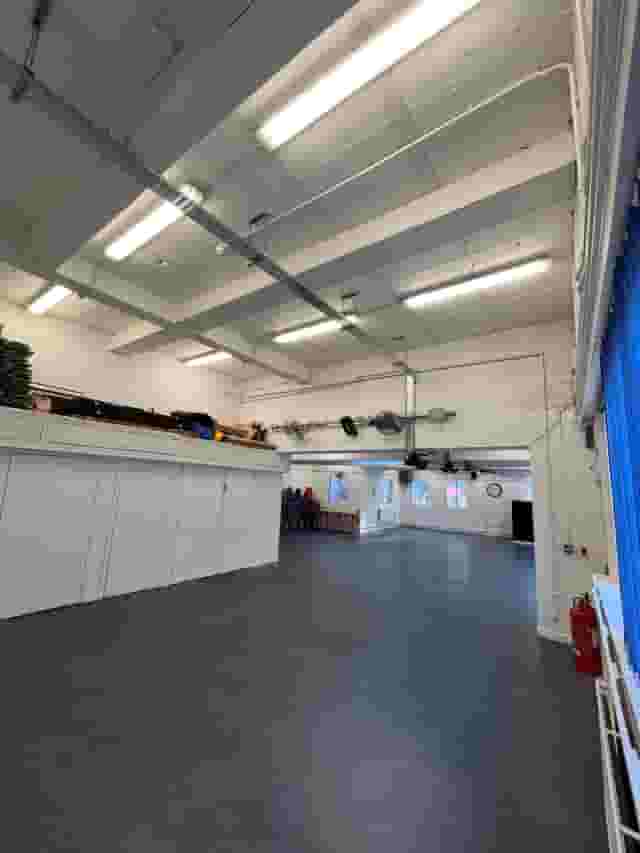
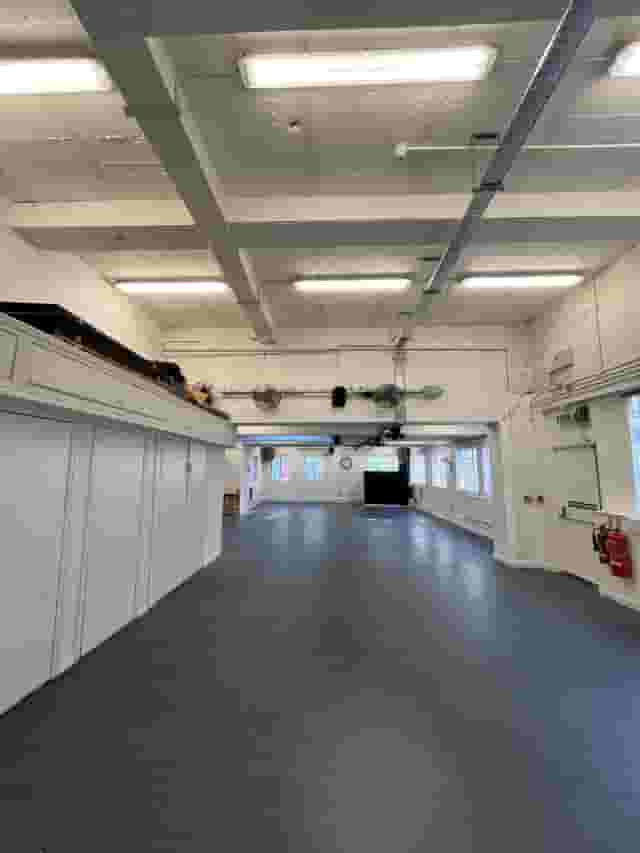
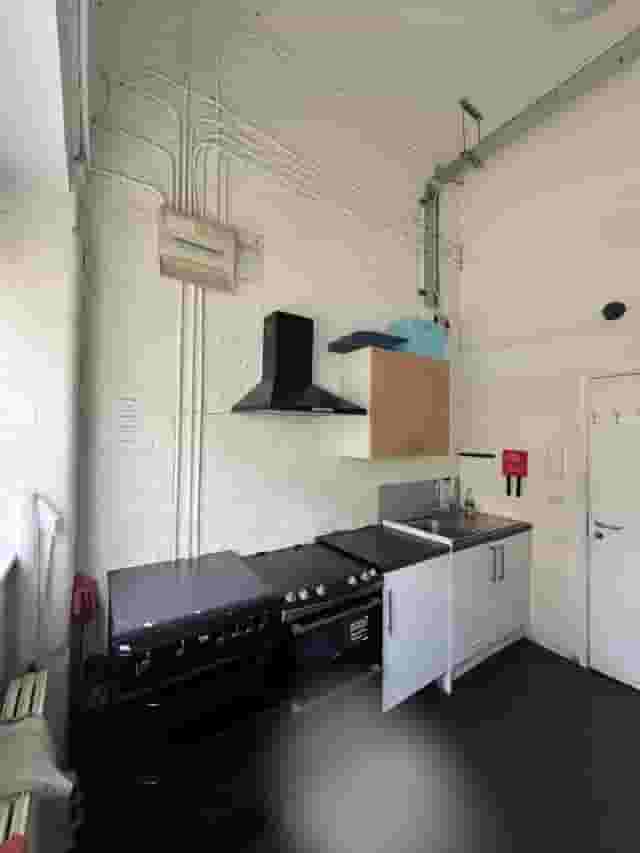
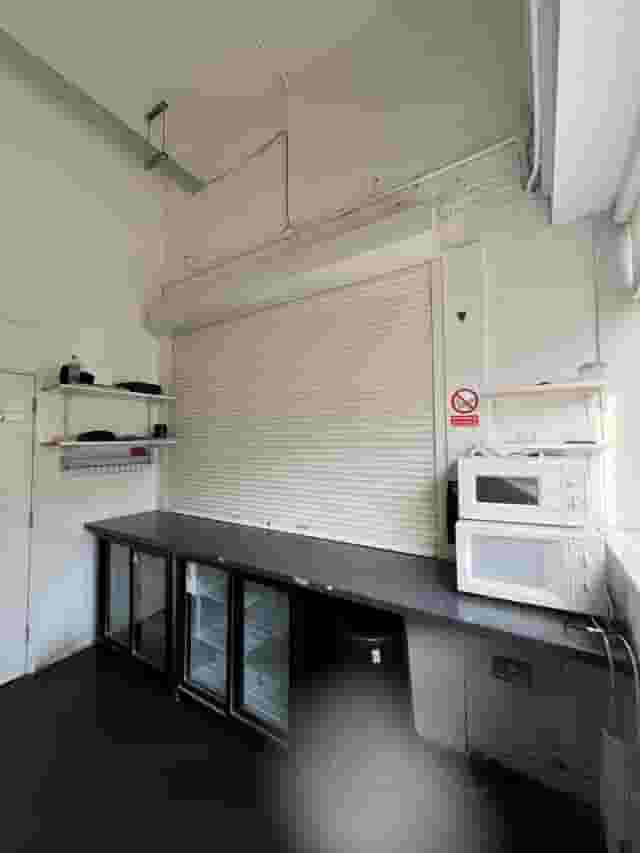


















































No venues match these filters
Try widening your capacity, luxury level or event type.
Don't have time to search? We'll find it for you.
For business events that need human judgement, talk to our team. Free for events of 100+ people, budgets over £10k or ongoing programmes.




Explore more venues in London















Frequently asked questions
Am I allowed to bring in my own food and drink?
What type of events can community centres hold?
Is there a screen and projector I can use in the community centre?
What events work well at a community hall?
Why should I pick a community centre for my event?
Can I bring in my own catering at a commnunity centre?
Other platforms search their database. We search everything.
Tell us what you need. Our deep research finds any venue, whether it's in our marketplace or not. No one else does this.
About Community Centres in London
Choosing the right hall format for your gathering
London community centres cover everything from Victorian library halls and converted parish halls to civic municipal rooms. When you organise a neighbourhood meeting, amateur performance, charity workshop or community lunch, the building you choose dictates how people talk to each other. A municipal hall brings structure and visibility, while a library room or local church hall creates an informal, neighbourhood atmosphere where people feel comfortable lingering over a cup of tea.
The first practical step is matching the room style to what your guests will be doing. If your session involves a single speaker addressing a crowd, sightlines and fixed rows matter most. If the plan involves group discussions, shared food or activity stations, you need clear floor space, sturdy tables and chairs you can shift around without needing a facilities team.
In south-west London, CAS Halls features an Upper Hall that holds 80 standing guests, with wooden floors, high ceilings and a 13.5m stage that suits presentations, small productions and panel discussions. In south-east London, The Upper Norwood Library Hub offers The Burgundy Room, holding up to 100 standing in a Victorian library setting that works well for local society meetings and annual general meetings.
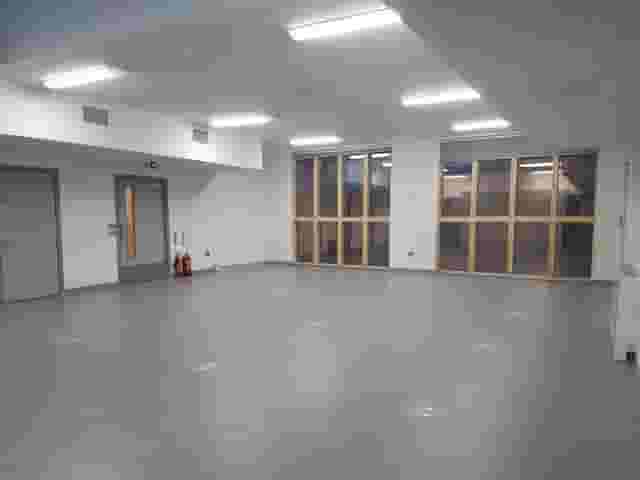
For smaller committees, workshops or support groups, large halls can feel cavernous and echoey. A compact space like Hive Cafe Community Space in south-west London accommodates 55 guests in a boardroom layout, with natural light from floor-to-ceiling windows and direct access to cafe facilities.
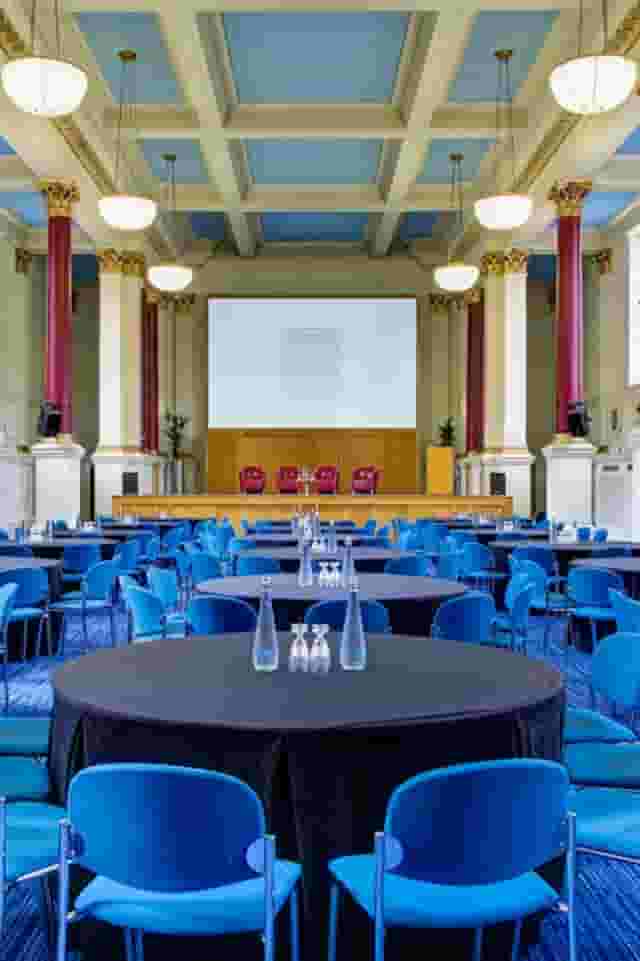
When an event grows to neighbourhood scale, larger assembly spaces become necessary. The Main Hall at Heritage & Arts Centre in east London accommodates 220 standing guests within a restored church building. In north London, St Stephen's Hall Hampstead offers a Grade II-listed, double-height main hall for 200 standing guests, with wooden flooring and strong natural daylight. If your gathering requires tiered or fixed rows for talks, Westbourne Park Baptist Church in Bayswater provides an auditorium sanctuary seating 200 in theatre layout. For major local consultations or borough-wide events, the Assembly Hall at Hornsey Town Hall accommodates 635 standing guests, giving you room for exhibition stands alongside seated attendees.
Room layouts, circulation and space planning
Planning for around 80 people in a community hall requires more floor area than standard capacity charts suggest. While a room might be rated for 80 standing, adding tables, coats, buggies and food stations reduces your usable space significantly.
To keep the room functioning well, allocate clear zones for distinct tasks:
- An entry area for signing in, collecting name badges and hanging coats.
- A refreshment table kept away from the main entrance doors to prevent bottlenecks as people arrive.
- The main activity area, arranged with wide gangways so people with mobility aids or pushchairs can navigate without asking others to stand.
- A clear perimeter path allowing volunteers to restock tea, coffee and water without crossing in front of speakers.
| Layout style | Best use case | Space requirement for 80 guests | Key watch-out |
|---|---|---|---|
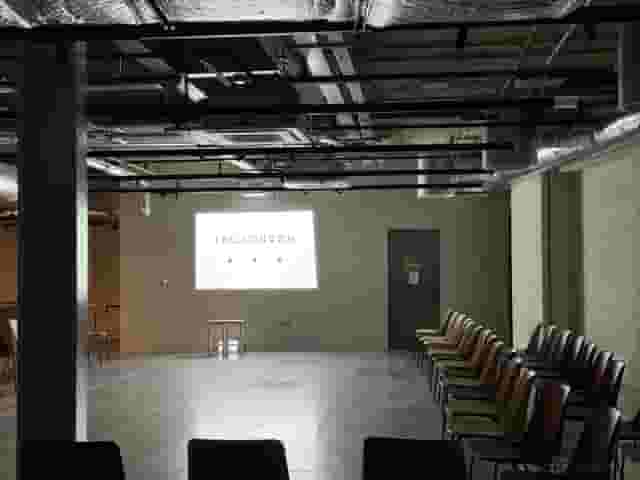
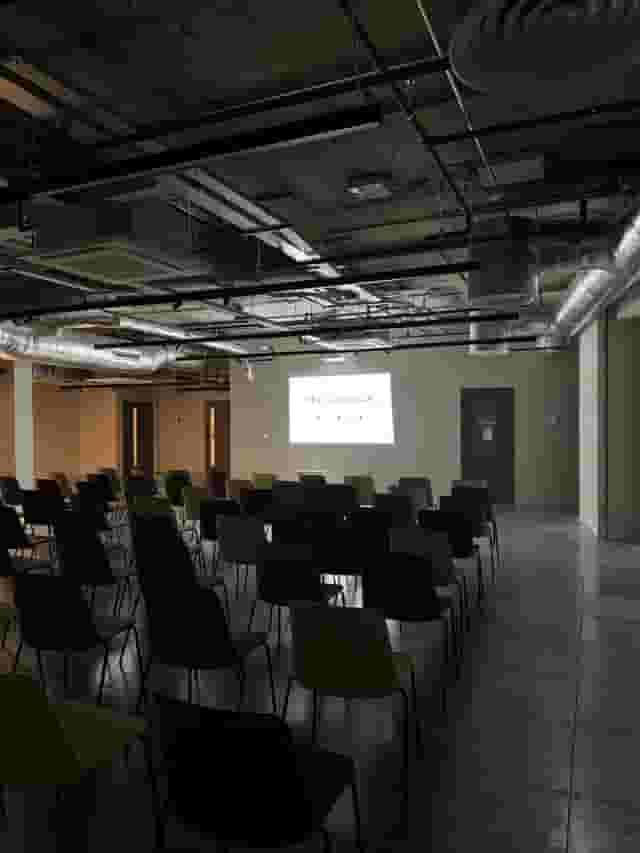
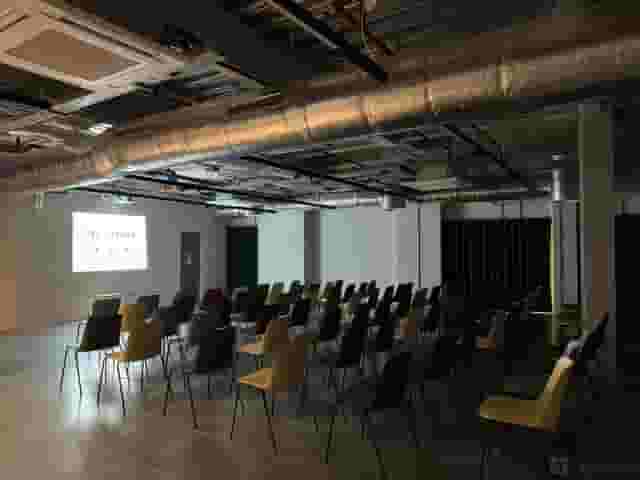
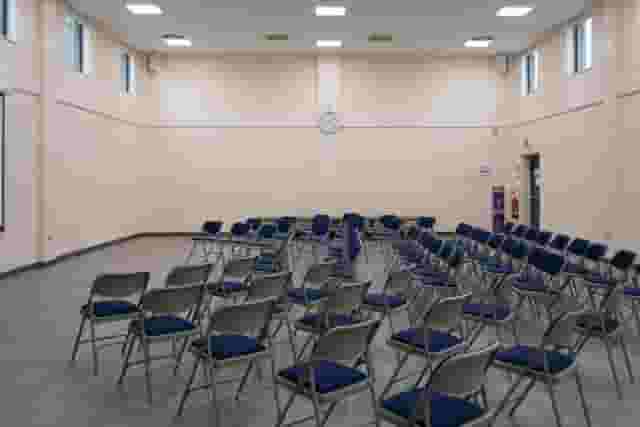
| Theatre style | Lectures, AGMs, film screenings | Around 80 to 90 square metres | Requires stacked chairs and clear central aisle |
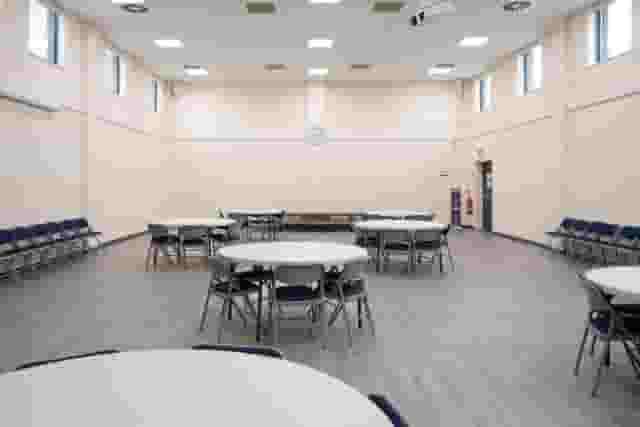
| Cabaret style | Workshops, training, committee discussions | Around 120 to 140 square metres | Needs round or trestle tables; leaves some backs to the stage |
| Perimeter seating | Open community forums, exercise, dances | Around 100 to 110 square metres | Leaves the centre open; limits desk space for writing |
| Cafe style | Community lunches, social afternoons | Around 130 to 150 square metres | Requires quick access to serving points and kitchens |
If you plan to serve hot drinks or finger food, keep the catering tables at least two metres away from projection screens or AV consoles. People gathering around an urn will naturally talk, and steam or spilled water can disrupt equipment or block the view for seated attendees.
Navigating food, drink and kitchen access
Community centres give you substantial flexibility over catering. Most halls allow you to bring your own food and drinks or hire an independent caterer of your choice. This keeps costs down compared to commercial venues with tied suppliers, but it means you must manage the kitchen details yourself.
Kitchen facilities in London halls fall into three common types:
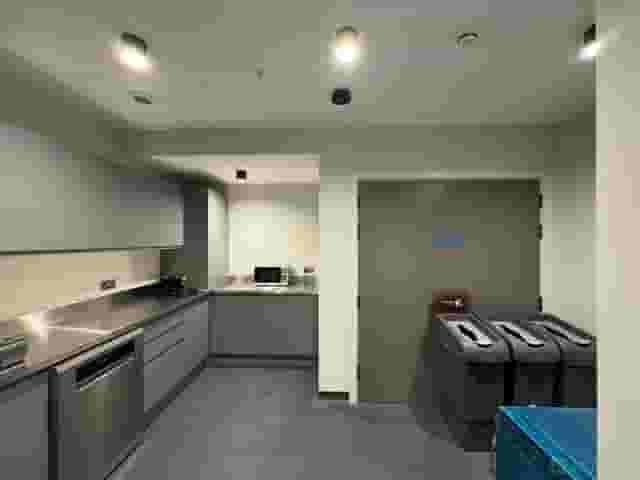
- Domestic kitchenettes. These usually have a domestic kettle, a small microwave, a standard fridge and a sink. They work well for heating water and unpacking cold platters, but they cannot handle cooking raw food from scratch.
- Reheating kitchens. These include commercial urns, hot cupboards or plate warmers, and commercial dishwashers. You can bring prepared hot dishes in thermal transport boxes and keep them warm before serving.
- Commercial production kitchens. These carry extraction hoods, gas ranges, deep fryers and stainless-steel prep benches. They are suitable for professional caterers cooking meals for the whole room.
Always ask the hall manager specifically what "kitchen access" covers. Some venues charge an extra fee to switch on the ovens, while others include the kitchen in the hourly hire but require you to bring your own tea towels, washing-up liquid and rubbish bags.
If you bring in a professional caterer, the venue will ask for a copy of their public liability insurance, usually requesting coverage of at least £5 million, along with food hygiene certification. When volunteers prepare food at home, stick to baked goods, whole fruit and cold savoury items that do not require strict temperature management during transport.
Alcohol requires careful handling. If you give away drinks for free, such as offering a glass of wine at a private community gathering, you rarely need a licence. However, if guests pay for drinks, or if the ticket price covers alcohol, the event involves a licensable activity. Check whether the hall holds its own premises licence that covers your event hours. If it does not, you must submit a Temporary Event Notice, known as a TEN, to the local borough council at least 10 working days before the event date, paying the standard statutory fee.
Waste management is another common trap. Many municipal and charitable halls do not have commercial council waste collections that permit private event rubbish. In many centres, you must bag all rubbish and take it away with you at the end of the evening. Verify this before buying disposable cups or planning a seated meal.
Sound, screens and technical setup
Do not assume a hall has working audio-visual equipment because you see a speaker mounted in the corner. Community centre technology ranges from modern installed systems to empty halls where you must bring every cable yourself.
When you view the space, ask three specific technical questions:
- What equipment is on site? Check whether the hire includes microphones, a digital projector, a drop-down screen or portable PA speakers. If the hall offers a television screen instead of a projector, check whether an 80-person audience at the back of the room can actually read slides on it.
- What cables and connections exist? Most venue equipment relies on standard HDMI connections. If you plan to present from a tablet or a laptop with only USB-C ports, bring your own adaptors. Never rely on the venue having the right converter in a drawer.
- Is there technical assistance on duty? Most community halls provide a caretaker who can unlock the building, show you the fire exits and point you to the breaker box. They are rarely sound engineers. If your event relies on multiple wireless microphones or live streaming, assign a volunteer specifically to manage the audio desk.
Acoustics in historic halls can be challenging. Spaces with double-height ceilings, bare brickwork and polished floorboards look characterful, but sound waves bounce off hard surfaces quickly. In an untreated hall, voices become muddy and hard to follow, especially for older attendees or people with hearing impairments.
To improve room acoustics without hiring specialist sound baffling, lay portable carpet runners in high-traffic aisles, keep curtains closed over tall windows and position your speakers slightly ahead of the microphone line to prevent feedback squeals. A roving microphone is essential for audience questions; people rarely project their voices well across a room of 80 guests.
Understanding hire costs and quote comparisons
Budgeting for a community gathering requires looking past the base hourly room rate. Venues often quote a bare room price, with operational services added as separate line items.
Our pricing data indicates that venue costs for community events in London typically run from £35 to £88 per head. This estimate is based on 4 quotes from the venues on this page and assumes a gathering of about 80 guests. Because community halls usually hire out space by the hour or session rather than as a per-person delegate package, this range translates the total cost of space hire, essential amenities and operational charges into an indicative per-guest figure to help you benchmark your budget.
Where your event lands within that £35 to £88 range depends heavily on when you book, what facilities you unlock and how much work you handle yourself:
- Towards the £35 end: These bookings typically happen on weekday mornings or afternoons on a straightforward dry-hire basis. You pay for the room, use existing trestle tables and chairs, arrange your own tea and coffee, and carry out your own setup and sweeping up afterwards.
- Towards the £88 end: These bookings usually fall on weekend evenings or peak slots in central boroughs. They reflect packages that include dedicated kitchen hire, installed audiovisual gear, on-site caretaker coverage throughout the event, and professional post-event cleaning services.
To compare quotes accurately between different venues, build a checklist of the operational items that affect the final invoice:
| Cost element | Standard arrangement | What to clarify before booking |
|---|---|---|
| Room hire rate | Charged hourly or by four-hour session blocks | Does the booking time include setup and pack-down? |
| Caretaker fees | Often charged for evening or weekend lock-up | Is there an overtime rate if guests leave late? |
| Kitchen access | Sometimes included, often an optional extra | Does use of the oven or dishwasher incur a surcharge? |
| AV equipment | Basic projector included; mics charged per unit | Are adaptors and extension leads supplied? |
| Refundable deposit | Held against property damage or extra cleaning | How long after the event is the deposit returned? |
| Waste disposal | Hirers often required to take rubbish home | Can you pay a fee for the hall to dispose of waste? |
Ask whether the venue has separate fee structures for registered charities, local resident associations or community interest groups. Many halls maintained by trusts or borough councils offer discounted rates for non-commercial community uses, provided you can supply a charity registration number or proof of local address. If you want to save time gathering quotes, Hire Space is an event planning and venue booking platform backed by a team of real people who help manage venue sourcing. It provides instant price estimates drawn from real booking data so you know realistic costs before getting in touch and suggests similar community spaces at a lower price if your preferred hall stretches your budget.
Managing event logistics, timings and wrap-up
A smooth community event depends on realistic time management. The common mistake is booking the hall only for the exact duration of the public session. If your event runs from 2:00 pm to 5:00 pm, booking 2:00 pm to 5:00 pm guarantees a stressful day.
Allow at least one full hour before your guests arrive. In that hour, you need to unlock the building, check the heating or ventilation, position tables and chairs, boil water for the tea urn, test your laptop with the projector, and set up your welcome table.
Similarly, plan for at least 45 minutes of clear-down time after the event finishes. Guests will stay behind to talk, and volunteers need time to wash mugs, stack chairs, wipe down surfaces and sweep the hall floor. Caretakers in London venues work to tight schedules; if your contract ends at 9:00 pm, they will expect the building empty, swept and locked by 9:00 pm sharp. Running into overtime can trigger penalty rates that forfeit your security deposit.
Noise regulations are strictly enforced across residential London boroughs. If your event involves recorded music, live performers or amplified speeches, check the hall's music curfew. Many venues in residential streets require music to stop at 10:00 pm or 10:30 pm, with all guests off the premises by 11:00 pm. Some halls have sound limiters installed on the main power supply; if the noise volume exceeds a pre-set decibel threshold for more than a few seconds, the electricity cuts off automatically.
Before you hand the keys back to the caretaker, run through a simple closing routine:
- Return all tables and chairs to their storage cupboards, stacked exactly as you found them.
- Check that all kitchen taps are turned off and the hot water urn is unplugged and drained.
- Check the toilets to ensure taps are not running and lights are turned off.
- Bag all rubbish, tie the bags securely and move them to the designated bin store or into your vehicles.
- Take time-stamped photos of the clean room on your phone. This gives you clear evidence of how you left the venue if a dispute over the damage deposit arises later.
Taking care of these operational details early means you spend the event focused on your neighbours, colleagues and guests, rather than worrying about extension cords or kitchen sinks.
What our customers say
Inspiration and planning guides

This Is Why London Has Such Unique Venues
At Hire Space, unusual venues [https://hirespace.com/Browse/Unusual-Event-Venues-London] are the name of the game. Passion to find a unique venue for an event seems to be unabated in London, but it's of little surprise when taking into account all the amazing spaces the capital has to offer. But just why is London filled with so many unusual venues for hire? We investigated: Romans, Saxons, Normans, Tudors and Stuarts. The Black Death, two World Wars and one Great Fire. London has seen it a

EventLAB Series: Introducing the Event
We're very excited to introduce EventLAB [https://eventlab.online/], our first two-day event designed to take event professionals through every step of the event planning process. We'll be bringing you the latest updates in the run-up to the event in our 'EventLAB Series' [https://hirespace.com/blog/tag/eventlab//], including relevant content and a little glimpse of the speakers, workshops and themes that will feature at the event. In the first instalment, we’ll explain all there is to know a

6 Reasons Why Venues Should Join Hire Space
Four years ago, we launched Hire Space to connect event venues with new customers easily via our online platform and Venue Expert service. We've come up with 6 reasons why Venue Managers might like working with Hire Space, and why venues should join the club [http://bit.ly/2kQaHEd]! 1. Best SEO in the Industry = High Web Traffic Our Marketing team has enhanced our site visibility on search engines and as a result 1.3M customers visited our web site in 2016 (7% higher than the previous year). Ou
One supplier. Every venue. Full visibility on what you spend.
Multiple venues and events. One agreement.