Private Dining Venues in Covent Garden
Explore private dining rooms in Covent Garden for client dinners and team meals, with verified capacities and indicative pricing from real event quotes.
58 Private Dining in venues in Covent Garden














































No venues match these filters
Try widening your capacity, luxury level or event type.
Don't have time to search? We'll find it for you.
For business events that need human judgement, talk to our team. Free for events of 100+ people, budgets over £10k or ongoing programmes.




Explore more venues in Covent Garden















Frequently asked questions
What's the cost of Covent Garden private dining?
How to ensure privacy in Covent Garden dining?
Can I find historic dining venues in Covent Garden?
What size should a Covent Garden private dining room be?
Are Covent Garden dining rooms tech-ready?
Other platforms search their database. We search everything.
Tell us what you need. Our deep research finds any venue, whether it's in our marketplace or not. No one else does this.
About Private Dining in Covent Garden
Matching room formats to dinner objectives
Selecting a private dining room in Covent Garden comes down to the working dynamic of the table. A dinner designed for high-level board discussions requires an entirely different layout and acoustic setup than a celebratory dinner for sixty colleagues or a formal meal with international clients. The physical arrangement of the table dictates who speaks to whom and sets the formal boundary of the evening.
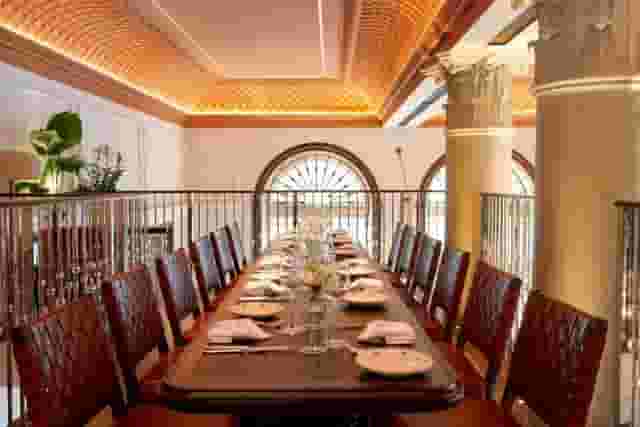
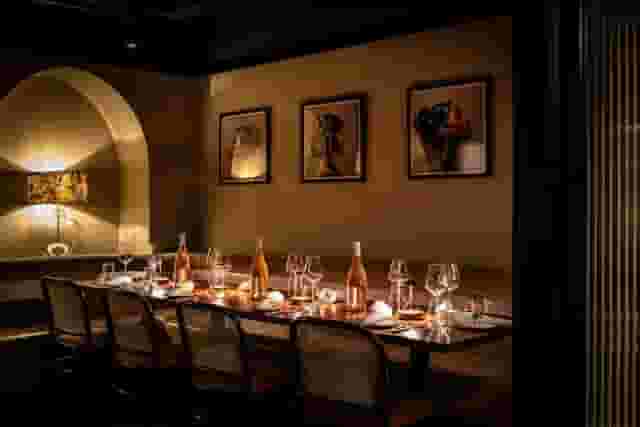
For small leadership gatherings of under 10 guests, an intimate single table offers the best environment for focused conversation. Rooms such as the Wine room at Savoy Grill, which seats eight guests, keep every attendee within easy speaking distance without competing against background restaurant chatter. When numbers rise towards 12 to 16 guests, a classic boardroom configuration remains practical. Spaces like the Supporters' House Private Dining Room at The National Gallery for 12 guests or the Private room at The River Restaurant by Gordon Ramsay for 16 guests allow a single speaker to address the room without raising their voice.
Once your guest list climbs past 20 diners, a single long table can become fractured. Guests at opposite ends can no longer hear each other, and natural sub-conversations take over. For groups between 20 and 40, you face a strategic choice between an elongated banqueting table and multiple round tables. The Combined Room at The Delaunay, which seats 24 guests, provides an orderly formal setting that maintains a cohesive atmosphere for corporate entertaining. For slightly larger delegations, the Nelson room at The Clermont Charing Cross accommodates 36 guests for dining, offering space for pre-dinner drinks before moving to the tables.
For major corporate banquets, year-end celebrations or multi-team dinners exceeding 100 people, standard private dining rooms give way to dedicated institutional dining halls or complete restaurant buyouts. The Great Room at RSA House (The Royal Society of Arts) can host 140 guests for seated dining, while the Egyptian Room at 60 Great Queen Street seats 150 guests with space for staging. Where an exclusive culinary takeover is preferred over an assembly room, spaces like the Whole Restaurant at Spring Restaurant provide reception space for 200 guests before seated service. To explore options across the wider capital with similar standards of luxury, our guide to how planners taste the luxury with these top private dining rooms provides useful context.
| Dining group size | Typical layout | Room style | Core planning priority |
|---|---|---|---|
| 6 to 12 guests | Single boardroom table | Dedicated small private room | Absolute privacy and low background noise |
| 14 to 24 guests | Long banqueting table | Large private dining room | Sightlines across the table and shared service timing |
| 25 to 50 guests | Multiple round tables | Hotel suite or combined restaurant room | Reception space for pre-dinner arrival |
| 50 to 150+ guests | Multiple rounds with stage | Institutional hall or exclusive restaurant hire | Audio visual support, speech staging and cloakroom flow |
Budgeting and understanding private dining costs
Corporate private dining in Covent Garden operates on two primary commercial models: minimum food and beverage spends, or fixed per-person dining packages. Understanding which model a venue uses determines how much flexibility you have with menu choices and attendance drops.
Based on seven quotes from the venues on this page, private dining in Covent Garden is typically £228 to £300 per head, assuming a guest count of about 60 guests. This estimate reflects what venues in this district have charged for comparable corporate dining events. Towards the lower end of that range, spend usually covers a three-course set menu, a welcoming glass of sparkling wine and half a bottle of house wine per person. Towards the £300 end of the range, packages often incorporate multi-course fine dining menus, premium wine allocations, mineral water, coffee and petit fours. To budget accurately for your own group, venue booking platform Hire Space generates an instant, data-backed cost estimate based on actual booking figures from past dinners, supported by a team of real people who take responsibility for the final outcome. If a chosen room sits outside your price range, the team can also suggest comparable Covent Garden spaces that meet your brief for less.
Minimum spend versus set menu packages
Most restaurant private dining rooms in the neighbourhood prefer a minimum spend agreement. The venue guarantees the exclusive use of the room provided your total spend on food, wine and drinks reaches an agreed threshold. If your group fails to spend that amount, the difference is charged as a room hire fee.
Minimum spends work in your favour when you host high-value clients who appreciate fine vintage wines, aperitifs and upgraded menus, because every pound spent on consumption offsets the venue cost. Conversely, if your guest list is unpredictable, minimum spends introduce financial exposure. If five guests cancel on the morning of the dinner, you still owe the full contracted minimum spend.
Fixed per-person packages, common in hotel suites and historic livery halls, charge a set rate for each attendee. While these packages simplify internal accounting, watch out for minimum headcount clauses. Many venues stipulate that you must pay for a baseline of 15 or 20 attendees even if fewer attend. Hire Space 360 is enterprise venue and hotel procurement for companies spending £1m or more a year on meetings and events: a managed meetings and events programme, the kind procurement teams call strategic meetings management. The programme consolidates every dining room, event space and overnight stay into a single supplier contract, ensuring bookings comply with internal event policy. It replaces individual venue bills with consolidated invoicing, giving finance and procurement teams real-time spend reporting and a clear audit trail across all departments, as explained in how Hire Space 360 works for procurement.
The anatomy of the final invoice
A common pitfall for corporate event planners is comparing room proposals on food and wine prices alone. Additional line items frequently shift the balance of the total spend:
- Service charge: Central London venues add a discretionary service charge between 12.5% and 15% to all food and beverage spend. Ensure your internal budget accounts for this automatically.
- Cloakroom and staffing fees: While standard private rooms absorb staffing into their minimum spends, independent halls or historic institutions may charge supplemental fees for security, dedicated cloakroom staff and late-night front-of-house teams.
- Audio visual equipment: While basic Wi-Fi is usually standard, microphones, display screens and dedicated sound systems are rarely included in basic room hire.
- Menu supplements: Set menus frequently carry surcharges for luxury ingredients like beef fillet, artisanal cheeses or specialist seafood courses.
| Invoice line item | Standard structure | What to check before contract signing |
|---|---|---|
| Menu charge | £85 to £160 per person | Deadlines for final dietary submissions and choices |
| Wine and beverages | Consumption or package (£50 to £120 per person) | Corkage allowances and post-event bottle billing rules |
| Service charge | 12.5% to 15% on total consumption | Whether it applies to room hire or only catering |
| Room hire supplement | Waived on minimum spend or £500 to £2,500 flat | Penalty clauses if beverage minimum is not reached |
Ensuring acoustic privacy and business discretion
When an organisation hosts private dining, confidentiality is often as important as the meal itself. Sensitive quarterly results, client negotiations and personnel changes cannot be discussed over a dinner table if the room leaks sound or if waitstaff constantly circulate without warning.
Many central venues advertise private dining, but the architectural reality varies significantly. Some spaces are merely curtained alcoves or mezzanine sections overlooking a loud, ground-floor brasserie. While these areas look festive, sound travels freely upward from the bar. For business dinners where speeches, toasts or sensitive commercial updates will occur, you must insist on a fully enclosed room with solid walls, a closing door and limited sound transfer from adjacent kitchens.
Beyond physical partitions, operational flow dictates privacy. Confirm in advance whether the room has dedicated staff assigned exclusively to your party, or whether waiters will share duties between your room and the main public floor. A dedicated team allows you to manage the timing of food service around presentations. You can instruct the head waiter to pause service completely while your chief executive gives a ten-minute address, then resume service immediately after.
Verify the pathway to the restrooms. In high-traffic restaurant venues, guests in private rooms often have to walk through the crowded main dining room or share general facilities. High-end private dining suites often feature private cloakrooms and dedicated restrooms immediately adjacent to the room, keeping your guests insulated from the general public throughout the night.
Technology requirements for private speeches and presentations
Business dining frequently doubles as a communications forum. Whether you require a short five-minute welcome speech or a full digital presentation between courses, verify the room's technical capabilities long before the event date.
Many private dining rooms in Covent Garden offer basic event technology such as Wi-Fi, screens, projectors or built-in audio visual systems, but the provision varies between venues. Hotel private rooms and institutional spaces tend to be better equipped than standalone boutique restaurants.
If your evening includes formal remarks, review these technical points during your initial enquiry:
- Display visibility: If you intend to show slides or video, confirm whether the room uses an integrated wall screen, a portable television monitor or a projection surface. Check the sightlines from every seat. A long banqueting table often obstructs the view for guests seated near the screen.
- Audio amplification: In rooms seating more than 20 guests, background acoustics, cutlery and glassware noise can drown out an unamplified speaker. Ask the venue whether microphone support is permitted, what type of wireless hand-held or lapel units are available and whether the room has an independent sound system.
- Power access and cabling: Confirm where power sockets sit relative to the presenter's position. Check whether the venue supplies modern video connectors such as HDMI and USB-C adapters, or if your team must provide their own presentation hardware.
- Technical support: Ask if an on-site technician is on standby to assist with initial setup and troubleshooting, or if your host is expected to manage the connections independently.
Heritage, atmosphere and menu architecture
Covent Garden has private dining rooms in historic and Grade II-listed buildings, as well as restaurants with long-established links to the area's rich theatre, market and dining heritage. When organising an event for international visitors or clients you want to impress, the architectural character of the room sets the emotional tone of the evening. Organisers looking for historically significant settings often consult our overview of how to dine through time with these private dining venues to find properties with authentic period features.
When booking a heritage dining space, ask whether original architectural features, listed interiors or documented building histories can be incorporated into the experience. Spaces with vaulted ceilings, mahogany panelling or classical portraits create an immediate sense of gravitas that modern minimalist dining rooms cannot match. However, listed buildings can also introduce operational restrictions, such as limits on external branding, banner stands, live music volume or portable cooking equipment.
Designing a corporate dining menu
The structure of your menu determines how smoothly the evening proceeds. For corporate groups of 12 or more, venues almost universally require a set menu or a reduced choice menu selected in advance.
When coordinating the menu with your venue chef, structure it to minimise disruption:
- Pre-orders versus set menus: For groups between 12 and 30, collecting individual guest pre-orders two weeks prior ensures that attendees receive their preferred dish while avoiding lengthy ordering delays at the table. For groups over 30, a single set menu with dedicated vegetarian, vegan and allergen-free alternatives is the most effective way to keep the service running to schedule.
- Wine pairings: Pre-selecting wines with the venue sommelier avoids awkward menu consultations and price discussions in front of guests. Allocate roughly half a bottle of wine per person for a standard dinner, split between white and red, with sparkling wine reserved for arrival drinks.
- Dietary management: Demand for vegan, gluten-free and dairy-free options is standard across corporate groups. Ensure the kitchen can provide equivalent alternatives that match the visual standard of the main menu, rather than makeshift substitutions.
Planners seeking additional central London ideas can also explore our curation of top 7 central London private dining venues for alternative regional room layouts and menu styles.
Timings, transport and guest logistics
The logistical rhythm of Covent Garden makes it one of the most accessible dining hubs in Central London, but its pedestrianised core requires deliberate planning for guest arrivals and departures.
Structuring the evening's schedule
A standard business dinner runs across three to four hours. Building realistic buffers into your schedule prevents the kitchen from falling behind or rushing your guests through dessert.
- 18:30 to 19:15: Arrival and welcome drinks. Allow at least 45 minutes for guests to arrive, check coats and enjoy a drink. Covent Garden traffic and West End congestion frequently delay attendees travelling across town.
- 19:15 to 19:30: Seating guests and bread service. Getting 20 to 40 corporate guests seated and settled always takes longer than anticipated.
- 19:30 to 20:15: Starters and primary wine service.
- 20:15 to 21:00: Main course service and initial clearing.
- 21:00 to 21:20: Speeches or formal remarks. Schedule any company presentations immediately after the main plates are cleared, before dessert is served. Guests are attentive, wine glasses are full and waiting staff can step out of the room completely.
- 21:20 to 22:00: Dessert, cheese courses, coffee and petit fours.
- 22:00 to 23:00: Informal networking, digestifs and guest departures.
Transport connections and vehicle access
Covent Garden Underground station sits on the Piccadilly line, but its lift-only exit creates heavy foot traffic during peak evening hours. Advise guests that Leicester Square on the Northern and Piccadilly lines, Holborn on the Central and Piccadilly lines, and Charing Cross on the Northern and Bakerloo lines, as well as National Rail, are all within a five to ten minute walk.
For guests arriving by taxi or executive car, vehicle drop-offs directly outside venues within the central Covent Garden Piazza are heavily restricted. Provide your attendees with clear drop-off points along the Strand, Great Queen Street or St Martin's Lane, depending on which edge of the neighbourhood your dining venue occupies. Checking these practical transport details beforehand ensures your dinner begins smoothly, comfortably and on time.
What our customers say
Inspiration and planning guides

Beyond the Bowl: The Ultimate Bowl Food Recipes To Wow Your Guests
In the quest for the perfect party or private dining menu? One that combines convenience with style? Look no further than the versatile bowl food!

5 Catering Suppliers To Ensure Your Food is Glorious
Here's our curated list of catering suppliers guaranteed to transform your event into an extraordinary feast!

Unique Venue of the Month: The Attendant
If we said our Unique Venue of the Month for March was a restaurant inside a public toilet, you would probably start to think we've (finally) lost it here at Hire Space. Well...our Unique Venue of the Month is a restaurant inside a public toilet. But it's not what it seems. Hear us out. The Attendant [https://hirespace.com/Spaces/London/8941/Attendant/Whole-Venue/Events] was originally a Victorian public gents' bathroom in Fitzrovia, built in 1890. It was mothballed and made spick-and-span in
One supplier. Every venue. Full visibility on what you spend.
Multiple venues and events. One agreement.