47 Conference in venues in South West London
























No venues match these filters
Try widening your capacity, luxury level or event type.
Explore top conference venues in South West London suitable for 200 attendees.
No venues match these filters
Try widening your capacity, luxury level or event type.
For business events that need human judgement, talk to our team. Free for 100 person+ events organised by businesses.











Tell us what you need. Our deep research finds any venue, whether it's in our marketplace or not. No one else does this.
When we started seeing a 40% uptick in enquiries for South West London conference venues over the past two years, it wasn't just coincidence – it's become the strategic choice for savvy event planners hosting 200-person conferences. The numbers tell a compelling story: you're looking at journey times of just 15 minutes from Clapham Junction to Waterloo, putting your delegates within easy reach of the capital's business heart, whilst offering significantly better value than Central London alternatives.
Here's what makes South West London genuinely different for larger conferences: Clapham Junction alone handles over 100 million passengers annually, making it one of the busiest transport hubs in Europe. For your 200 delegates, this translates to seamless arrivals from across the South East, with Victoria Station providing that crucial 30-minute link to Heathrow via the Elizabeth Line. We've seen corporate clients consistently choose venues like those in Battersea and Richmond precisely because their attendees can actually get there without the Central London transport chaos.
Let's talk real numbers. Day delegate rates in South West London typically range from £50-£65 for quality venues, compared to £75+ in Central London. For a 200-person conference, that's a potential saving of £5,000-£10,000 on venue costs alone. The upcoming Battersea Power Station development is adding premium conference spaces to the mix, but current venues like those in Fulham and Wandsworth offer that sweet spot of professional facilities without the premium postcodes.
The 180-250 m² you need for 200 delegates in theatre-style seating is far easier to find here, often with the bonus of outdoor terraces and parking – luxuries that Central London simply can't match. Tech firms and financial services are increasingly choosing South West London for this very reason: proper space for networking, breakout areas that don't feel cramped, and venues that can handle the hybrid event technology that's become essential.
Your next step? Start your search in areas like Putney or Kingston upon Thames, where you'll find venues that understand the specific needs of 200-person conferences without the Central London premium.
After reviewing hundreds of conference venues across South West London, we've learned that the difference between a smooth 200-person event and a technical nightmare often comes down to five non-negotiable requirements. Miss any of these, and you'll be dealing with frustrated delegates, failed presentations, and a very unhappy client.
Your venue absolutely must have 63 amps, 3-phase power supply as a minimum. We've seen too many events where organisers assumed standard domestic power would suffice, only to have projectors cutting out mid-presentation when the catering equipment kicked in. For 200 delegates, you're looking at simultaneous demands from AV systems, lighting rigs, laptop charging stations, and catering equipment. Venues in South Kensington and Chelsea typically have this sorted, but always verify with a site visit.
Here's where many venues fall short: 100 Mbps symmetrical bandwidth minimum with capacity for 200+ concurrent devices. Standard business broadband simply won't cope when your delegates are simultaneously streaming, downloading presentations, and video calling colleagues. The best venues we work with offer 1 Gbps wired connections with Wi-Fi 6 capability. Test this during peak hours – what works at 10am might collapse at 2pm when the building's fully occupied.
A room full of 200 people generates serious heat – around 20kW of thermal load. Your venue needs HVAC systems capable of maintaining 20-22°C regardless of outside temperature or occupancy. This isn't just about delegate comfort; overheating kills AV equipment and makes presentations unwatchable. Venues with 3.5-4 meter ceiling heights handle this better, giving you proper air circulation and space for lighting rigs.
For 200 people, you need line-array speaker systems for even sound coverage, not just a couple of speakers at the front. Wireless microphone systems with multiple channels, high-lumen projectors (minimum 5,000 lumens), and dedicated AV control rooms are essential. The venues that impress us most have built-in rigging points and sound-absorbing treatments – details that separate professional spaces from converted function rooms.
Theatre-style seating for 200 requires 180-250 m² minimum, but that's just the start. You need additional space for registration, networking, catering, and breakout areas. Factor in 10-15 m² secure storage for materials and equipment. The smartest planners we know always visit venues in Wimbledon or Twickenham with a tape measure – room layouts on paper rarely match reality.
Before you commit to any venue, insist on a technical site visit during peak hours. Test the Wi-Fi, check the power supply documentation, and verify the HVAC can handle your numbers. It's the difference between a conference that runs like clockwork and one that becomes a cautionary tale.
The beauty of South West London's conference venue scene lies in its diversity – each area offers distinct advantages for your 200-person event, and knowing these nuances can save you both money and headaches. We've mapped out the key areas based on hundreds of venue visits, and the differences are more significant than you might expect.
Battersea's transformation has been remarkable, particularly with the Power Station development adding premium conference spaces throughout 2024. What makes this area brilliant for 200-person conferences is the combination of cutting-edge venues and excellent transport links. The new venues here typically offer those crucial 250 m² spaces with 4-meter ceilings and state-of-the-art AV infrastructure. Day delegate rates hover around £65-£75, positioning it as premium but not quite Central London pricing. The tech firms we work with consistently choose Battersea venues for their hybrid event capabilities and impressive networking spaces.
Here's where you'll find genuine value for larger conferences. Richmond offers that perfect blend of accessibility and cost-effectiveness, with venues typically charging £50-£60 day delegate rates. The area's strength lies in venues with proper parking facilities – crucial when you're expecting 200 delegates who might drive rather than navigate London's transport system. Richmond conference venues often feature those outdoor terrace spaces that work brilliantly for networking breaks, whilst Twickenham venues leverage their sporting heritage to offer unique spaces with excellent catering facilities.
If budget allows, this is where you'll find London's most impressive conference venues for 200 people. We're talking about spaces that regularly host international corporate events, with day delegate rates reaching £80-£100. The venues here understand the technical demands of large conferences – expect 1 Gbps internet, professional lighting grids, and dedicated AV support teams. Chelsea's unique conference venues often feature period architecture combined with modern technology, creating memorable experiences that justify the premium pricing.
For most corporate conferences, this corridor offers the sweet spot. Venues in Fulham and Wandsworth typically provide excellent transport links, competitive pricing (£55-£65 DDR), and the space flexibility that 200-person events demand. These areas have seen significant investment in conference infrastructure, with many venues offering the hybrid event technology that's become essential.
Your venue selection strategy should start with transport analysis – map where your delegates are travelling from, then work backwards to identify the optimal area. Book site visits in at least two different areas to compare not just the venues, but the entire delegate experience from arrival to departure.
Let's cut through the marketing fluff and talk real numbers – because when you're planning a 200-person conference in South West London, understanding the true cost structure can mean the difference between staying on budget and explaining a £15,000 overspend to your finance director.
Most venues quote day delegate rates between £50-£100, but here's what they don't always mention upfront: these rates assume standard configurations and timings. For 200 delegates, you're looking at a base cost of £10,000-£20,000 just for the DDR, which typically covers room hire, basic AV, Wi-Fi, and standard catering (arrival coffee, lunch, afternoon tea). However, the moment you need extended hours, additional AV equipment, or premium catering options, those costs escalate quickly.
We've seen venues in Merton quote £55 DDR, then add £2,000 for extended AV, £1,500 for evening reception space, and £800 for additional security – suddenly your £11,000 budget becomes £15,300. Always ask for a comprehensive quote that includes everything you actually need, not just the headline DDR.
Overtime charges are the biggest budget killer. Standard venue hire typically covers 8am-6pm, but conferences rarely fit neatly into these windows. Setup from 7am? That's £200-£400 extra. Running until 8pm for networking drinks? Another £300-£500. For 200-person events, we budget an additional 15-20% on top of quoted rates for these inevitable extensions.
AV upgrades are another trap. Basic packages might include one projector and a handheld mic, but 200 people need line-array speakers, wireless lapel mics, and often multiple screens. Professional AV packages for this size event typically add £2,000-£4,000 to your bill.
Book Tuesday-Thursday for the best rates – venues in Putney and Kingston upon Thames often offer 10-15% discounts for midweek bookings. Consider venues slightly further out like Wimbledon – the transport links are excellent, but rates can be £10-£15 per delegate lower than central areas.
Negotiate package deals for multi-day events or if you're booking 6+ months ahead. The venues that impress us most are transparent about all costs upfront and willing to create bespoke packages that actually reflect your needs.
Your next step: request detailed quotes from at least three venues, specifying exact timings, AV requirements, and catering needs. Compare the total cost, not just the DDR – it's the only way to make an informed decision that won't surprise your budget later.
After witnessing countless conference disasters over the years – from venues that couldn't handle 200 people despite claiming they could, to AV systems that failed during keynote presentations – we've identified the seven mistakes that consistently trip up even experienced event planners. The good news? They're all completely avoidable if you know what to look for.
Venues love to quote maximum capacities, but "200 people" can mean vastly different things. We've visited venues claiming 200-person capacity where delegates would be sitting shoulder-to-shoulder with no room for networking or even comfortable movement. Always request detailed floor plans showing your specific layout – theatre-style seating for 200 requires genuine 180-250 m² with proper circulation space. The venues in South Kensington that consistently deliver understand this distinction.
Here's a costly oversight: booking a venue after a quiet morning visit, only to discover the Wi-Fi collapses under load and the air conditioning can't cope when the building's fully occupied. For 200-person conferences, insist on visiting during peak hours – ideally when another large event is running. Test the internet speed, check noise levels from adjacent spaces, and verify the HVAC actually maintains comfortable temperatures.
Standard venue hire might include "setup time," but 200-person conferences need serious preparation. Registration desks, AV testing, catering setup, and signage installation typically require 4-6 hours minimum. We've seen events start late because organisers assumed 2 hours would suffice. Factor breakdown time too – venues charge overtime rates that can add £500-£1,000 to your bill if you overrun.
The biggest mistake? Focusing solely on the conference room whilst ignoring how 200 people will actually arrive, register, network, and leave. Check parking capacity (most venues accommodate 20-30 cars maximum), public transport frequency during your event hours, and whether there's adequate space for registration queues. Venues in Battersea and Richmond often excel here due to better transport infrastructure.
Basic AV packages rarely suit 200-person events. That "included" system might be a single projector and handheld mic – useless for professional conferences. Specify exactly what you need: line-array speakers for even coverage, wireless lapel mics, confidence monitors, and professional lighting. Get detailed AV specifications in writing before signing contracts.
With 200 delegates, you're statistically likely to have attendees with mobility, hearing, or visual impairments. Ensure step-free access, hearing loop systems, accessible toilets, and clear signage. This isn't just good practice – it's legal requirement under the Equality Act 2010.
Quality venues for 200-person conferences book 6-12 months ahead, especially for popular Tuesday-Thursday slots. Last-minute bookings often mean compromising on location, facilities, or paying premium rates. Start your venue search at least 8 months before your event date.
Your next step: create a venue evaluation checklist covering these seven areas before you start viewing spaces. It'll save you from expensive mistakes and ensure your 200-person conference runs smoothly from start to finish.
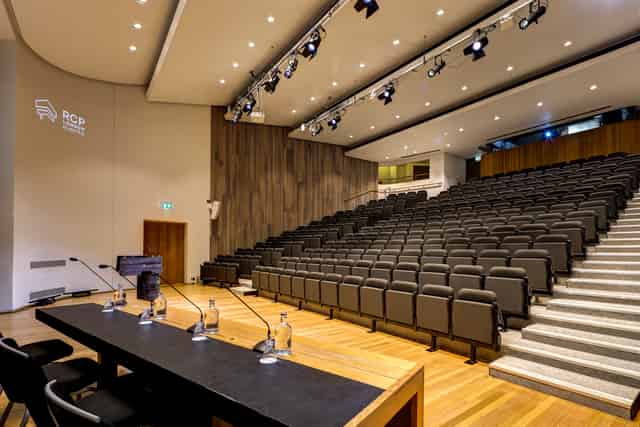
Discover 5 standout London, UK conference venues with outside space. Compare capacities, amenities and layouts for summer conferences, outdoor networking and fresh-air breakouts. Plan your next corporate event with ease.

On a blustery winter's day in January 1649, the deposed King Charles I was beheaded by the victorious rebels of the Civil War. And the bloody execution took place just outside of our Unique Venue of the Month. Not many venues can claim to be of such historical significance, but Banqueting House [https://hirespace.com/Spaces/London/42821/Banqueting-House/Main-Hall/Weddings] – the only remaining part of the Palace of Whitehall, where English monarchs used to reside – played a major part in Briti

Located in the heart of the City, Salters’ Hall combines the rich heritage of the salt trade of medieval London with contemporary surroundings. Rebuilt in 1972 by Basil Spence and now a Grade II listed building, it is a rare example of a post-war livery building and has remained largely untouched until now... Architects de Metz Forbes Knight [http://www.dmfk.co.uk/projects/load/salters-hall] (dMFK) were tasked with the project to upgrade the building whilst retaining its sense of history and al
Multiple venues and events. One agreement.


