Minimum Spend Venues in Liverpool
Find private rooms and event spaces with minimum spend terms across Liverpool, with instant pricing estimates and options to suit your team.
47 Minimum Spend in venues in Liverpool
















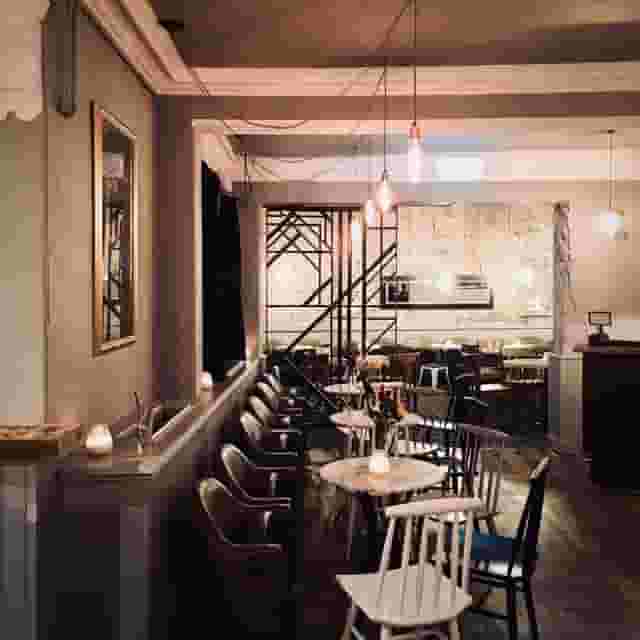
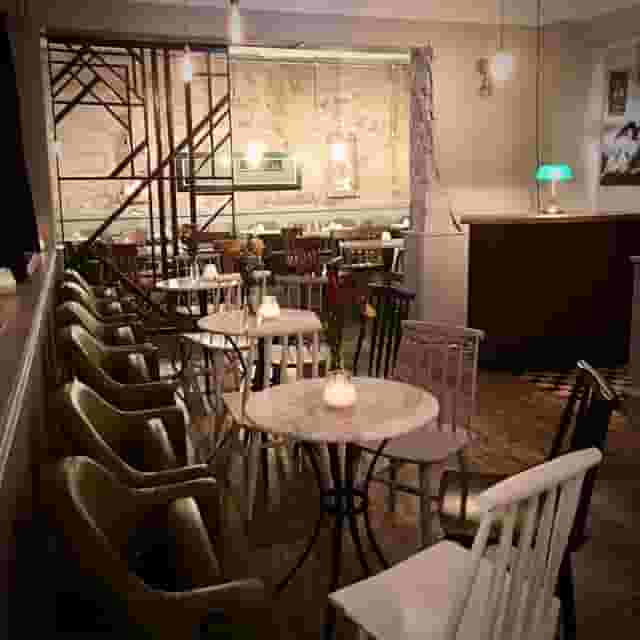
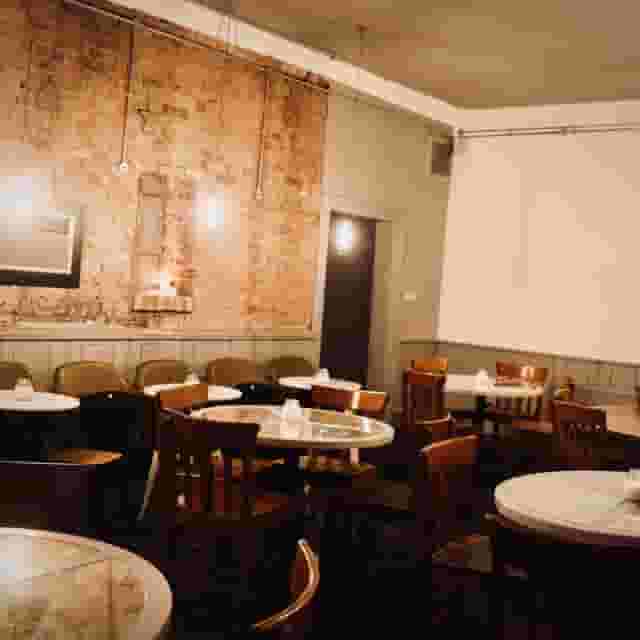




No venues match these filters
Try widening your capacity, luxury level or event type.
Don't have time to search? We'll find it for you.
For business events that need human judgement, talk to our team. Free for events of 100+ people, budgets over £10k or ongoing programmes.




Explore more venues in Liverpool
Frequently asked questions
What defines a good minimum spend venue in Liverpool?
How do I estimate a minimum spend in Liverpool?
Can I find a historic minimum spend venue in Liverpool?
What size minimum spend venue suits a Liverpool event?
Are Liverpool's minimum spend venues tech-equipped?
Other platforms search their database. We search everything.
Tell us what you need. Our deep research finds any venue, whether it's in our marketplace or not. No one else does this.
About Minimum Spend in Liverpool
How minimum spend works for corporate events in Liverpool
Booking a private venue on a minimum spend model means your company commits to spending a baseline amount across food, drinks or both, rather than paying an upfront room hire fee. For a finance team or budget holder, this structure is practical because every pound committed goes directly into hospitality for your colleagues or clients instead of paying for empty floor space.
The arrangement suits company gatherings where hospitality sits at the centre of the brief, such as client receptions, annual celebrations, team dinners and post-conference socials. Rather than handling separate invoices for venue rental, third-party catering and bar staff, you manage a single consolidated bill against an agreed financial target. Hire Space 360 is enterprise venue and hotel procurement for companies spending £1m or more a year on meetings and events: a managed meetings and events programme, the kind procurement teams call strategic meetings management. This model places every venue contract and hotel stay onto one agreement with centrally negotiated terms, keeping bookings within company event policy and replacing separate venue payments with one consolidated invoice. As detailed in how Hire Space 360 works for procurement, finance teams gain live spend tracking and audit visibility across all regional activity, backed by named event sourcing experts.
Understanding what counts towards that threshold is the first critical step in negotiating a contract. In most Liverpool venues, the minimum spend applies solely to food and beverage ordered through the house kitchen and bar. It routinely excludes discretionary service charges, which often sit between 10% and 12.5%, as well as technical equipment hire, security costs and VAT. If your company spends £4,000 on hospitality against a £4,000 minimum spend, an added service charge of 12.5% plus VAT will take your final liability well above the baseline commitment. Always confirm in writing whether quoted thresholds are gross or net of VAT and service.
Shortfalls require equal attention. If attendance drops or your guests drink less than planned, the venue still expects the agreed total. Some venues charge the balance as a direct room rental charge on the night. Others permit you to make up the difference with bottled wine to take away, or by adding premium spirits and desserts to the tab before closing. Clarifying the shortfall policy before you sign protects your budget against late dropouts or unexpected changes in company policy.
Budgeting and market rates across the city
Minimum spend levels in Liverpool fluctuate heavily based on the day of the week, the calendar season and the footprint of the space. A private room on a Tuesday evening carries a modest threshold because the venue is trading against quiet baseline footfall. That same room on a Thursday or Friday in late November or December will carry a much higher target because the operator is giving up peak public trade to host your group.
Across the wider hospitality market, typical requirements vary with format and venue style. General market guidance indicates that planners can expect a minimum spend per guest: £20 to £100 per head for standard corporate hospitality. For a mid-sized team event, market figures suggest an indicative minimum spend for 50 guests: £1,000 to £5,000 in total. These figures depend on whether you are running an informal drinks reception with sharing platters or an upscale three-course seated dinner with paired wines.
| Expense element | What is standard | What to verify before signing |
|---|---|---|
| Food and drinks | Counts directly towards the spend threshold | Check whether promotional or day-delegate menus qualify |
| Service charges | Usually added on top (typically 10% to 12.5%) | Confirm if service contributes to the minimum threshold |
| VAT | Often excluded from initial minimum spend figures | Confirm whether written thresholds are inclusive or exclusive of VAT |
| Staffing and security | Included for standard service ratios | Ask if extra door staff or late-night bar teams trigger extra fees |
| Technical equipment | Usually charged as a separate facility fee | Check if in-house screens, projectors and microphones are free |
| Unspent balance | Invoiced as a shortfall fee or room hire charge | Clarify if unspent funds can be converted into gift stock or credit |
To evaluate whether a quote represents sensible value, calculate your expected per-head consumption based on guest numbers and event duration. If an organiser books a space with a £3,000 minimum spend for 30 guests, each attendee must consume £100 of food and drink across three or four hours. Unless you plan an extensive multi-course dinner with premium wines, that per-head figure may leave you with an artificial surplus at the end of the night. Matching the threshold closely to your group size and typical drinking culture prevents forced over-ordering. To benchmark baseline numbers across the city, venue booking platform Hire Space provides instant, data-backed price estimates drawn from real corporate bookings, backed by a team of real people who help guide your choice. The platform also highlights comparable spaces with lower spend thresholds if an initial quote threatens to stretch your budget.
Choosing the right setting for your team and agenda
Liverpool offers distinct styles of private and semi-private spaces that operate on food and beverage spend. Selecting the right physical environment depends on the formality of your gathering, your presentation needs and whether the evening focuses on seated conversation or open networking.
Private dining and executive entertaining
Small corporate dinners, senior leadership off-sites and confidential client discussions require visual privacy, low ambient noise and attentive table service. High-volume bars and open restaurant mezzanines rarely provide the acoustic control needed for speeches or strategic debates.
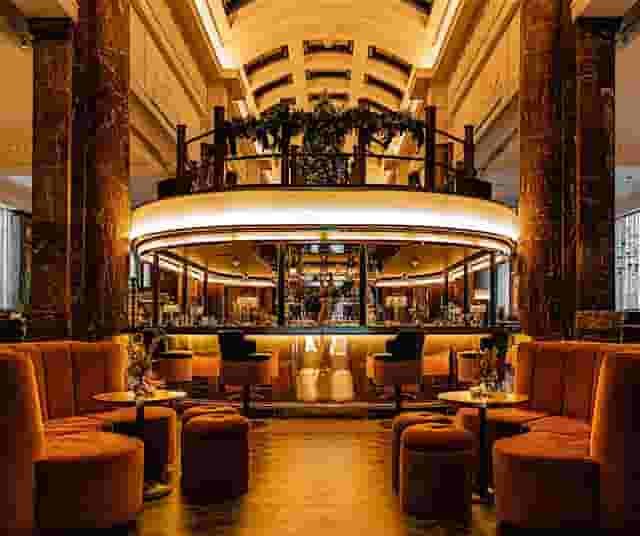
For intimate executive groups, dedicated dining rooms inside established restaurants provide full privacy without separate facility charges. The BANKERS OFFICE seats up to 9 guests for private dining in a historic former bank on Water Street, providing a quiet setting where conversations stay behind closed doors. In this format, meeting the spend commitment is straightforward through structured tasting menus and wine pairings, leaving the organiser with predictable per-head costs.
Hotel suites and central hospitality spaces
When company events draw delegates from outside the North West, booking within or near central hotels simplifies accommodation, airport connections and morning travel. Commercial hotel spaces understand corporate billing routines, dietary management and formal delivery requirements.
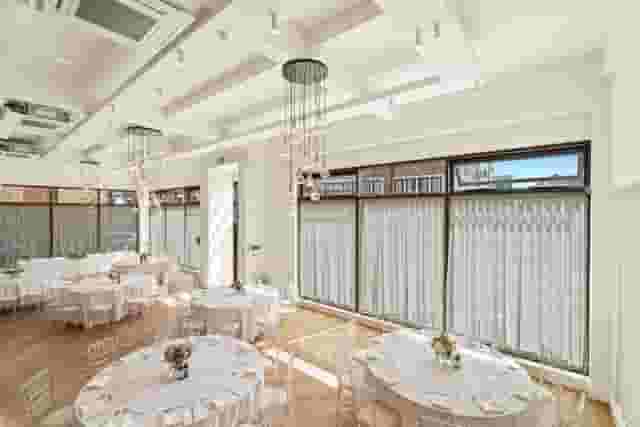
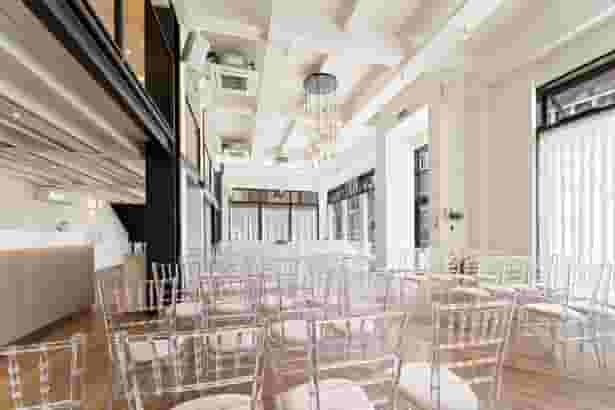
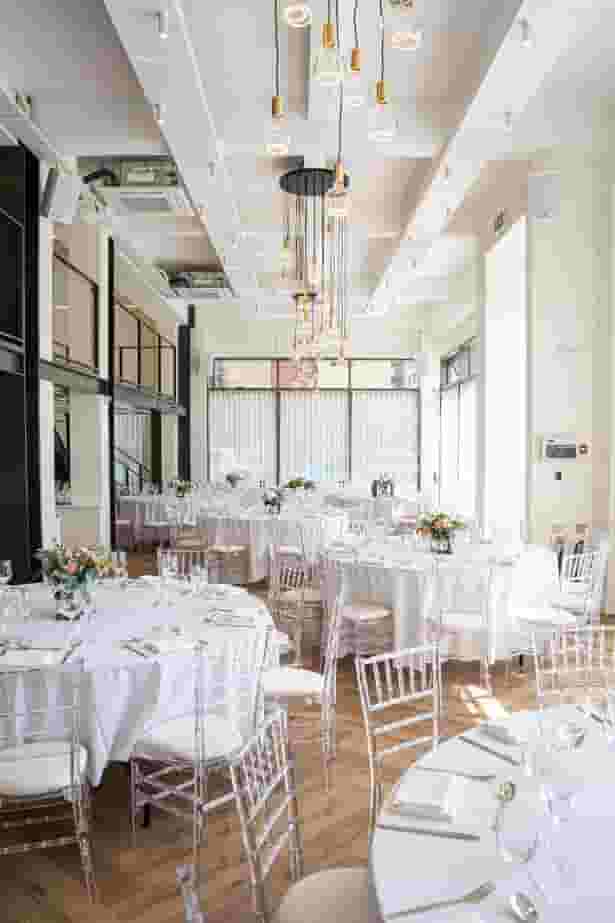
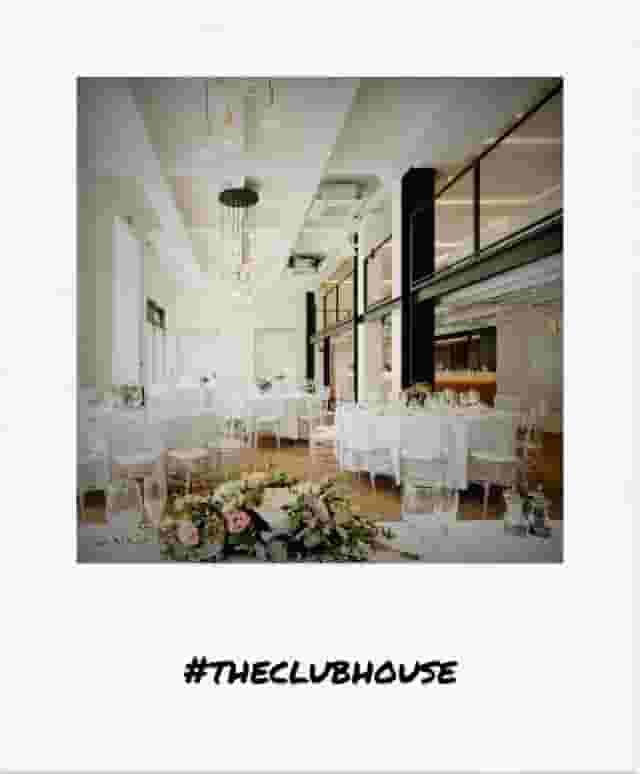
In the waterfront district, the Grace Suite accommodates up to 450 guests for a standing reception, providing modern infrastructure for company award nights and large celebrations. Further inland near creative retail districts, The clubhouse accommodates up to 200 people standing for drinks and buffet gatherings. Hotel-managed spaces provide dedicated banqueting teams who can supply detailed food allergen matrices, run audio presentations and manage phased arrivals without friction.
Heritage rooms and civic venues
Organisers planning milestone celebrations, regional networking evenings or formal galas often seek architecture with regional character. Liverpool has an exceptional stock of Grade-listed buildings, classical halls and maritime docks that accommodate private corporate functions.
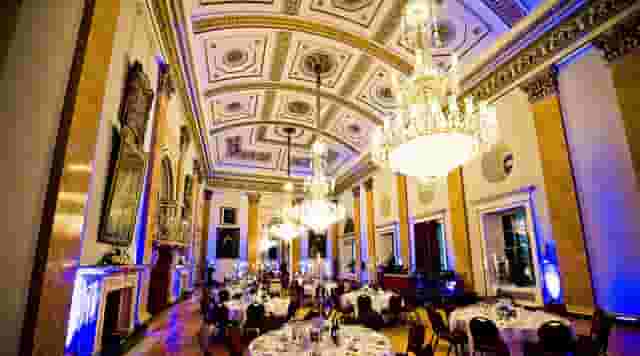
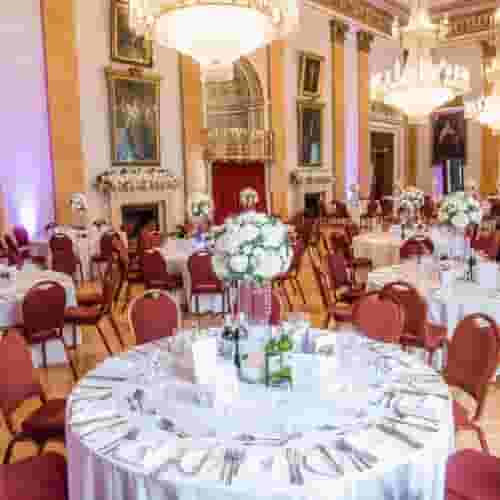
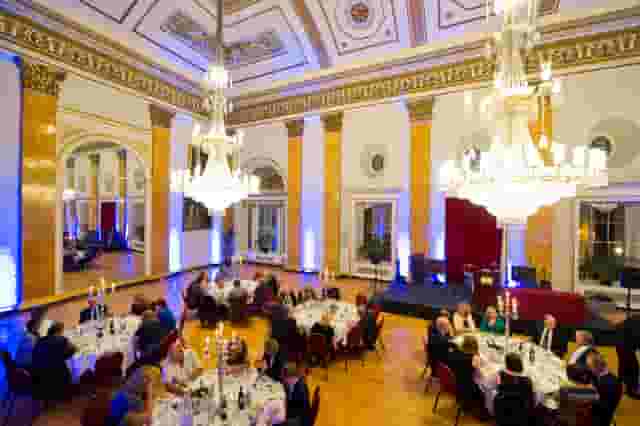
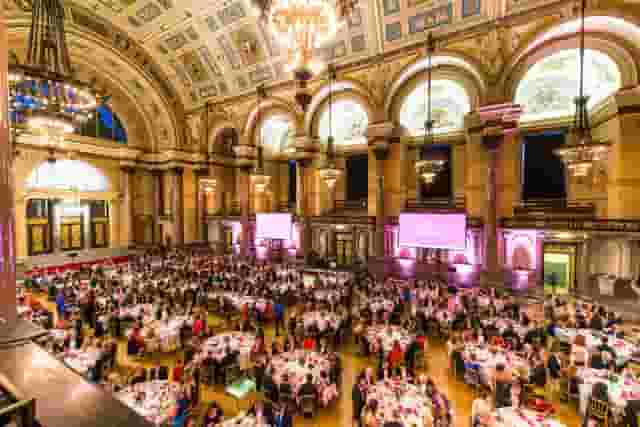
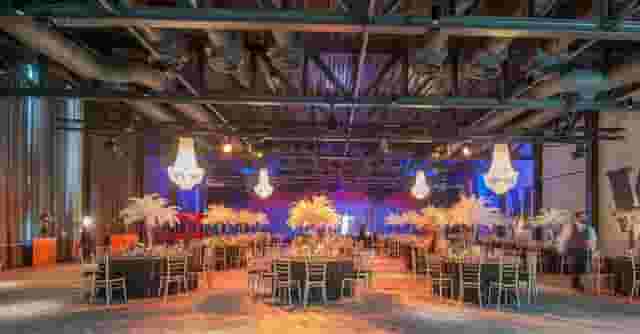
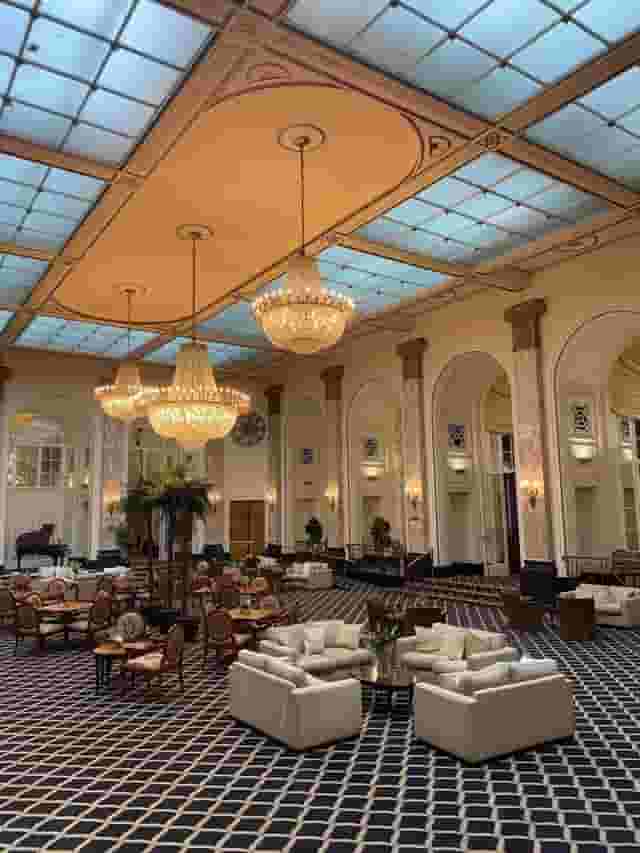
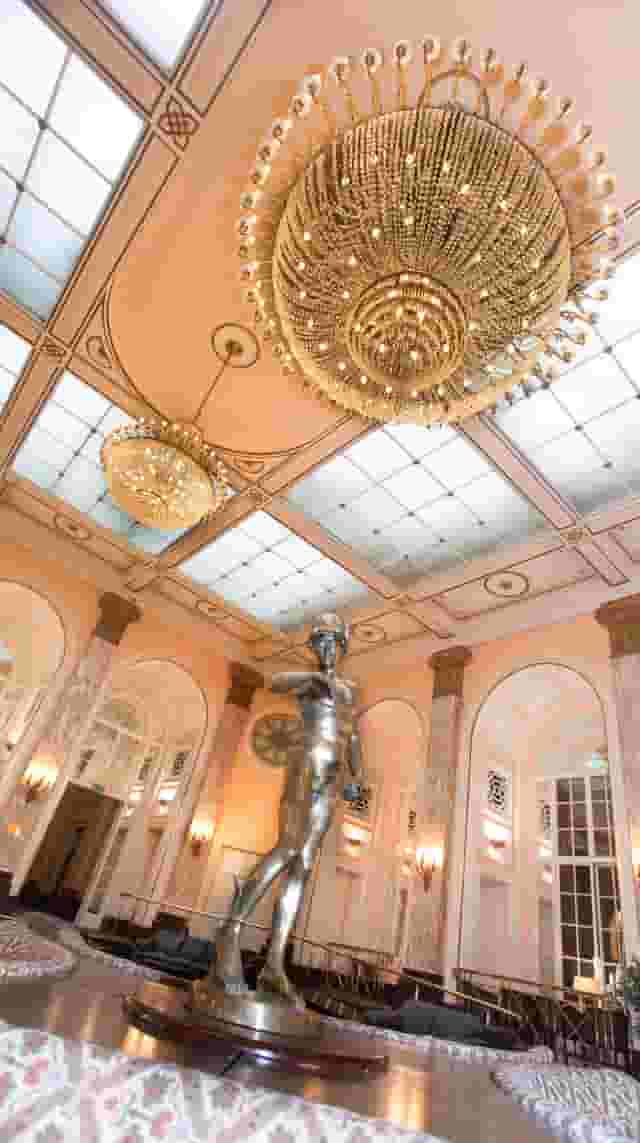
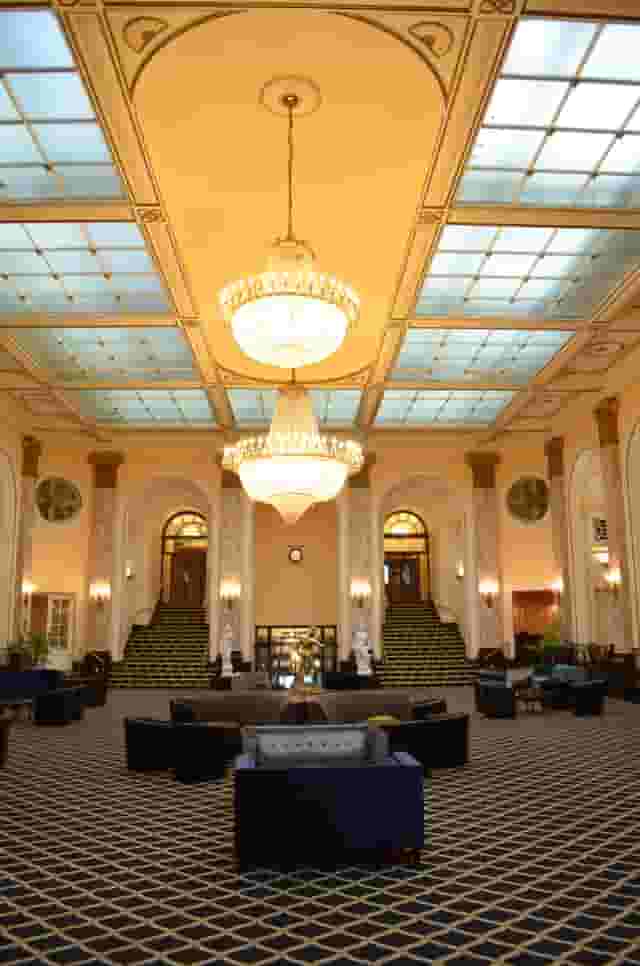
For large civic gatherings, The Main Ballroom provides space for up to 300 guests for grand receptions beneath historic crystal chandeliers. Along the Mersey, the Port of Liverpool Suite accommodates standing parties of up to 200 guests with views across the waterfront and the Three Graces. Heritage environments demand early coordination around supplier access, kitchen prep facilities and noise parameters, as architectural preservation rules can limit heavy production setups.
Converted warehouses and industrial spaces
Creative agencies, technology firms and companies hosting informal summer or winter parties often gravitate towards converted industrial spaces. These venues provide flexibility for external entertainment, brand backdrops and varied seating layouts.
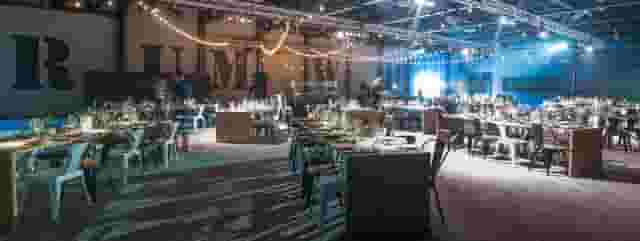
The Baltic Triangle and North Docks house notable examples of Liverpool's converted commercial infrastructure. The Event Hall offers a 10,500 square foot blank canvas space accommodating up to 560 standing guests in the Baltic Triangle. Further north along the historic docks, the Rum Warehouse provides dining capacity for up to 600 guests in a renovated 1950s dockside building. These larger footprint spaces suit substantial all-hands gatherings where you need clear separation between dining areas, presentation stages and dance floors.
Sports and cultural destinations
Hosting an evening in a location with local cultural resonance can significantly improve delegate attendance, particularly for client-facing entertainment or multi-office socials.
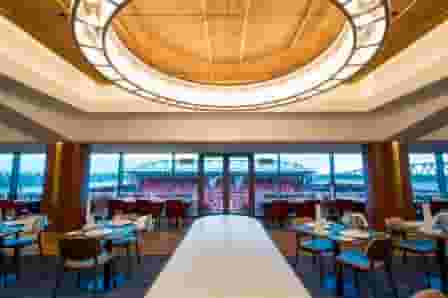
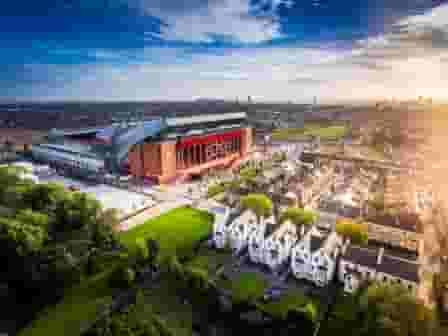
The Executive Lounge provides dining and buffet space for up to 180 guests with views over the Anfield pitch. Stadium hospitality rooms feature built-in reception desks, robust security staff, dedicated loading bays and pre-installed audiovisual setups that speed up registration and logistics for corporate organisers.
Structuring food, drinks and bar spend
The format of your catering dictates the rhythm of the evening and directly controls how quickly your event hits its financial commitment. Mismatches between your agenda and your catering plan cause bottlenecks at the bar or leave hungry guests waiting for circulating trays.
Seated service against standing receptions
Seated multi-course meals give you immediate cost certainty. Fixed-price dining menus allow you to hit your baseline through food orders alone, reducing dependence on bar consumption. This structure works best for award evenings, farewell dinners and formal team celebrations where conversation takes place around fixed tables.
Standing receptions with canapes or bowl food encourage cross-department mingling and easier movement. Canapes alone rarely satisfy guests attending straight from the office, so pairing light circulating bites with hearty bowl food or street food stations ensures adequate catering. Stations also create natural gathering points around the room, which breaks up clusters and keeps service moving steadily without long queues at a single counter.
Managing the company bar tab
An unmanaged bar tab can burn through an entire evening budget within ninety minutes, while an overly restrictive policy leaves guests frustrated. Organisers typically handle corporate bar tabs through one of four models:
- Timed open bars. The company covers all drinks for a set window, such as arrival until the end of dinner, after which the bar shifts to a card-only basis.
- Drink tokens. Each guest receives two or three tokens upon registration, exchangeable for house wine, beer or single spirits. This guarantees equitable spend across the entire team.
- Capped tabs with tiered access. The tab covers house wine, local beers and soft drinks, while spirits, cocktails and doubles must be purchased privately by guests.
- All-inclusive packages. The venue charges a fixed per-head rate for unlimited house drinks across a set four-hour duration, with the total sum credited towards the minimum spend.
To ensure your tab lasts the night, instruct the event manager in writing that staff must not pour doubles, open multiple bottles of wine prematurely or serve premium champagne without explicit approval from your named lead organiser.
Technical production, logistics and access
A successful company gathering requires reliable technical equipment for speeches, presentations and background music, alongside straightforward travel logistics for attendees travelling across the city.
Sound, screens and lighting
Never assume that a hospitality venue includes business-grade presentation tools as standard. Restaurant private rooms and late-night bars often feature background sound systems designed for curated playlists, which lack the microphone channels or auxiliary inputs required for corporate speeches.
Ask the venue operations team to confirm the following technical details before signing:
- Whether wireless handheld or lapel microphones are available, and whether they can cut over the house background music automatically.
- What connection methods exist for presentations, including whether HDMI inputs run directly to screens or require wireless casting adapters.
- Whether the space has a designated member of staff on site to manage AV issues during the evening.
- What noise limiters operate within the room, particularly in residential city-centre zones where decibel caps can trip power to DJ equipment or live bands.
Timing, access and departure logistics
City-centre venues in Liverpool benefit from strong regional transport links, with Liverpool Lime Street, Moorfields and Liverpool Central stations connecting directly to Wirral, Cheshire and Greater Manchester. When planning an event timeline, factor in how your guests will arrive and depart.
| Logistical checkpoint | Operational consideration | Action required |
|---|---|---|
| Access windows | How early your team or suppliers can enter the room | Confirm supplier access times for banners, registration and AV checks |
| Cloakroom capacity | Secure space for coats, laptop bags and umbrellas | Check if cloakroom staff are included or carry an hourly fee |
| Accessibility | Step-free routes from street level to the private room | Inspect lift access, accessible bathroom locations and door widths |
| Late licences | Curfews for bar service and live entertainment | Verify what time the bar closes and when guests must vacate |
| Transport links | Walking distances to rail stations and taxi ranks | Share taxi drop-off postcodes and nearest public car parks with guests |
For events concluding after 23:00, confirm taxi pickup procedures. Venues situated on narrow pedestrianised streets or busy nightlife corridors can make private car or taxi collections difficult at midnight. Recommending a designated pickup point on an adjacent main road helps guests leave smoothly and safely at the end of the night. Reviewing these operational details alongside your hospitality contract ensures that your Liverpool company event runs predictably from guest arrival through to the final invoice.
What our customers say
Inspiration and planning guides

How To Throw An Amazing Party (Without Paying For It)
Imagine a party, with your colleagues, your friends or your family, at the tip of The Gherkin. [https://hirespace.com/Venues/London/210/SearcysThe-Gherkin] I cannot convey just how incredible that venue is. It's a glass palace, floating between London's iconic, spiralling skyscrapers. You feel immersed in the London skyline, surrounded by a panorama of sky and steel. Here's the catch: it costs £10,500 to hire. Out of your budget? Not a problem: rather than paying yourself, you can get other pe

5 Easy DIY Decoration Ideas For Your Summer Party
Are you looking to make your summer event beautiful on a budget? These 5 ideas are simple but will guarantee to transform your event.

Hackney Town Hall: Modern Elegance Meets Art Deco Flair
Believe it or not, the London Borough of Hackney was once a wild and marshy place, the name itself likely having roots in the Old English for Haka’s Island. Now of course, Hackney is one of London’s trendiest boroughs and nowhere proves this more than the recently refurbished Hackney Town Hall [https://hirespace.com/Spaces/London/138600/Hackney-Town-Hall/Assembly-Hall/Weddings] . Hackney Town Hall combines the original elements of 1930s design with modern elegance. This gorgeous venue is perfec
One supplier. Every venue. Full visibility on what you spend.
Multiple venues and events. One agreement.