5 Seminar Rooms in venues in City Of London



No venues match these filters
Try widening your capacity, luxury level or event type.
Explore top seminar rooms in the City of London for 200 people, ideal for professional events.
No venues match these filters
Try widening your capacity, luxury level or event type.
For business events that need human judgement, talk to our team. Free for 100 person+ events organised by businesses.


Tell us what you need. Our deep research finds any venue, whether it's in our marketplace or not. No one else does this.
When you're planning a seminar for 200 delegates, the City of London isn't just a prestigious address – it's a strategic advantage that can transform your event from ordinary to exceptional. Having organised countless corporate seminars in the Square Mile, I can tell you that the unique combination of world-class infrastructure and unparalleled networking opportunities makes this location absolutely unbeatable for large-scale corporate events.
The numbers speak for themselves: you'll need approximately 200-250 m² of space for comfortable theatre-style seating, and the City's premium seminar rooms in City of London are specifically designed to handle this scale. What sets these venues apart is their proximity to major financial institutions – Goldman Sachs, Deloitte, and the Bank of England are all within walking distance, making it incredibly easy for senior executives to attend without disrupting their schedules.
Here's something most event planners overlook: Liverpool Street and Bank stations handle over 100 million passengers annually, meaning your delegates can reach you from anywhere in London within 30 minutes. The Elizabeth Line connection means Heathrow is just 30 minutes away – crucial when you're hosting international speakers or delegates flying in for the day.
But here's the insider tip: book venues within a 5-minute walk of these transport hubs. I've seen too many events suffer from late arrivals because delegates underestimated the walk from Bank to venues near the Thames. The top sustainable meeting venues in London often cluster around these transport links, making them both practical and environmentally conscious choices.
The City's seminar rooms are built for serious business. Most venues offer 3-phase power supply and 100 Mbps dedicated internet – essential when you're streaming presentations or running interactive polling with 200 participants. The acoustic treatment in these spaces typically achieves 0.6-0.8 NRC ratings, meaning your speakers won't struggle with echo or background noise from the bustling streets outside.
What really makes the difference is the calibre of your audience. City-based seminars consistently attract C-suite executives and senior decision-makers who might skip similar events in other locations. The prestige factor isn't just about impressing clients – it's about ensuring the right people actually show up and engage with your content.
Your next step? Start by identifying venues with flexible layouts that can accommodate both your main seminar and breakout sessions, ensuring you maximise the networking potential that makes City events so valuable.
The biggest mistake I see event planners make with 200-person seminars is underestimating the complexity that comes with scale. What works for a 50-person workshop simply doesn't translate, and nowhere is this more critical than in the City of London where expectations run sky-high and there's zero tolerance for operational hiccups.
For venues accommodating 200 delegates, you're looking at booking windows that stretch far beyond typical meeting rooms. The premium City venues – particularly those near Liverpool Street and Bank – get snapped up quickly during peak corporate seasons (April-June and September-November). I've seen companies pay 20-30% premiums because they left booking until 8 weeks out.
Your licensing requirements become significantly more complex at this scale too. You'll need Temporary Event Notices (TENs) submitted at least 10 days prior, and if you're planning evening networking with alcohol service, factor in additional licensing discussions. The City of London Corporation is generally supportive, but their processes take time.
Here's where many planners get caught out: a 200-person seminar requires 3-phase power supply and dedicated 100 Mbps internet as standard. Most smaller venues simply can't handle the simultaneous demands of live streaming, delegate registration systems, and interactive polling without significant infrastructure upgrades.
Your AV requirements jump dramatically too. You'll need 10,000+ lumens projectors, 8-10 speaker PA systems, and wireless microphone capabilities that can handle multiple speakers without interference. The inspiring workshop venues that work beautifully for smaller groups often lack the technical infrastructure for this scale.
Medium-scale City venues (100-300 capacity) typically run £4,000-£8,000 per day for room hire alone. Add professional AV (£2,000-£4,000), staffing requirements (1 manager, 2-3 AV techs, 2-3 stewards), catering for 200 at £35-£50 per head, and you're looking at substantial investment.
The hidden costs that catch people out include overtime charges (common when setup runs long), additional security for evening events, and parking arrangements for VIP speakers. NCP London Barbican charges £12/hour, but pre-booked daily rates around £40 offer better value for key stakeholders.
Your immediate next step should be creating a detailed timeline working backwards from your event date, ensuring you've allocated sufficient time for venue visits, technical rehearsals, and the inevitable last-minute adjustments that come with events of this magnitude.
Let me be brutally honest about what you're really looking at financially – because I've seen too many event budgets blow up when planners underestimate the true cost of quality City venues for 200 delegates.
The day delegate rates in Central London range from £55 for basic venues up to £120+ for super luxury spaces, but here's what those figures actually mean in practice. For a full-day seminar with morning coffee, lunch, and afternoon refreshments, you're realistically looking at £65-£85 per person at most City venues. Multiply that by 200 delegates and you're already at £13,000-£17,000 before you've even considered room hire, AV, or additional services.
Forget the 8-12 week timelines you'll see quoted elsewhere. For 200-person capacity in prime City locations, I recommend starting your venue search 16-20 weeks ahead. The seminar rooms in City of London that can genuinely handle this scale without compromising on quality are limited, and they book up fast during corporate peak seasons.
Here's the timeline that's served me well: 16 weeks out for initial venue shortlisting, 14 weeks for site visits and technical discussions, 12 weeks for contract signing with 25-50% deposit, and 8 weeks for final headcount confirmations. This gives you breathing room for the inevitable changes that come with large-scale corporate events.
The venue hire might be £6,000-£8,000 per day, but it's the extras that catch you out. Professional AV for 200 people runs £3,000-£5,000, and that's assuming straightforward requirements. Add live streaming capabilities or hybrid event technology, and you're looking at another £2,000-£3,000.
Staffing becomes a significant line item too – you'll need dedicated event management, technical support, and registration staff. Budget £1,500-£2,500 for professional staffing, because trying to manage 200 delegates with inadequate support is a recipe for disaster.
| Cost Component | Budget Range | Notes |
|---|---|---|
| Venue Hire | £6,000-£8,000 | Peak season +20% |
| Catering (DDR) | £13,000-£17,000 | £65-85 per person |
| Professional AV | £3,000-£5,000 | Basic to advanced |
| Staffing | £1,500-£2,500 | Event day support |
| Total Base Cost | £23,500-£32,500 | Excluding extras |
Tuesday-Wednesday bookings often secure 10-15% discounts, and January-February can offer significant savings if your event timing is flexible. Many corporate venues loved by London PAs offer package deals that bundle room hire, basic AV, and catering – these can provide better value than itemised pricing.
Your next move should be requesting detailed quotes from at least three venues, ensuring you're comparing like-for-like packages and understanding exactly what's included in their day delegate rates.
The difference between a seminar that flows seamlessly and one that becomes a logistical nightmare often comes down to getting the technical fundamentals right from day one. With 200 delegates, you're operating at a scale where small oversights become major disruptions, and I've learned this lesson the hard way more times than I care to admit.
Your venue needs a minimum 200-250 m² for comfortable theatre-style seating – that's 0.5-0.6 m² per person, which is the absolute minimum for safety compliance. But here's what the square footage doesn't tell you: ceiling height becomes critical at this scale. You need 2.7-3.0 metres minimum for proper AV rigging and lighting, otherwise your back rows won't see anything clearly.
I always insist on venues with flexible layout options because your networking breaks are just as important as the main presentations. Theatre style accommodates all 200, but you'll want space that can quickly reconfigure to cabaret rounds (120-140 capacity) for interactive sessions. The quirky London meeting rooms that work brilliantly for smaller groups simply can't handle this kind of layout flexibility.
Here's where most planners underestimate requirements: you need 10,000+ lumens projectors as standard, not the 3,000-lumen units that work fine for 50 people. Sound becomes exponentially more complex too – an 8-10 speaker PA system with wireless microphone capabilities that won't interfere when multiple speakers are presenting.
Your internet requirements jump to 100 Mbps dedicated bandwidth minimum. I've seen seminars grind to a halt when registration systems, live streaming, and delegate Wi-Fi all compete for insufficient bandwidth. The most inspiring meeting rooms in London often have stunning aesthetics but lack the robust technical infrastructure this scale demands.
Two hundred people generate serious heat – you need climate control systems capable of maintaining 20-22°C with 40-60% humidity and air exchange rates of 8-10 per hour. Poor ventilation becomes obvious quickly with this many delegates, and there's nothing worse than watching your audience lose focus because they're uncomfortable.
Storage becomes crucial too – budget for 10-20 m² of secure space for registration materials, delegate bags, and AV equipment. Most venues underestimate this requirement, leaving you scrambling for solutions on event day.
Your next step should be conducting a detailed technical site visit, bringing your AV supplier along to identify any infrastructure limitations before you commit to the venue contract.
After organising dozens of large-scale seminars in the City, I've developed a mental checklist of the small details that separate truly successful events from those that merely get by. The difference often lies not in the big decisions – venue choice, speaker lineup – but in the nuanced understanding of how 200-person events actually behave in practice.
Your biggest bottleneck will always be arrival management between 8:30-9:15 AM. With 200 delegates, you need minimum three registration stations with dedicated staff, plus a separate VIP check-in area for speakers and key stakeholders. I learned this after watching a beautifully planned seminar nearly derail because 180 people tried to collect badges from two overwhelmed volunteers.
Pre-event communication becomes absolutely critical at this scale. Send detailed joining instructions 48 hours ahead, including specific transport routes, parking alternatives, and mobile contact numbers. The ways to make your meetings more memorable often start with eliminating the stress of simply getting there.
Here's what the venue won't tell you: 200 people can't all access refreshments simultaneously. Stagger your breaks by announcing different sections to move first, or you'll create 15-minute queues that eat into your programme time. I always negotiate for 20% extra refreshment stations beyond the venue's standard offering – it's worth the additional £300-500 to maintain your schedule.
For lunch, avoid buffet-style service entirely. Pre-ordered options or stationed food service keeps people moving and prevents the inevitable bottlenecks. Factor in dietary requirements for at least 15-20% of delegates – the City's international business community means diverse needs.
Your AV will fail. Not might fail – will fail. I insist on backup projectors, spare wireless microphones, and redundant internet connections as standard. The additional £800-1,200 for comprehensive backup systems has saved me countless times, particularly in historic meeting rooms in London where older infrastructure can be unpredictable.
Test everything 24 hours before, not on the morning. Run through your entire presentation sequence, check microphone handovers, and verify that your streaming setup actually works with the venue's network configuration.
The real value of City seminars lies in the networking opportunities, but 200 people won't naturally mix without structure. Create designated networking zones with clear signage, and consider using the new London venues that offer multiple interconnected spaces for natural conversation flow.
Your immediate next step should be creating a detailed run-of-show document that accounts for these operational realities, sharing it with your venue coordinator at least two weeks before your event date.
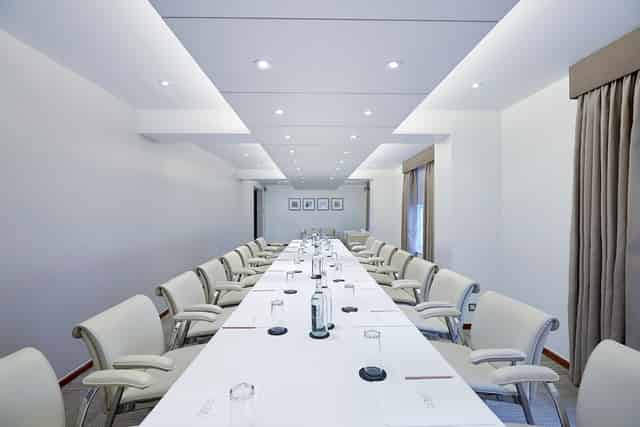
Looking for the coolest meeting rooms in London? From stylish interiors to unique settings, here are 8 venues that will definitely elevate your next meeting!

Located in the heart of the City, Salters’ Hall combines the rich heritage of the salt trade of medieval London with contemporary surroundings. Rebuilt in 1972 by Basil Spence and now a Grade II listed building, it is a rare example of a post-war livery building and has remained largely untouched until now... Architects de Metz Forbes Knight [http://www.dmfk.co.uk/projects/load/salters-hall] (dMFK) were tasked with the project to upgrade the building whilst retaining its sense of history and al

Creative ventures across the artistic spectrum are accommodated and embraced at Anomalous Space [https://hirespace.com/Venues/London/1551/Anomalous-Space], situated stunningly close to Angel Station on Pentonville Road. The venue's name captures its uniqueness, in that it deviates from the standard, unoriginal function space that's all too common. Anomalous Space combines the most contemporary of technological facilities with Art-Deco features, all set within an authentic Georgian townhouse.
Multiple venues and events. One agreement.


