Private Dining Rooms in Liverpool
Explore Liverpool private dining rooms for corporate entertaining, team dinners and board meetings, with verified capacities and clear pricing.
10 Private Dining Rooms in venues in Liverpool

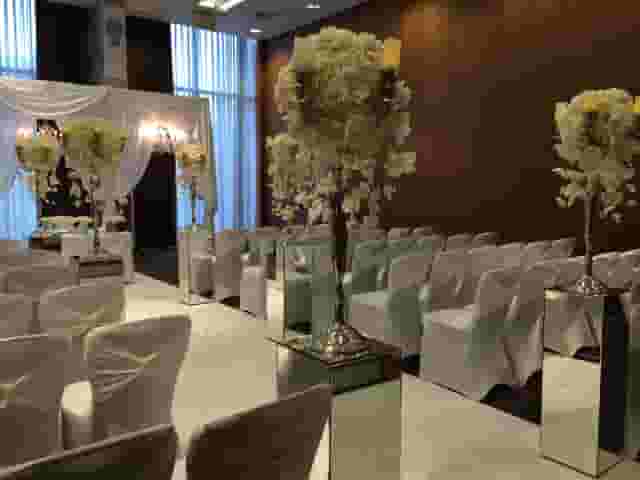
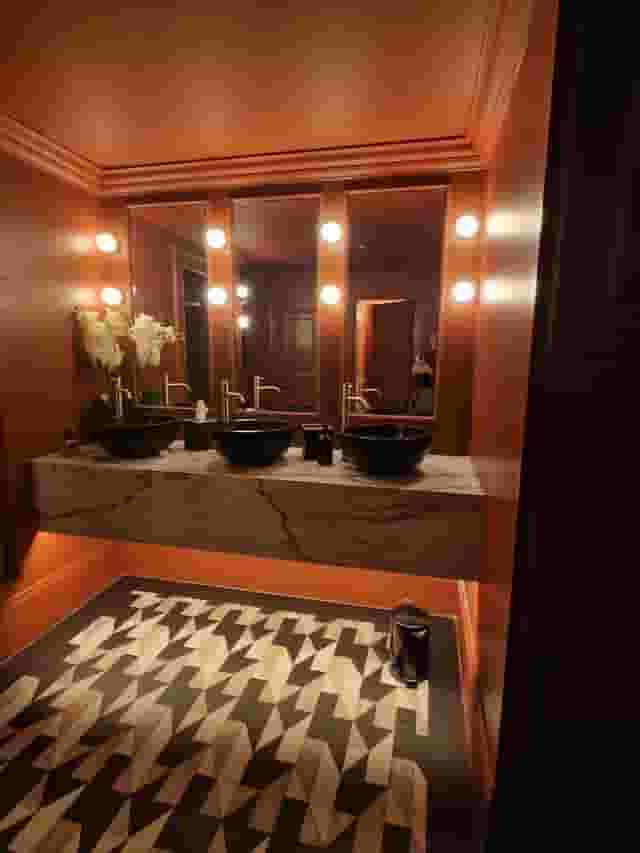
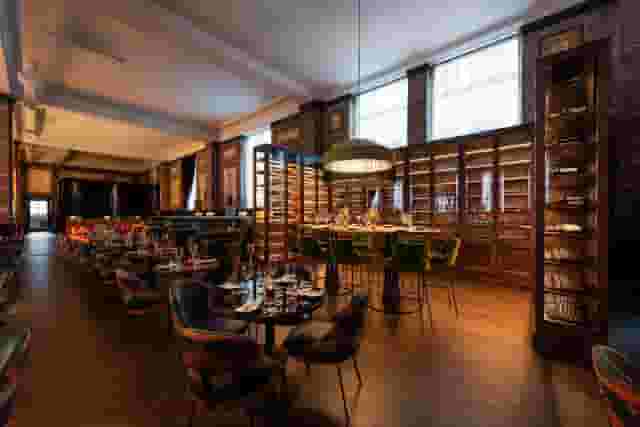
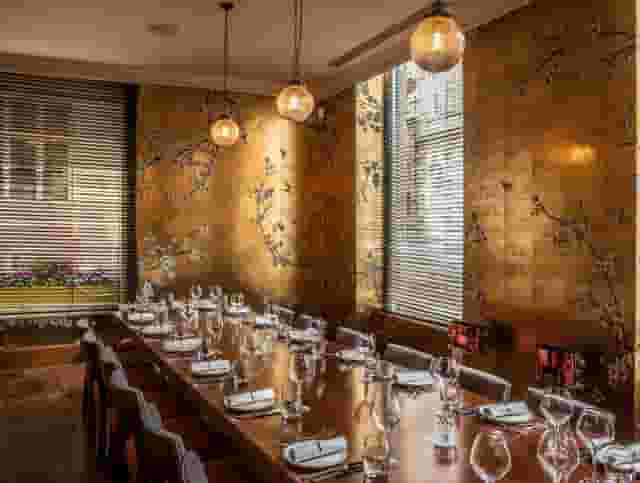

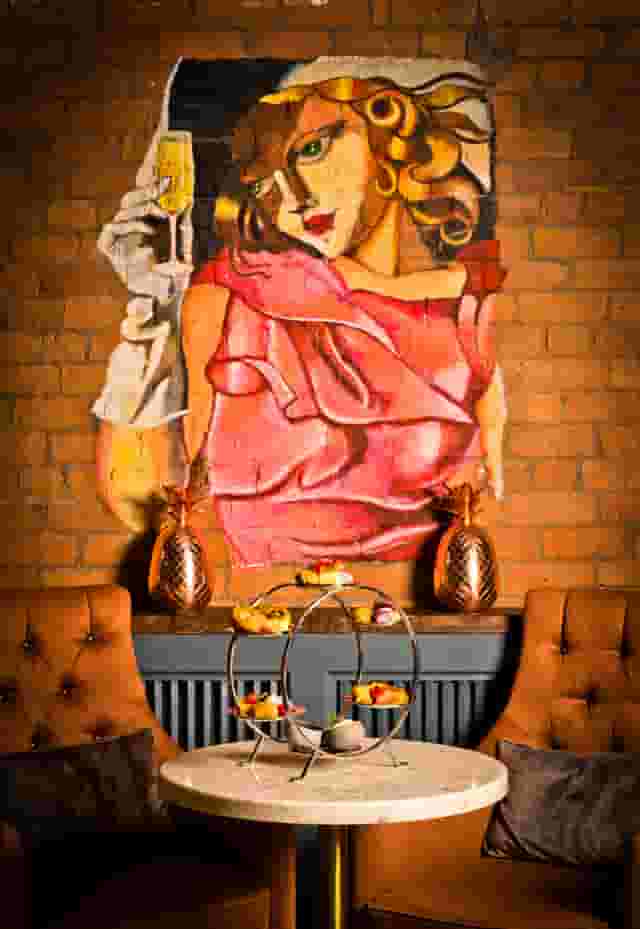
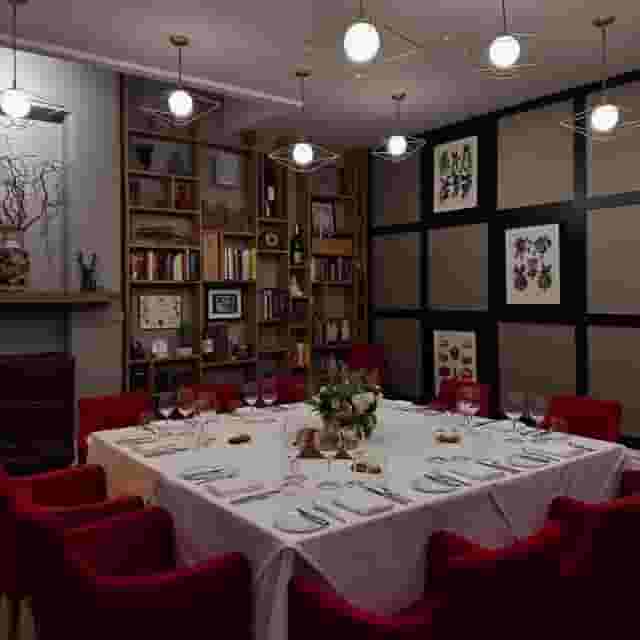
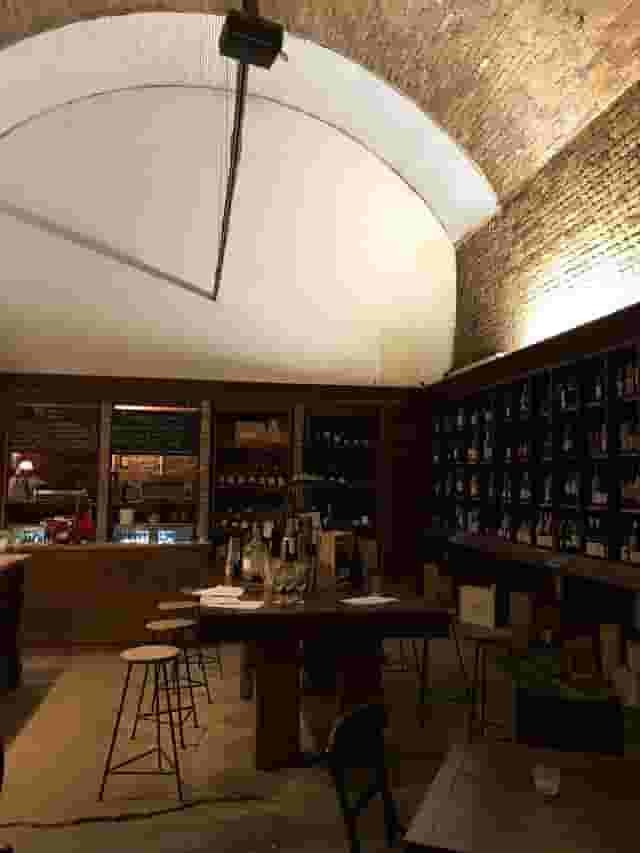
No venues match these filters
Try widening your capacity, luxury level or event type.
Don't have time to search? We'll find it for you.
For business events that need human judgement, talk to our team. Free for events of 100+ people, budgets over £10k or ongoing programmes.




Other platforms search their database. We search everything.
Tell us what you need. Our deep research finds any venue, whether it's in our marketplace or not. No one else does this.
About Private Dining Rooms in Liverpool
Selecting the right room format for a business dinner in Liverpool
Corporate dining falls into distinct operational brackets. Planning a dinner for board directors requires complete acoustic seclusion, clear sightlines for presentations and steady service that stays out of the conversation. Entertaining clients calls for atmosphere, distinctive architecture and hospitality that shows care. An internal department celebration or project wrap party prioritises space to mingle before guests take their seats. Matching your brief to the layout of the room avoids friction on the night.
In Liverpool, private dining spaces divide broadly into restaurant rooms, hotel suites and civic landmarks. Each brings distinct commercial advantages.
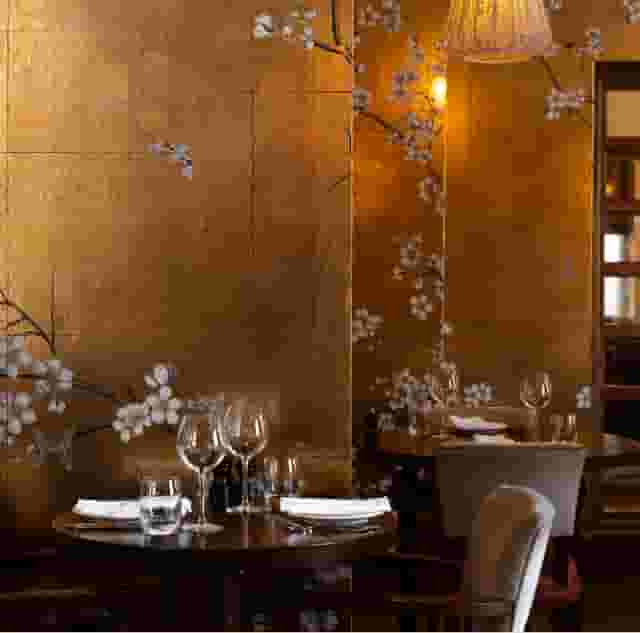
Dedicated restaurant dining rooms keep operational friction low because the kitchen, bar and front of house team are already running on a single engine. You receive established hospitality standards, proven dishes and straightforward per-head menu structures. For groups of up to 20 guests seated around a single table, Restaurant Bar & Grill Liverpool provides a small, self-contained private dining room inside a historic property. Setting 15 to 20 guests around one boardroom table keeps the conversation shared across the entire group, which works well for senior leadership discussions or partner dinners where sidebar conversations should be kept to a minimum.
When the guest list grows to 30 or 40 people, a single boardroom table becomes impractical. Conversation splinters once a table exceeds 14 seats, so you need a space that accommodates multiple round tables or an informal standing reception before dinner. The private dining room at Liverpool Selina in the creative Baltic Triangle district accommodates standing groups of up to 40 guests. It functions well for creative agencies, technology teams and informal gatherings where you want drinks and bowl food or sharing plates rather than a rigid three-course sequence.
Hotel dining suites solve a different logistical challenge. If attendees are travelling from London, Manchester or overseas, booking a private dining suite within a full-service hotel removes transit risks. Guests check in, drop their bags and take the lift down to dinner. In the city centre, Hard Days Night Hotel offers the Hard Days Night Suite, accommodating up to 70 people standing. The space features its own private bar and restrooms, preventing guests from drifting into public hotel areas between courses.
| Dining room format | Typical guest capacity | Best operational fit | Catering model |
|---|---|---|---|
| Enclosed restaurant room | 10 to 24 seated | Board dinners, executive client hospitality | In-house kitchen, set menu pre-orders |
| Semi-private mezzanine | 30 to 100 seated | Social celebrations, company milestones | In-house kitchen, sharing or set menus |
| Hotel private suite | 40 to 80 seated or standing | Travelling teams, residential summits | In-house banqueting, drinks packages |
| Civic or historic hall | 80 to 210 seated | Annual dinners, regional awards | Panel caterers, formal multi-course service |
Choosing the wrong format creates subtle problems. Putting 18 people into a room built for 60 leaves the atmosphere cold and makes speeches echo. Conversely, cramming 30 guests into a room intended for 24 seated leaves waitstaff squeezing between chair backs and spilling wine. Always ask for the usable floor plan with tables drawn to scale before confirming numbers.
Managing acoustics, room layout and speech schedules
Sound management makes or breaks a corporate dinner. Restaurant dining rooms with high ceilings, polished concrete floors and extensive glass look sharp in photographs, but hard surfaces bounce audio across the room. If background music from the main dining room bleeds under your door, your guests will spend the evening straining to hear each other.
If your dinner includes remarks from a managing director, an awards presentation or a client address, complete acoustic separation is essential. A closed door keeps your discussions confidential and shuts out ambient kitchen clatter. If you want inspiration on spaces with historic craftsmanship and structural dampening, read our guide on how to dine through time with these private dining venues.
Semi-private rooms and raised mezzanines offer an alternative energy. They let your party absorb the hum of a busy dining floor without placing your group among general diners. The Upstairs Mezzanine at Las Iguanas Liverpool in Liverpool ONE seats up to 100 guests for dining and features its own private bar with city views. A mezzanine works well for internal socials and team recognition evenings where high energy is welcome. However, if your plan includes quiet speeches or sensitive financial reviews, open mezzanines introduce too much background noise to run audio effectively without a dedicated microphone system.
For daytime meetings that roll into evening dinners, daylight and air quality dictate afternoon energy levels. The Conference Room at Hope Street Hotel seats 50 guests in theatre layout and features solid oak flooring, abundant natural light and dedicated catering options. Moving seamlessly from an afternoon strategy workshop to an evening private dinner in the same venue keeps attendees focused and saves transfer time across town.
Structuring the evening timeline
A successful private business dinner requires careful stage management. Kitchens run into trouble when organisers try to compress drinks receptions, multi-course dining and multiple speeches into an unrealistic window.
| Time | Activity |
|---|---|
| 18:30 to 19:15 | Arrival drinks and canapes in reception area |
| 19:15 to 19:30 | Call to dinner, seating and bread service |
| 19:30 to 20:15 | Starters served and cleared, wine topped up |
| 20:15 to 20:30 | Welcome speech or client address |
| 20:30 to 21:30 | Main course served, cleared and wine refreshed |
| 21:30 to 22:00 | Dessert and coffee service |
| 22:00 to 23:30 | Digestifs, informal networking and departures |
Never schedule important speeches while hot food is on the tables. Waiters clearing plates, refilling water and pouring sauce will distract guests and drown out the speaker. Position your main address either between the starter and the main course while guests have drinks in hand, or immediately following dessert when the kitchen has finished plated service.
Understanding private dining costs and minimum spends
Budgeting for a private dinner in Liverpool requires understanding how venues structure their revenue. Some venues charge a straightforward room hire fee plus food and drink spend. Others waive the room hire fee entirely and operate on a minimum spend basis, requiring your party to spend a set amount on food and beverages across the evening.
In Liverpool, private dining typically runs from £50 to £129 per head. This price range is an indicative estimate based on 6 quotes from the venues on this page for similar private dining events, and assumes a party size of about 60 guests.
Where your booking falls within that range depends on the day of the week, the complexity of your menu, the wine selection and whether you take exclusive hire of a dedicated kitchen line. As a venue booking platform supported by a team of real people who oversee the process, Hire Space provides data-backed price estimates drawn from actual event bookings to show what a room will cost before you submit an enquiry. If a chosen location exceeds the target budget, the platform highlights comparable dining rooms nearby at lower spend thresholds.
Towards the £50 end of the range, quotes generally cover a three-course set menu with tea, coffee and half a bottle of house wine per person. These options are standard among high street restaurants and hotel group spaces on weekday evenings from Monday to Wednesday, when private dining rooms have lower demand.
Towards the £129 end of the range, packages reflect fine dining formats. Expect canapes on arrival, sparkling wine or Champagne, four or five courses with premium ingredients, paired regional wines and extended room access past midnight. Friday and Saturday evenings across November and December sit consistently at the top of the price range due to seasonal competition.
| Spend element | Standard inclusion | Common extras to verify | Negotiation levers |
|---|---|---|---|
| Food service | 3 courses, bread, tea and coffee | Canapes, palate cleansers, cheese boards | Fixed set menu, pre-orders submitted 14 days early |
| Drink allocation | Half bottle of house wine, mineral water | Welcome cocktails, Champagne upgrades, digestifs | Agreeing a fixed drinks cap with the bar manager |
| Staffing and room | Dedicated waitstaff, table linens | Cloakroom attendants, security after 23:00 | Choosing off-peak days from Monday to Wednesday |
| Equipment | Standard venue background music, Wi-Fi | Handheld microphones, projectors, PA systems | Bringing your own portable plug-and-play kit |
To keep spending predictable, establish ground rules with the venue before the doors open. If you operate an open bar on consumption, unmonitored orders for top-shelf spirits quickly push spend past your target. Instruct the events coordinator that once the agreed wine and beer allowance is exhausted, staff must ask your lead organiser before opening additional bottles.
Always check service charges and VAT in writing. Most venues add an optional service charge between 10% and 12.5% to the final food and drink bill. Ensure this figure is accounted for when comparing quotes against your corporate spend limits. If you want to explore high-end culinary concepts across the UK, look into our article on how to taste the luxury with these top private dining rooms. Hire Space 360 is enterprise venue and hotel procurement for companies spending £1m or more a year on meetings and events: a managed meetings and events programme, the kind procurement teams call strategic meetings management. It centralises every venue contract, private room booking and overnight stay under a single supplier agreement, replacing individual invoices with consolidated billing. Finance teams can see how Hire Space 360 works for procurement to maintain live spend reporting and an audit trail that keeps dining spend aligned with internal event policies.
Scaling up for larger company dinners and waterfront views
When a corporate dinner exceeds 100 guests, standard private dining rooms in high street restaurants no longer fit. The event crosses over into banqueting, which demands different room proportions, separate service kitchens and dedicated infrastructure.
Liverpool possesses exceptional waterfront and civic properties built during the city's maritime peak. Hosting a dinner in these buildings gives national and international guests an immediate connection to the heritage of the city.
The Port of Liverpool Suite at The Bentley accommodates standing groups of up to 200 people. Positioned with direct views of Liverpool's waterfront and the Three Graces, the room pairs cabaret lounge styling with seasonal food menus. Waterfront views provide an impressive backdrop as daylight fades, particularly for evening award dinners and client networking receptions where the scenery acts as an effortless conversation starter.
Across the Strand, the Royal Liver Suite inside the Royal Liver Building provides space for receptions of up to 200 guests. Hosting dinner inside one of the most recognisable landmarks in the north of England brings genuine prestige to an event. It works especially well for corporate galas, inward investment dinners and annual stakeholder events where the status of the address reinforces the significance of the evening.
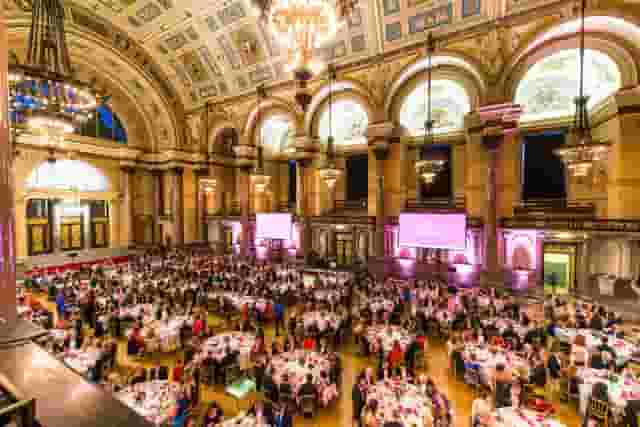
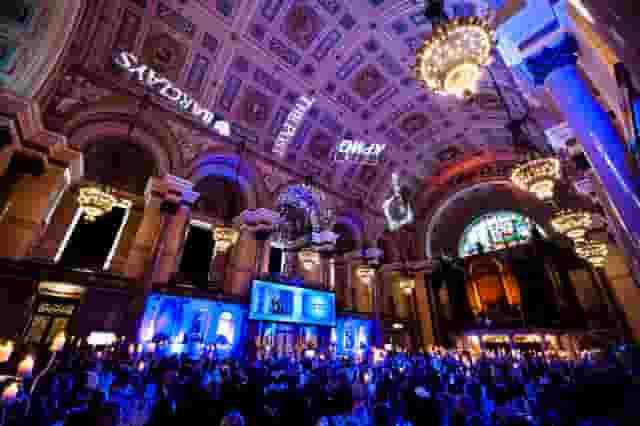
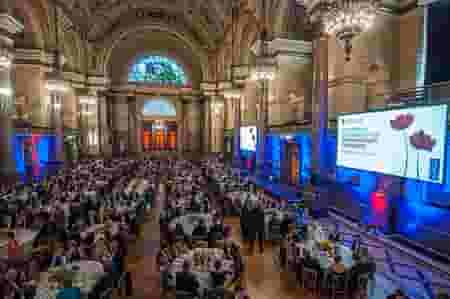
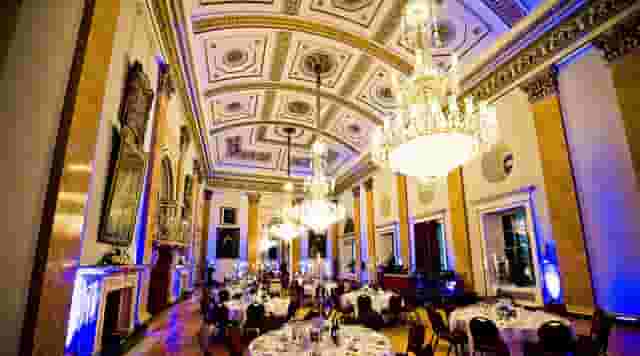
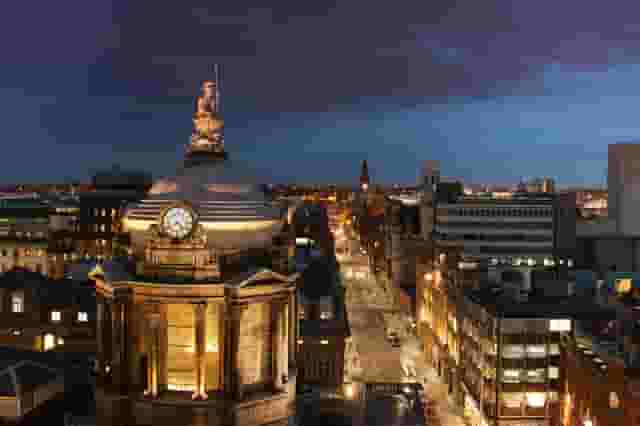
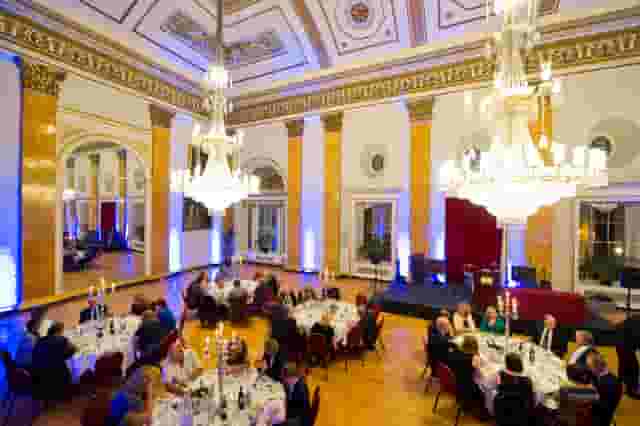
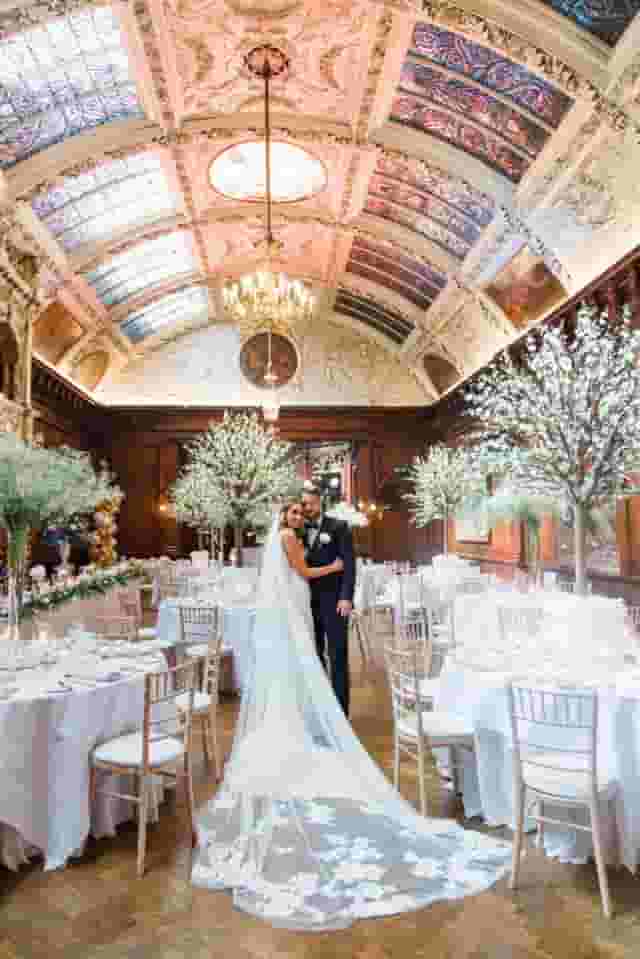
For large civic gatherings, Liverpool Town Hall offers The Main Ballroom, which accommodates receptions for up to 300 guests and formal seated dinners for up to 210. Dating from the Georgian era, the ballroom features high vaulted ceilings, historical panelling and grand chandeliers. A venue of this scale requires formal planning around entrance logistics, security protocols and approved external caterers, but it delivers an atmosphere that modern conference hotels cannot replicate.
When planning larger dinners, check how the venue handles pre-orders. Venues hosting 80 guests or more rarely offer an a la carte choice on the night. You will need to collect guest menu selections, dietary needs and seating preferences at least two weeks before the event. Running a clean spreadsheet with colour-coded dietary tags prevents confusion when the banqueting staff deliver courses across 15 or 20 tables simultaneously.
Logistics, licensing and getting guests home
The operational success of a dinner relies on what happens outside the dining room: arrival access, cloakrooms, accessible facilities and late-night transport. A dinner that runs smoothly can be overshadowed if guests spend 40 minutes waiting in the rain for taxis or struggle to find the entrance.
Transit links and central access
Liverpool is a compact, highly walkable city, but weather along the Mersey can turn quickly. Selecting a venue close to public transport hubs keeps attendance high and arrivals on schedule.
Venues around the commercial district and waterfront sit within a five-minute to ten-minute taxi ride from Liverpool Lime Street station, the main mainline rail terminal connecting Manchester, Birmingham and London Euston. If guests are commuting locally from Wirral, Chester or northern suburbs, proximity to Merseyrail stations such as Moorfields, James Street or Liverpool Central is a clear advantage.
When your dinner includes guests travelling from regional offices, ensure your venue has accessible drop-off bays outside the main entrance. Cobbled streets around the historic ropewalks and waterfront can create challenges for coaches or guests with limited mobility, so check the accessibility path from the kerb to the dining table in advance.
Licences, curfews and cloakroom logistics
Verify the venue licence hours early in your search. While city centre restaurants frequently hold alcohol licences running until midnight or 01:00, civic properties and heritage venues often operate earlier curfews. An 23:00 bar closure with music ending at 23:30 is common in municipal buildings. If your team plans to network late into the evening, verify whether the venue can extend its licence, or reserve space in an adjacent hotel lounge where guests can move after the dining room closes.
Cloakroom arrangements are frequently neglected. When 60 guests arrive on a rainy November evening carrying heavy winter coats and laptop bags, dumping coats over the backs of dining chairs clutters the room and ruins the appearance of the table settings. Confirm whether the room has its own staffed cloakroom or dedicated secure rails within the private space.
Dietary requirements and allergies
Corporate guest lists always feature dietary requirements. Vegetarian, vegan, gluten-free and dairy-free requests are standard, while severe nut, sesame or shellfish allergies demand strict kitchen segregation.
During your initial enquiry, ask how the kitchen manages cross-contamination and how alternative dishes are presented. In an elite dining room, the chef prepares bespoke alternatives that mirror the look and sophistication of the main menu, rather than serving a plain fruit salad or basic risotto. Brief your front of house manager with a finalised seating chart indicating exactly which seat requires which dish. When waitstaff deliver specialist plates directly to the guest without announcing allergies across the table, the dinner retains its professional polish from start to finish.
What our customers say
Inspiration and planning guides

Beyond the Bowl: The Ultimate Bowl Food Recipes To Wow Your Guests
In the quest for the perfect party or private dining menu? One that combines convenience with style? Look no further than the versatile bowl food!

5 Catering Suppliers To Ensure Your Food is Glorious
Here's our curated list of catering suppliers guaranteed to transform your event into an extraordinary feast!

Unique Venue of the Month: The Attendant
If we said our Unique Venue of the Month for March was a restaurant inside a public toilet, you would probably start to think we've (finally) lost it here at Hire Space. Well...our Unique Venue of the Month is a restaurant inside a public toilet. But it's not what it seems. Hear us out. The Attendant [https://hirespace.com/Spaces/London/8941/Attendant/Whole-Venue/Events] was originally a Victorian public gents' bathroom in Fitzrovia, built in 1890. It was mothballed and made spick-and-span in
One supplier. Every venue. Full visibility on what you spend.
Multiple venues and events. One agreement.