Private Dining Rooms in Birmingham
Compare Birmingham private dining rooms with indicative pricing and verified capacities for your next corporate dinner or client gathering.
15 Private Dining Rooms in venues in Birmingham






No venues match these filters
Try widening your capacity, luxury level or event type.
Don't have time to search? We'll find it for you.
For business events that need human judgement, talk to our team. Free for events of 100+ people, budgets over £10k or ongoing programmes.




Explore more venues in Birmingham





Frequently asked questions
What should I avoid in a Birmingham dining venue?
What's the cost of hiring a private dining room in Birmingham?
How do I select a Birmingham venue for a corporate dinner?
Can I find a traditional private dining room in Birmingham?
What defines a top private dining room in Birmingham?
Other platforms search their database. We search everything.
Tell us what you need. Our deep research finds any venue, whether it's in our marketplace or not. No one else does this.
About Private Dining Rooms in Birmingham
Organising a business dinner requires balancing atmosphere, discretion and reliable hospitality. Whether you are hosting important clients, celebrating an annual team milestone or gathering senior leaders for a quarterly discussion, the setting dictates how the evening flows. A dedicated dining room removes the noise of a crowded public floor, giving your group the space to talk candidly while staff manage the pacing of each course.
Birmingham has one of the most varied dining scenes in the country, from canal-side terraces and high-rise dining rooms overlooking the skyline to period estates and Michelin-graded kitchens. Finding the right room means looking beyond the photographs to assess acoustics, table geometry, service speed and contract terms. Hire Space is a venue booking platform, backed by a team of real people who help manage the outcome. Its Deep Venue Research tool explores dining rooms across the city to provide instant, data-backed price estimates based on real booking data, helping you build a tailored shortlist in minutes rather than waiting days for individual venues to reply.
Choosing the right room style for a business dinner
Private rooms in Birmingham divide into three broad categories: modern high-rise spaces, dedicated restaurant dining rooms and heritage properties. Each style supports a different kind of evening.
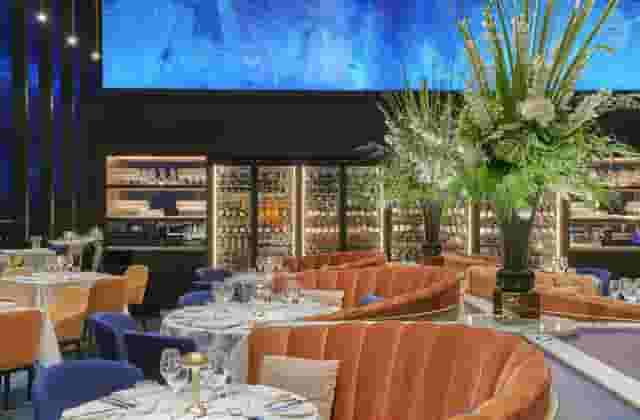
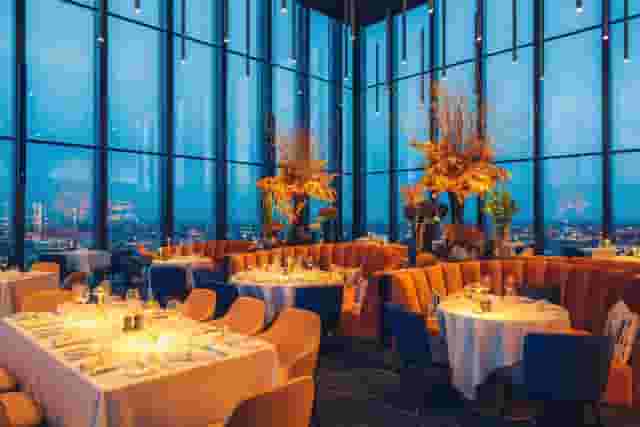
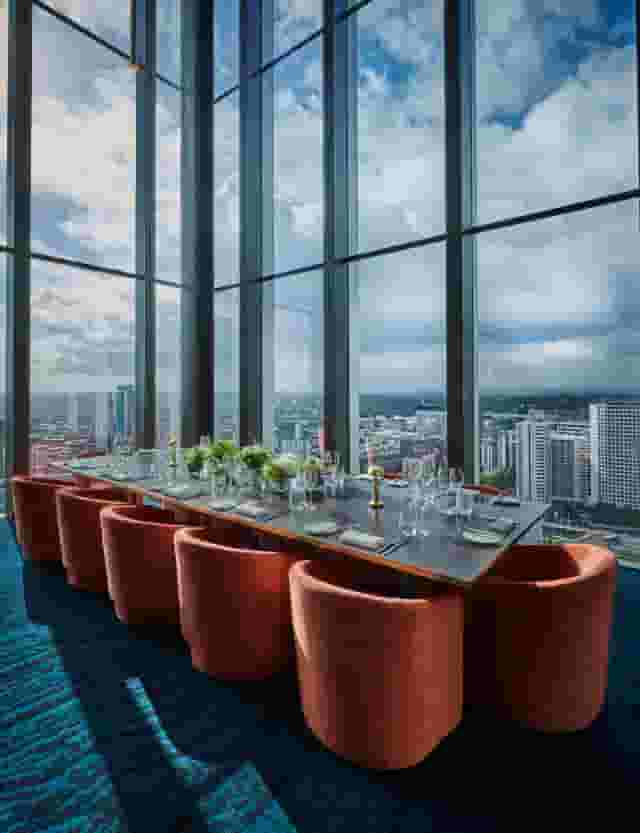
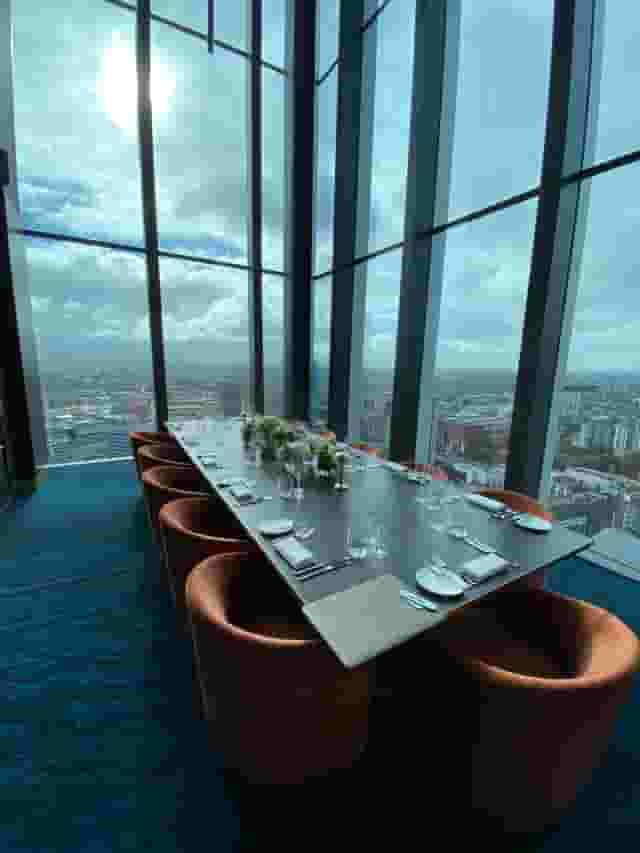
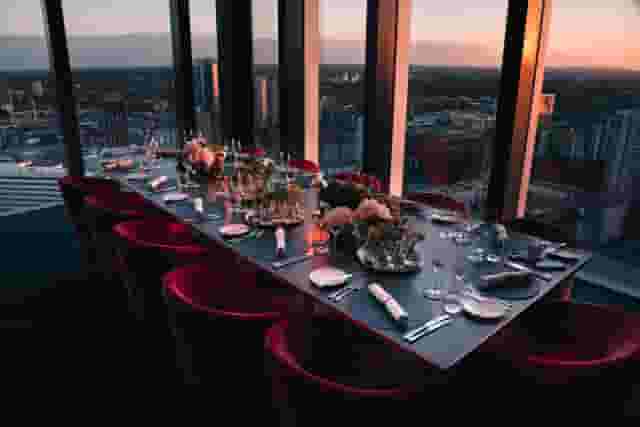
High-rise and skyline rooms work well for client entertainment and celebratory dinners where visual impact matters immediately. Spaces such as the private dining room at Orelle, which seats 16 guests on the upper floors of Colmore Row, provide panoramic city views that establish an impressive tone from the moment attendees step out of the lift. Similarly, the private dining rooms at Marco Pierre White's Steakhouse Bar & Grill seat up to 30 people against elevated backdrops of the city centre. These settings generate energy, though you should check window glare during summer evenings and confirm how blinds are operated if you plan to run presentations before dinner.
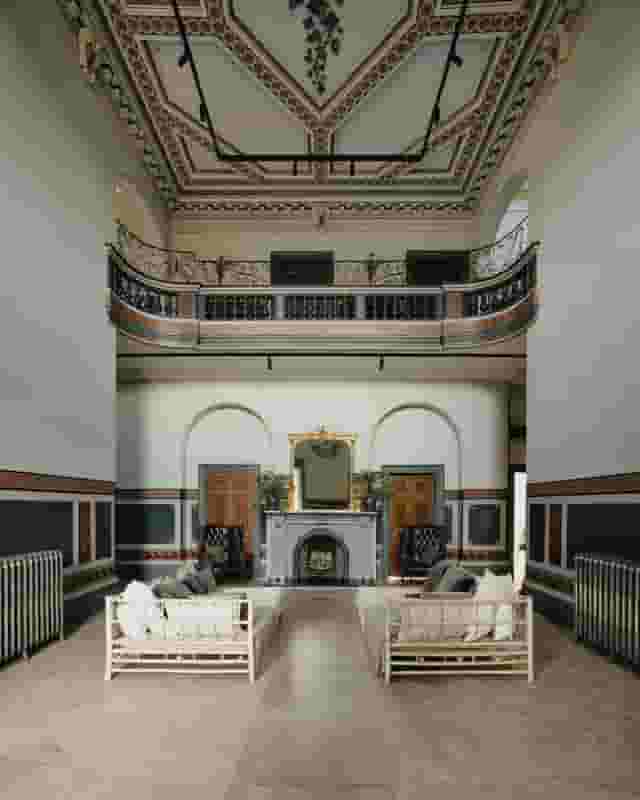
When discretion and quiet conversation take priority, dedicated rooms in fine dining restaurants are preferable. In these rooms, the focus stays squarely on service, wine quality and conversation across the table. For mid-sized corporate gatherings, the Church Room at Grand Hotel Birmingham offers a restored historic setting that accommodates up to 53 guests in a theatre layout or smaller groups around dining tables. If you want a more informal, social gathering near the water, the restaurant space at Noel's Bar & Restaurant holds up to 150 standing guests and offers Mediterranean menus by the canal basin.
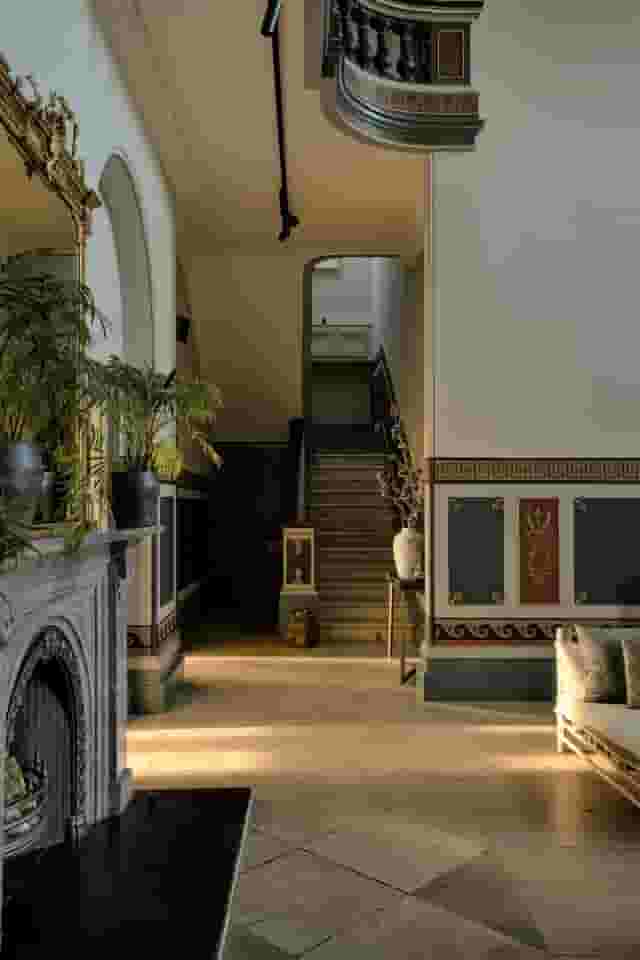
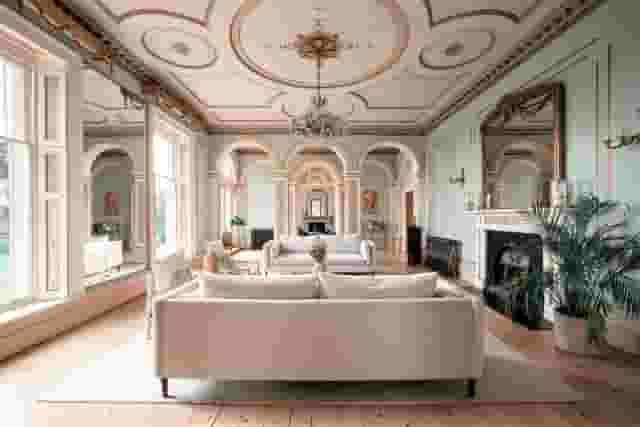
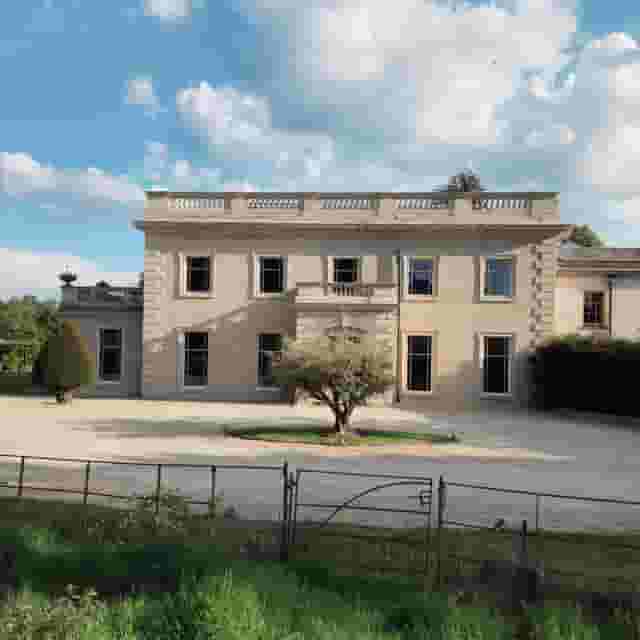
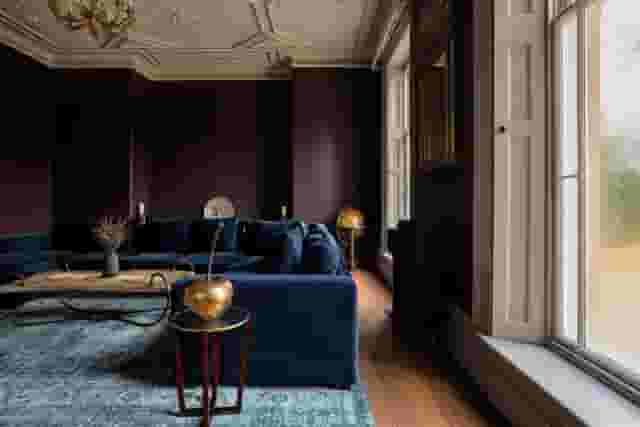
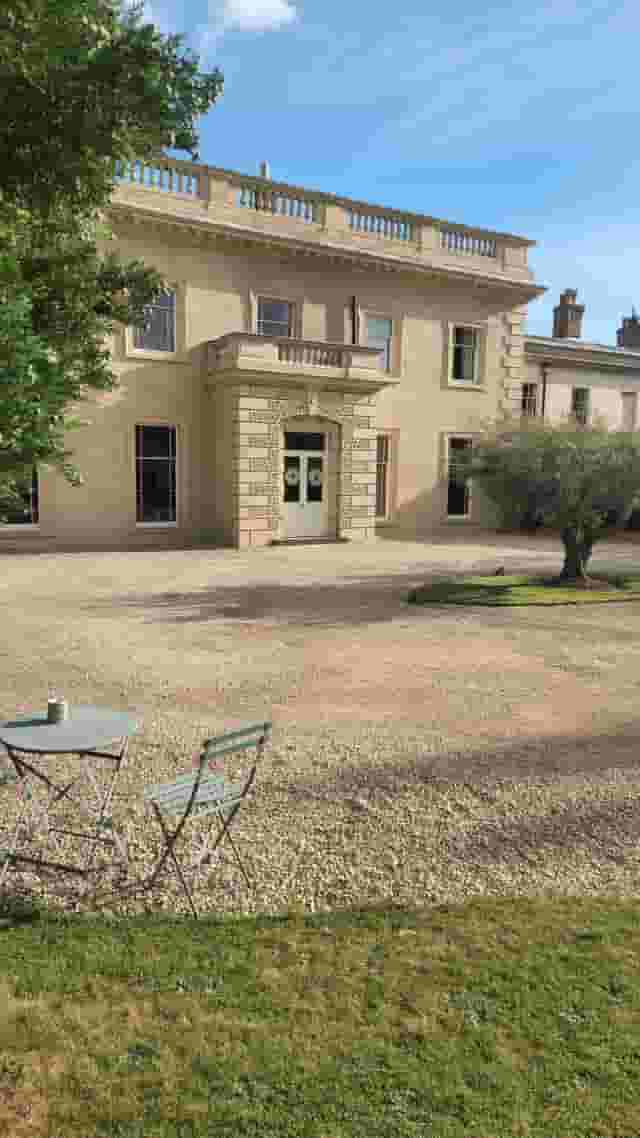
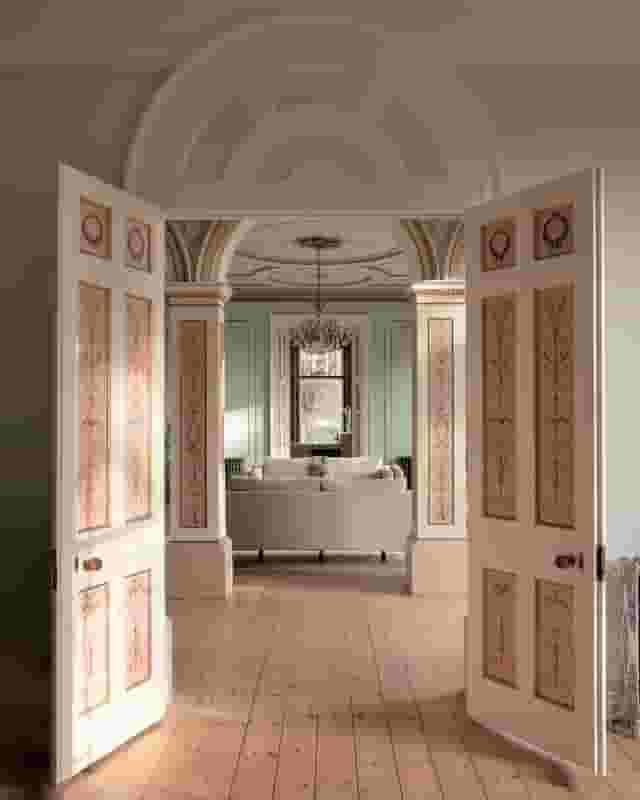
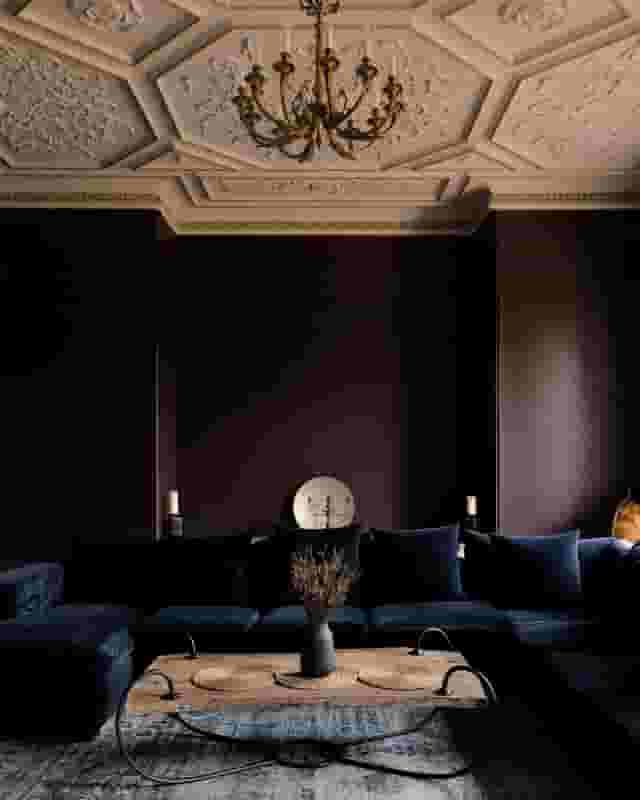
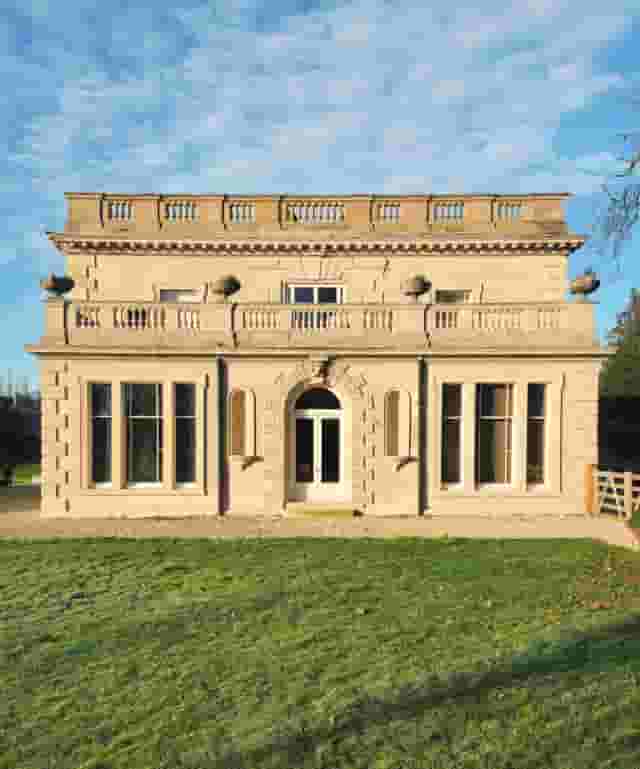
Heritage properties outside the central ring road provide a completely different environment. Locations such as Hagley Hall, where the Crimson Dining Room hosts up to 28 reception guests, offer classic Palladian architecture surrounded by parkland. These venues suit board dinners, executive retreats or formal client entertaining where uninterrupted privacy is essential.
| Venue style | Best suited for | Group sizes | Key consideration |
|---|---|---|---|
| Skyline and high-rise | Client entertaining and milestone celebrations | 10 to 30 seated | Check window reflections and screen visibility |
| Fine dining private rooms | Board dinners and relationship building | 8 to 24 seated | Strict service pacing and fixed tasting schedules |
| Heritage and period halls | Formal executive dinners and annual summits | 20 to 80 seated | Travel logistics and external transport arrangements |
| Canalside and bistro rooms | Team socials and informal networking dinners | 15 to 60 seated | Background noise bleed from public bars |
Menu structures, wine pairings and kitchen pacing
The kitchen format determines the structure of your evening. A private dinner is not an ordinary restaurant booking; running fifteen to thirty dishes out at the same moment requires planning from both the organiser and the kitchen.
For corporate entertaining, set menus with three choices per course are standard. Asking twenty guests to order à la carte on the night risks long delays between courses, as the kitchen must prepare dozens of different dishes simultaneously. To keep the evening moving on schedule, collect dietary requirements and individual menu pre-orders at least ten days before the event.
Tasting menus remove the friction of individual orders entirely. At venues focused on culinary craft, such as the private dining room at Adam's Restaurant, which hosts up to 50 guests for receptions, or the private dining room at Opheem, which accommodates 30 reception guests, tasting menus allow the kitchen team to showcase multi-course culinary sequences. These menus suit evenings where dining is the main event rather than background hospitality. When reviewing higher-tier dining options, you can explore guides such as taste the luxury with these top private dining rooms to see how established venues handle course development and service cadence.
Wine planning needs equal attention. Pairing wines by the course works well for formal dinners of up to twenty people, but it requires attentive sommeliers who pour before each dish lands. For larger parties, ordering a fixed allocation of red, white and sparkling wine by the bottle is safer and keeps spending predictable. A practical rule of thumb is half a bottle of wine per guest across the meal, supplemented by sparkling wine on arrival and mineral water throughout.
Special diets require clear processes. Vegan, vegetarian, gluten-free and allergen-specific meals must not be treated as an afterthought. Ask the venue for specific alternative menus well ahead of time. When sustainability or ingredient sourcing forms part of your company values, review the best sustainable private dining venues for ideas on how kitchens approach low-waste catering, seasonal British produce and ethical sourcing.
Understanding costs, packages and minimum spends
Budgeting for private dining in Birmingham depends on whether a venue uses a minimum spend model, a fixed per-head package or room hire plus consumption charges.
Across this category, indicative costs typically sit at £25 to £53 per head. This figure is estimated from what venues charge for similar events, based on 11 quotes from the venues on this page, and assumes a party size of about 60 guests. Smaller, highly exclusive private dining rooms or Michelin-starred restaurants will naturally sit above this bracket, while simpler weekday lunch bookings or larger banqueting halls trend toward the lower end.
Minimum spends are the most common pricing model for restaurant private rooms. The venue agrees not to charge room hire as long as your total food and beverage bill reaches an agreed threshold, such as £25 to £53 per head for a weekday lunch or £25 to £53 per head for a Thursday evening. If your guests drink less than expected, you still pay the agreed minimum. Check whether service charge and VAT count towards that minimum spend; in many venues, they are added on top. Hire Space 360 is enterprise venue and hotel procurement for companies spending £1m or more a year on meetings and events: a managed meetings and events programme, the kind procurement teams call strategic meetings management. It puts every private dining room, corporate event and hotel booking on one agreement with consolidated invoicing, keeping reservations aligned with company event policy while giving procurement and finance live spend reporting across every department.
Total event cost = food spend + beverage spend + service charge (12.5% to 15%) + AV/room extras.
When evaluating proposals, watch for additional line items that alter the final invoice:
- Service charge: usually 12.5% to 15%, added to all food and beverage spend.
- Cloakroom and staffing fees: occasionally billed if you require dedicated coat check attendants.
- Audio-visual hire: screens, microphones and HDMI cables are rarely included free of charge in restaurant spaces.
- Cakeage or corkage: fees charged if you bring branded cupcakes, celebratory cakes or specialist wines.
- Overrun penalties: hourly charges if your dinner runs past the contracted departure time.
| Cost element | Typical structure | How to manage it |
|---|---|---|
| Food menu | Fixed price per head for 3 to 6 courses | Agree a set menu with pre-orders to cap waste |
| Welcome drinks | Charged on consumption or per-glass package | Set a strict cap of 1 to 2 glasses per attendee |
| Table wine | Charged per bottle opened | Agree specific bottles in advance; avoid open bar orders |
| Service charge | Discretionary percentage (12.5% to 15%) | Confirm whether this counts towards minimum spend |
| Room hire | Flat fee, often waived against food spend | Negotiate waiver for off-peak days like Monday to Wednesday |
Room layout, privacy and acoustic control
A successful corporate dinner relies heavily on room layout and acoustic comfort. A room that feels spacious for twenty people can become deafening if hard surfaces reflect every laugh and clinking glass.
When booking, ask the venue to clarify whether the dining space is fully enclosed or semi-private. Semi-private mezzanine spaces or areas separated only by velvet curtains look attractive in marketing photographs, but they fail to stop sound from the main dining room. If your host intends to deliver financial updates, announce promotions or speak about confidential projects, you need four solid walls and a closeable door.
For historic spaces and larger banquets, such as the Great Hall at Aston Hall, which holds up to 80 reception guests, vaulted ceilings and stone floors create grandeur but require careful voice projection. In large heritage spaces, background music should be turned off before any speeches begin, and a handheld microphone should be tested during the room setup.
Table shapes dictate how your guests interact:
Single long table (boardroom style)
Works best for groups of 10 to 22 guests. It creates an egalitarian, formal atmosphere where everyone feels part of one collective conversation. However, guests can generally only speak to the people sitting directly opposite them and to their immediate left and right.
Oval or round tables
Ideal for groups of 18 to 60 guests split across several tables. Round tables seating eight to ten people encourage active debate and cross-table conversation. If you have guest speakers, position them centrally so they can address all tables without turning their backs on half the room.
Hollow square or U-shape
Useful when an evening starts with a presentation before food service. It allows sightlines to a central screen, but it takes up significant floor space and pushes guests further apart once dining begins.
Audio-visual equipment and technical considerations
Most restaurant private dining rooms are designed for hospitality rather than conferences. If your evening includes a presentation, you must confirm the technical infrastructure before paying a deposit.
Check the following technical points with the venue manager:
- Display screens: does the room have a built-in LED screen, or will you need to bring a portable monitor? Ensure connection cables match modern laptops, with HDMI or USB-C adapters available.
- Sound management: can you plug an external playlist into the room's sound system, and is the volume independently controlled from the main restaurant?
- Wi-Fi performance: corporate guests will expect reliable guest Wi-Fi, particularly if your group includes remote attendees or individuals downloading documents between courses.
- Power points: if senior executives plan to work or charge devices before dinner, verify that floor boxes or wall sockets are accessible near the tables.
Test the equipment thirty minutes before your guests arrive. Attempting to fix a screen display while clients hold arrival drinks creates unnecessary stress.
Arrival logistics, transport and scheduling
Timings make or break a private dinner. A standard corporate dinner schedule runs over three to four hours. Building buffer time into the schedule prevents the kitchen from rushing courses or keeping guests trapped at the table late on a weeknight.
Recommended corporate running order
- 18:30 to 19:15: Arrival drinks and canapes. This 45-minute window accounts for train delays and traffic around the city centre.
- 19:15 to 19:30: Guests seated, bread served and introductory welcome remarks from the host.
- 19:30 to 20:15: Starters served and cleared; wine glasses refreshed.
- 20:15 to 21:00: Main course served and cleared.
- 21:00 to 21:15: Main business speeches or guest remarks while tables are clear.
- 21:15 to 21:45: Desserts, British cheese boards and coffee service.
- 21:45 to 22:30: Informal networking, digestifs and departures.
Transport in Birmingham requires careful thought depending on the location of your venue. Venues clustered around Colmore Row, Snow Hill and the city core sit within a short walk of Birmingham New Street station, making them convenient for guests arriving from London, Manchester or regional hubs. For central venues, advise attendees on the closest multistorey car parks, such as Snow Hill or Town Hall, as street parking is heavily restricted.
For venues situated further out in Worcestershire or suburban Birmingham, arrange taxi ranks or pre-booked executive cars for departure, especially if dinner finishes after 22:30. Ensure your event confirmation details cloakroom facilities, accessible step-free access from the street entrance to the private room, and clear directions for arriving guests. A well-managed arrival sets a relaxed tone that lasts throughout the evening.
What our customers say
Inspiration and planning guides

Beyond the Bowl: The Ultimate Bowl Food Recipes To Wow Your Guests
In the quest for the perfect party or private dining menu? One that combines convenience with style? Look no further than the versatile bowl food!

5 Catering Suppliers To Ensure Your Food is Glorious
Here's our curated list of catering suppliers guaranteed to transform your event into an extraordinary feast!

Unique Venue of the Month: The Attendant
If we said our Unique Venue of the Month for March was a restaurant inside a public toilet, you would probably start to think we've (finally) lost it here at Hire Space. Well...our Unique Venue of the Month is a restaurant inside a public toilet. But it's not what it seems. Hear us out. The Attendant [https://hirespace.com/Spaces/London/8941/Attendant/Whole-Venue/Events] was originally a Victorian public gents' bathroom in Fitzrovia, built in 1890. It was mothballed and made spick-and-span in
One supplier. Every venue. Full visibility on what you spend.
Multiple venues and events. One agreement.