22 Small Meeting Rooms in venues in Central London



No venues match these filters
Try widening your capacity, luxury level or event type.
Explore small meeting rooms in Central London for up to 200 people. Perfect venues for professional gatherings.
No venues match these filters
Try widening your capacity, luxury level or event type.
For business events that need human judgement, talk to our team. Free for 100 person+ events organised by businesses.
Tell us what you need. Our deep research finds any venue, whether it's in our marketplace or not. No one else does this.
You might think "small meeting room" and "200 people" don't belong in the same sentence, but here's where Central London's venue landscape gets interesting. What we're really talking about are intimate, purpose-built spaces that feel personal despite accommodating substantial numbers – and trust me, there's a world of difference between cramming 200 people into a generic conference hall and hosting them in one of Central London's thoughtfully designed compact venues.
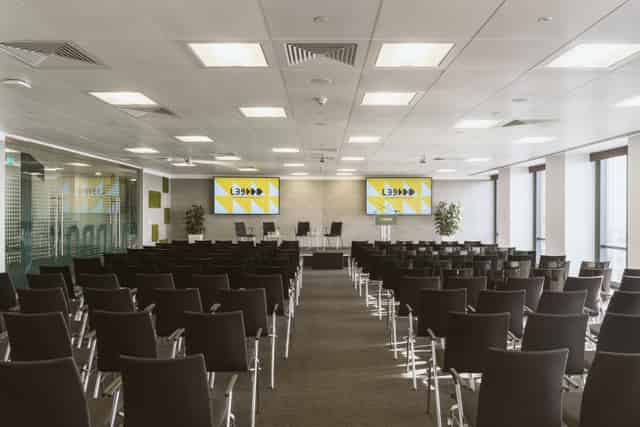
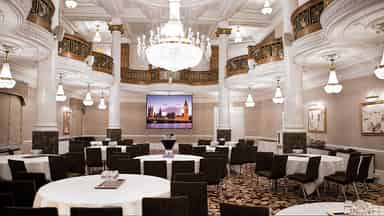
The magic lies in the proportions. Take venues like The Dilly's main event space – at 288m², it's technically compact by London standards, yet it comfortably hosts 250 guests because every square metre is optimised. Compare this to sprawling suburban conference centres where you might have twice the space but half the atmosphere, and you'll understand why savvy event planners are choosing Central London's Small Meeting Rooms in Central London over larger alternatives.
The secret sauce is density and design. Central London's premium small meeting rooms typically offer 1.2-1.5m² per person in theatre-style layouts – significantly more efficient than the 2m² you'd find in traditional conference venues. This isn't about squeezing people in; it's about creating energy and engagement that larger spaces simply can't match.
We've seen day delegate rates ranging from £75 for premium venues up to £120+ for super-luxury spaces, but here's the insider tip: you're not just paying for square footage. You're investing in locations where your attendees can walk from King's Cross to Soho in 15 minutes, where world-class catering partners are on your doorstep, and where the venue itself becomes part of your event's story.
The technical specifications matter too. These venues typically feature 3.5-4 metre ceiling heights with integrated AV systems, 200-300 Mbps symmetric internet, and climate control that actually works – something you can't take for granted in older London buildings. Many offer modular layouts, so your 200-person morning presentation can transform into breakout sessions for 50 people each.
Consider exploring options in areas like Small Meeting Rooms in Fitzrovia or Small Meeting Rooms in Marylebone where you'll find this perfect balance of intimacy and capacity. The key is booking 8-12 weeks ahead for peak periods, and always factor in setup time – these efficient spaces need 4-6 hours for proper configuration.
Planning a 200-person event in Central London's compact venues isn't just about finding space – it's about orchestrating a complex logistical dance where every detail matters twice as much. After organising hundreds of these events, I've learned that success comes down to five non-negotiable steps that separate seamless events from chaotic disasters.
Here's what most planners get wrong: they think 6-8 weeks is sufficient for Central London venues. In reality, the best small meeting rooms for 200 people – particularly in areas like Small Meeting Rooms in Mayfair or Small Meeting Rooms in City of London – are booked solid during peak periods (Tuesday-Thursday, September-November, February-May). Start your search 10-12 weeks out, and always have three backup options.
Don't assume all venues are created equal. You'll need minimum 63-amp, 3-phase power for 200 people, plus 200-300 Mbps symmetric internet if you're streaming or running interactive sessions. I've seen too many events fail because planners didn't verify the venue's HVAC can maintain 20-22°C with 200 bodies generating heat. Always request a technical specification sheet and cross-reference it with your AV requirements.
With compact venues, kitchen access and service flow become critical. Budget £35-55 per person for quality catering, but more importantly, understand the logistics. Most Central London venues require 90-minute service windows for 200 people, and you'll need dedicated staging areas. Book your caterer simultaneously with your venue – the best ones are as sought-after as the venues themselves.
In smaller spaces, bottlenecks kill events. Plan for 15-20 minute arrival windows with multiple registration points. Consider venues in Small Meeting Rooms in Liverpool Street or Small Meeting Rooms in London Bridge where transport links support staggered arrivals.
Add 20% to your timeline and 15% to your budget. Compact venues leave no room for error – literally. If your AV setup runs over, there's nowhere to hide the chaos.
Your next step? Create a venue shortlist and visit each space during a similar event to see how they handle 200-person logistics in action.
Getting 200 people to the same Central London venue at roughly the same time sounds straightforward until you factor in the reality of London's transport network during peak hours. The difference between a smooth start and 45 minutes of stragglers trickling in often comes down to understanding the nuances of Central London's accessibility – and frankly, most event planners underestimate just how complex this can be.
Here's something I learned the hard way: Central London venues might be "well-connected," but that doesn't mean they're equally accessible for large groups. The golden rule is ensuring 80% of your attendees can reach your venue within 15 minutes of a major transport hub. Venues near King's Cross St Pancras or Liverpool Street Station tick this box beautifully – it's why Small Meeting Rooms in Liverpool Street consistently outperform more central locations for large group logistics.
The Elizabeth Line has been a game-changer here. Journey times from Heathrow to central venues have dropped to 45 minutes, making international attendee logistics significantly more manageable. But here's the catch – Elizabeth Line stations get absolutely rammed between 8:30-9:30am, so factor this into your start times.
For 200-person events, I always recommend staggered arrival windows. Book venues in areas like Small Meeting Rooms in Farringdon or Small Meeting Rooms in Holborn where multiple tube lines converge – it spreads the arrival load and reduces platform congestion.
Parking is where reality bites hard. NCP Car Park Covent Garden charges £12/hour, and that's if you can get a space. For 200 people, assume maximum 15-20% will drive, and always provide detailed public transport instructions rather than parking directions.
Don't rely on venue websites for accessibility information. Most Central London stations now have step-free access, but "step-free" doesn't always mean "200-person-group-friendly." I've seen events where wheelchair users couldn't access lifts because of crowd congestion during peak times.
Always visit your shortlisted venues during similar peak periods. Walk the route from the nearest station, time it with luggage, and check if there are alternative routes if lifts fail. The best venues provide detailed accessibility maps and have relationships with local taxi firms for attendees with mobility requirements.
Your next step? Create a transport briefing document for attendees that includes three different route options, expected journey times from major hubs, and a backup plan for transport disruptions.
Let's talk numbers, because I've seen too many event planners get blindsided by the true cost of hosting 200 people in Central London's compact venues. The headline day delegate rate might say £75, but by the time you factor in all the essentials, you're looking at £150-200 per person – and that's before you add the extras that transform a good event into a memorable one.
Here's what a realistic budget looks like for 200 people in a premium Central London small meeting room. Your venue hire will run £1,200-3,000 for the day, but that's just the starting point. Add essential AV equipment (£800-1,200), professional catering at £45-65 per person (£9,000-13,000), and suddenly you're at £11,000-17,200 before you've even thought about registration systems, signage, or contingency funds.
The hidden costs are where budgets really stretch. Overtime charges kick in if your setup runs long – and with 200 people in a compact space, it usually does. Expect £150-200 per hour for extended access. Cleaning fees for large groups can add another £300-500, and if you need additional power or internet capacity, that's £200-400 more.
The biggest money-saving opportunity? Book venues in areas like Small Meeting Rooms in Clerkenwell or Small Meeting Rooms in Waterloo rather than Mayfair or Soho. You'll save 20-30% on venue costs without sacrificing accessibility or quality.
But here's where you shouldn't cut corners: AV and catering. With 200 people in a compact space, poor sound quality or delayed service becomes magnified. Budget £6-8 per person for professional AV support – it's worth every penny when your keynote speaker's microphone works flawlessly.
Summer bookings (June-August) can be 25-40% cheaper than peak autumn rates. If your event timing is flexible, consider venues in Small Meeting Rooms in Bloomsbury during these quieter months. You'll get the same premium spaces at significantly reduced rates.
For multi-day events or annual bookings, negotiate package deals. Most venues offer 10-15% discounts for repeat business, and some will throw in complimentary AV or extended access hours.
Your next step? Create a detailed budget spreadsheet with three scenarios – basic, standard, and premium – then add 15% contingency to whichever level you choose. Trust me, you'll need it.
After two decades of watching event planners navigate Central London's venue landscape, I can spot the mistakes that'll derail a 200-person event from a mile away. The irony is that most of these pitfalls are completely avoidable – yet I see the same errors repeated time and again, often by experienced professionals who should know better. The stakes are higher with compact venues because there's simply no room to hide when things go wrong.
This is the big one. Planners see "small meeting room" and immediately think 20-50 people, missing out on Central London's most efficient spaces. Venues like those in Small Meeting Rooms in Soho or Small Meeting Rooms in Westminster are designed for exactly this sweet spot – intimate enough to maintain energy, spacious enough for substantial numbers. I've seen planners book massive conference halls for 200 people and wonder why the atmosphere fell flat.
With 200 people in a compact space, everything takes longer. The industry standard 2-hour setup becomes 4-6 hours when you're optimising every square metre. Factor in registration desks, AV equipment, catering stations, and signage – suddenly you're looking at extended access fees that weren't in your original budget. Always book venue access from 7am if your event starts at 10am.
Here's where compact venues bite back. With 200 people, you can't just set up a buffet and hope for the best. You need dedicated service corridors, multiple serving points, and staggered break times. I've watched 45-minute coffee breaks stretch to 90 minutes because planners didn't account for service bottlenecks. Budget for professional catering coordination – it's worth the £300-500 investment.
That "high-speed Wi-Fi" might handle 50 people checking emails, but 200 people streaming, uploading, and video calling simultaneously? Different story entirely. Always request a load test or visit during a similar-sized event. Venues in Small Meeting Rooms in West End typically have enterprise-grade networks, but verify the bandwidth allocation for your specific event.
Fire safety regulations are strict for 200-person events, and compact venues have specific evacuation procedures. Some venues require additional fire marshals or restrict certain layouts. This isn't just compliance – it's about ensuring your attendees feel safe and comfortable in what might feel like a more intimate space than they're used to.
When 200 people network during breaks, they don't stay in neat lines. They spill into corridors, reception areas, and nearby spaces. Venues that work brilliantly for seated presentations can feel chaotic during networking sessions. Always walk through the entire venue footprint, not just the main event space.
With 200 people converging on Central London, transport strikes or delays will affect your event. The best planners provide alternative route guidance and have relationships with local taxi firms for emergency transport.
Your next step? Create a pre-booking checklist covering each of these points, and never sign a venue contract without addressing every single one.
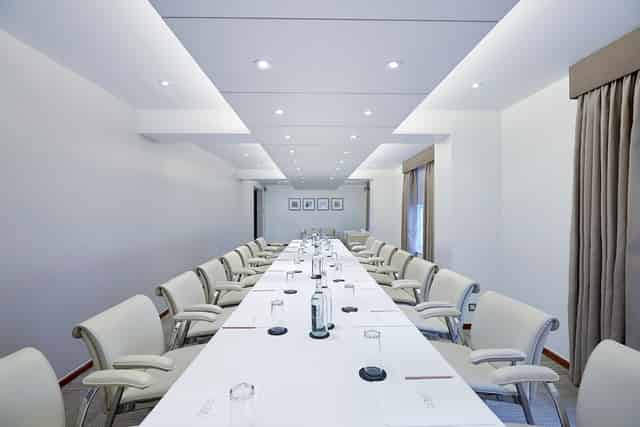
Looking for the coolest meeting rooms in London? From stylish interiors to unique settings, here are 8 venues that will definitely elevate your next meeting!

Located in the heart of the City, Salters’ Hall combines the rich heritage of the salt trade of medieval London with contemporary surroundings. Rebuilt in 1972 by Basil Spence and now a Grade II listed building, it is a rare example of a post-war livery building and has remained largely untouched until now... Architects de Metz Forbes Knight [http://www.dmfk.co.uk/projects/load/salters-hall] (dMFK) were tasked with the project to upgrade the building whilst retaining its sense of history and al

Creative ventures across the artistic spectrum are accommodated and embraced at Anomalous Space [https://hirespace.com/Venues/London/1551/Anomalous-Space], situated stunningly close to Angel Station on Pentonville Road. The venue's name captures its uniqueness, in that it deviates from the standard, unoriginal function space that's all too common. Anomalous Space combines the most contemporary of technological facilities with Art-Deco features, all set within an authentic Georgian townhouse.
Multiple venues and events. One agreement.