Christmas Party Venues in Glasgow
Find Glasgow Christmas party venues built for drinks receptions, seated dining and DJ sets, with clear capacity details to plan your celebration.
31 Christmas Party in venues in Glasgow







No venues match these filters
Try widening your capacity, luxury level or event type.
Don't have time to search? We'll find it for you.
For business events that need human judgement, talk to our team. Free for events of 100+ people, budgets over £10k or ongoing programmes.


Frequently asked questions
How do I ensure tech needs are met at my Glasgow Christmas event?
Are there exclusive hire options available at Glasgow's venues?
What size should I consider for a Glasgow Christmas party venue?
What should be considered when choosing location within Glasgow?
What type of atmosphere is best for a Glasgow Christmas party?
Other platforms search their database. We search everything.
Tell us what you need. Our deep research finds any venue, whether it's in our marketplace or not. No one else does this.
About Christmas Party in Glasgow
Structuring the evening: from reception to late-night DJ
A company Christmas party built around drinks, food and dancing requires careful spatial planning. When an event stumbles, the issue is almost never the playlist or the dessert. It is almost always a friction point in the timeline: guests stranded in a queue at the coat check, dinner running forty minutes late while the caterer plates hot mains, or a dancefloor that feels empty because the bar is located in an adjacent corridor.
The most successful company parties treat the evening as three distinct acts, whether those acts unfold across separate rooms or within a single modular space.
| Act | Duration |
|---|---|
| Act One: Arrival and drinks reception | 60 to 90 minutes |
| Act Two: Dinner and speeches | 90 to 120 minutes |
| Act Three: DJ, open dancefloor and evening bar | until close |
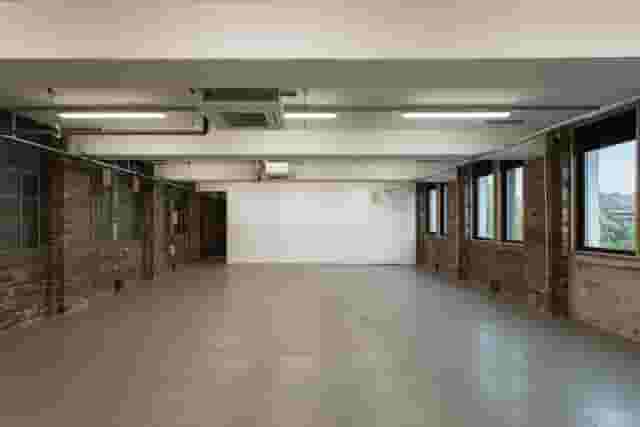
During the reception, guests need room to stand, hold a drink and circulate without dodging waiting staff carrying hot canapes. Standing capacity numbers published by venues can be misleading if you intend to serve substantial food during this window. If a room lists a standing capacity of 650 guests, like Exclusive Use at The Engine Works, it offers generous breathing space for a mid-sized company to set up welcome bars, registration desks and coat storage without cramping the opening hour.
Moving a crowd from drinks into dinner is where schedules often slip. If guests must move to another floor or wait for a room flip, momentum slows down. Historic townhouses and multi-room entertainment venues handle this division naturally by dedicating separate floors to each stage. For example, Private Event Spaces at The Corinthian Club provides a capacity of 500 standing across interconnected areas, allowing your team to move upward through the building as the evening transitions from formal drinks to dinner and dancing.
When using a single open space, such as the Warehouse at SWG3, which holds 500 for dining, you need a defined plan for how the room changes. If tables sit next to the dancefloor, position the DJ booth so guests who prefer to talk can remain seated without shouting over monitors. If the room must be turned around to open up the dancefloor, establish where guests will stand while staff clear tables, and ensure the background audio does not abruptly stop while furniture is moved. You can read more about balancing pacing and floor plans in this guide to planning a Christmas party.
Sound, production and dancefloor logistics
Organising a corporate party with a live DJ in Glasgow means dealing with venue licensing, noise management and technical infrastructure well before signing a contract. A space that looks atmospheric by day can present severe acoustic challenges once high-output audio systems and party lighting are brought in.
Sound limiters and acoustics
Many historic or city-centre buildings feature strict sound limiters tied to the venue licence. These devices measure decibel levels and cut power to the DJ booth if the volume breaches an agreed ceiling. Cavernous spaces with hard floors, brick walls or glazed roofs bounce sound around, creating muddied audio that triggers limiters at lower perceived volumes.
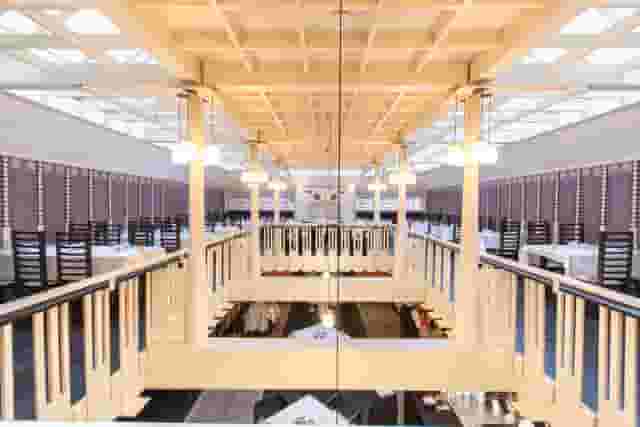
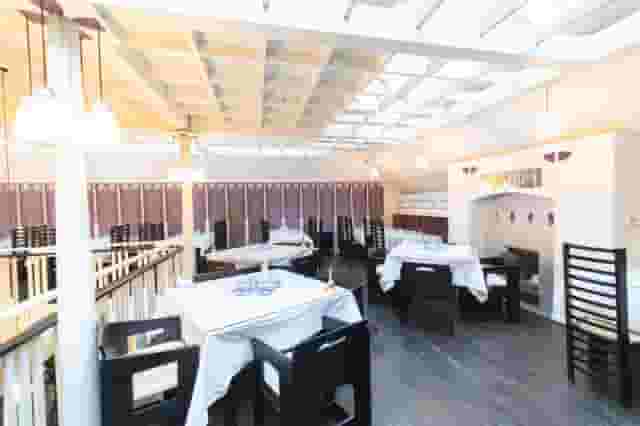
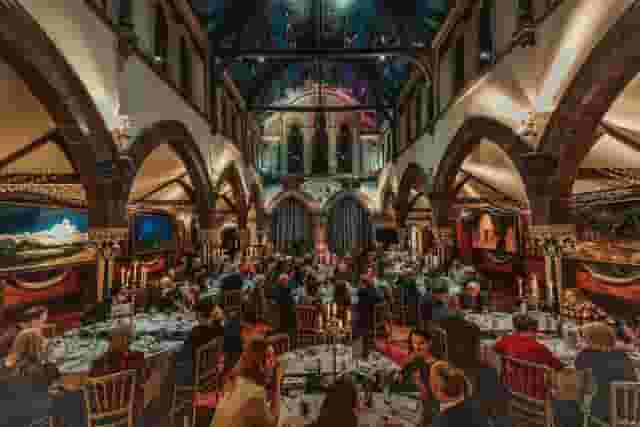
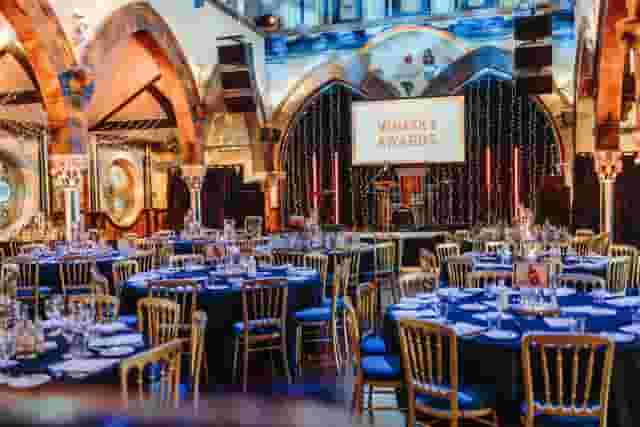
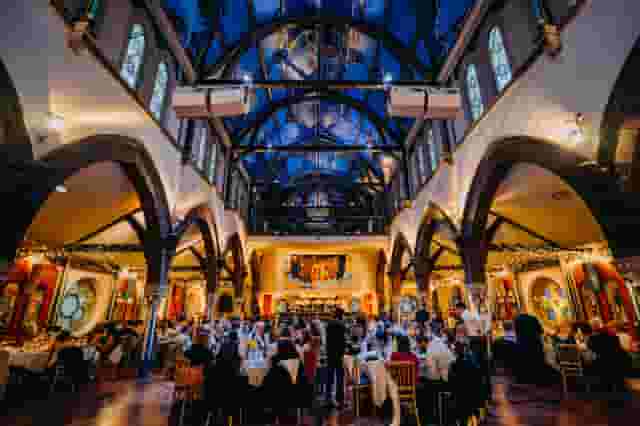
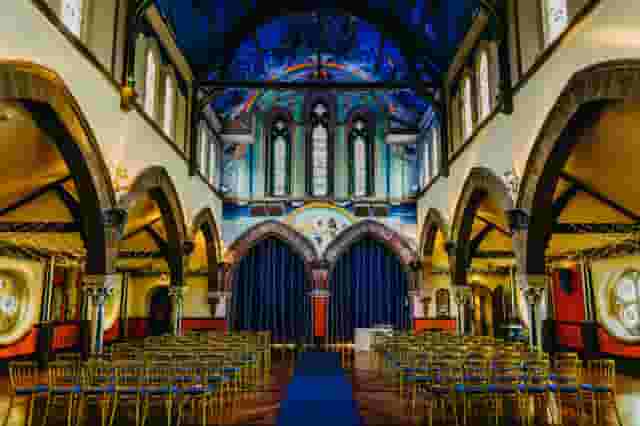
When evaluating heritage buildings or design-led venues like Mackintosh at the Willow, which accommodates 200 for dining, ask where amplified music can operate and whether external sound equipment is permitted. In delicate architectural spaces, background acoustics and acoustic sets work well, but full DJ club sets require explicit sign-off on bass frequencies and equipment positioning.
If your priority is high-energy late-night dancing, industrial and dedicated entertainment venues provide much more headroom. Venues designed for live music and touring events have dedicated three-phase power, acoustic dampening and high-grade in-house sound systems already tuned to the space.
Technical specifications and paperwork
Never assume an audio-visual package includes everything the DJ needs. A professional rider will typically demand two active monitors, specific digital media players, a performance mixer, a wireless microphone for company speeches and a sturdy booth at table height.
Before committing, request the technical specification from the venue coordinator and check the following details:
- In-house equipment: Does the venue supply a club-standard PA and lighting rig, or must your DJ hire external gear?
- Sound engineers: Is an in-house technician required to monitor decibel levels, and is their hourly rate included in the hire fee?
- Testing certification: Glasgow venues require all external electrical equipment to carry up-to-date Portable Appliance Testing (PAT) certification, alongside public liability insurance and formal risk assessments from the DJ.
- Haze and effects: Ask whether the venue smoke alarms permit water-based haze or fog machines. Many venues prohibit atmospheric effects because they trip building-wide optical fire sensors.
Load-in access is equally critical. City-centre properties often have narrow back lanes, pedestrian zones or strict loading-bay hours. Ask what time your production team and DJ can access the space, how long sound checks can run, and whether all gear must be struck immediately after the party ends.
Food and drink formats that maintain momentum
Food choices shape how people interact throughout the night. A formal plated meal creates a structured atmosphere suitable for awards and speeches, but it anchors guests to fixed seats for two hours or more. If your objective is a social night where departments mingle, alternative catering styles keep the energy moving toward the dancefloor.
| Catering format | Table space required | Movement between teams | Impact on schedule | Best suited for |
|---|---|---|---|---|
| Plated three-course dinner | 100% seated coverage | Low until coffee service | Rigid, takes 90 to 120 minutes | Formal speeches, annual awards and tradition |
| Festive bowl food | 20% to 30% poseur tables | High, continuous mingling | Fluid, served over 60 to 90 minutes | Social networking, active dancefloors and casual teams |
| Interactive food stations | 30% to 50% mixed seating | Very high as guests explore | Flexible, staggered across the night | Informal celebrations, varied dietary profiles |
| Traditional buffet | 70% to 100% seated coverage | Clustered around service points | Medium, requires table calling | Mixed age groups, generous portions and value |
For standing receptions where dancing follows directly, bowl food has largely replaced traditional finger buffets. Three or four substantial hot bowls per person, circulated by staff over ninety minutes, provide dinner-level sustenance without forcing everyone into assigned seating.
Whichever format you select, bar logistics will make or break guest satisfaction during the first hour. Standard venue bars built for routine trade cannot handle 200 colleagues arriving at 19:00, all ordering cocktails simultaneously.
To prevent queues:
- Stage welcome drinks: Set up dedicated trestle tables at the entrance with pre-poured fizz, beer, wine and non-alcoholic options so arriving guests get a drink immediately.
- Limit complex cocktail menus: If your package includes spirits, restrict the menu to simple two-ingredient pours during peak intervals, saving complex mixed drinks for later in the evening.
- Check staff-to-guest ratios: Insist on at least one bartender for every 35 to 40 guests. If the venue cannot provide this level of staffing, arrange a dedicated satellite bar serving beer, wine and soft drinks.
- Confirm drinks tokens versus open bars: If using tokens, distribute them alongside name badges or during the initial welcome to avoid a secondary queue inside the room.
Glasgow locations, transit cut-offs and guest arrivals
Selecting the right neighbourhood in Glasgow comes down to where your employees travel from and how they plan to get home after midnight. The city features distinct commercial and nightlife hubs, each offering different advantages for private evening functions.
| Area | Key locations |
|---|---|
| City Centre | Central Station, Queen Street, Buchanan Street |
| Finnieston & West End | Hydro, SEC, Kelvinhall, Argyle Street |
| Waterfront & South | Pacific Quay, Govan, Queen's Park |
City Centre convenience
For offices based around George Square, the financial district or along Buchanan Street, hosting your event in the core of the city keeps travel simple. Guests can walk straight from the desk to the venue without booking coaches or splitting taxi fares.
Centrally located properties also place your party on the doorstep of Glasgow Central and Queen Street stations, which is invaluable for colleagues commuting from Edinburgh, Stirling or Paisley. Venues such as Custom House at Clayton Hotel Glasgow City, which can host 220 in a theatre layout, provide both event space and on-site bedroom accommodation, solving logistics for regional staff who prefer not to travel late at night.
Finnieston, West End and riverside options
Moving west toward Finnieston and the Clydeside corridor brings access to converted industrial buildings, cultural landmarks and creative event spaces. Venues such as The Clydeside Distillery, which takes 180 guests for a reception, offer distinct character beside the river, away from high-street foot traffic. Across the water, the Atrium at Glasgow Science Centre can stage major productions for up to 650 guests under soaring architecture. You can explore how companies scale these larger creative events in this review of venues for large groups.
The trade-off with riverside and West End locations is evening transport. You must plan for the end of the night with precision.
The midnight transit cut-off
The Glasgow Subway network stops running before midnight from Monday to Saturday, with service ending significantly earlier on Sunday evenings. If your party ends at 01:00 or 02:00, the Subway will not be an option for departing guests.
Similarly, suburban rail services out of Glasgow Central and Queen Street taper off between 23:00 and 23:45. When booking a venue outside the immediate city centre, make sure there is a secure, well-lit taxi pick-up point, or consider organising pre-booked private coaches back to central transit hubs.
Check whether your venue has a managed drop-off zone with step-free entry for guests with mobility requirements, and confirm whether overnight parking is available for colleagues driving into the city.
Comparing venue contracts, licensing and hidden fees
Venue proposals for Christmas events can be difficult to compare on a like-for-like basis. One venue may provide an all-inclusive rate per head, while another quotes dry hire with separate bills for security, staffing, furniture hire and bar minimums. As an event planning and venue booking platform, Hire Space helps cut through uneven proposals by offering data-backed price estimates based on actual booking figures, supported by a team of real people who help verify true costs before you commit.
Because seasonal demand is intense across December, contract terms are stricter than at other times of the year. To protect your company budget, look past the initial room headline and examine the supporting lines.
Package structures
Venues generally quote corporate Christmas parties under one of three commercial structures:
- The complete festive package: A fixed fee per attendee that bundles venue hire, arrival drinks, a three-course dinner or bowl food, half a bottle of house wine and basic dancefloor lighting. This format offers budget certainty, but check whether it covers cloakroom attendants, DJ power fees or late-night security staff.
- Minimum spend: Common in public bars, boutique hotels and private dining rooms. You commit to spending an agreed total on food and beverage across the night. If guest numbers drop or drinking is modest, your organisation remains liable for the shortfall.
- Dry hire: You pay a flat rate for access to the bare walls and must bring in outside caterers, technical production, bar suppliers, event managers and cleaning teams. This model offers total creative flexibility for large productions, but requires significant management time and separate supplier contracts.
Critical contract clauses to scrutinise
Before executing an agreement, verify what is included in the base figure and what is charged as a mandatory supplement:
- Licensing extensions: Glasgow venues standardly operate until midnight or 01:00 on weekdays, with weekend licences extending to 02:00 or 03:00 depending on location. Confirm whether your quote includes the cost of applying for an occasional licence extension from Glasgow City Council, and find out what time the bar must close versus what time guests must leave the building.
- Door stewards and SIA security: Local licensing authorities often mandate security staff for private functions with amplified music, typically calculated at a ratio of two registered SIA door stewards for the first 100 guests, plus one additional guard per 100 guests thereafter. Check whether the venue supplies this team within the hire charge or invoices them as an hourly add-on.
- Catering and service charges: Review the fine print for discretionary or mandatory service charges, which commonly add 10% to 12.5% to food and drink tallies. Also verify whether listed figures include VAT, as corporate proposals occasionally display net figures that look deceptively low.
- Damage deposits and post-event cleaning: Clarify what level of cleaning is covered. Some dry-hire and industrial spaces require the hiring company to return the floor swept clear of all rubbish by 08:00 the following morning, or face heavy deductions from the security deposit.
- Attrition and payment terms: Review the cancellation timetable. Most festive contracts require a non-refundable deposit upon signing, followed by staged payments, with final guest numbers locked down four to six weeks before the party. Make sure the drop-out allowance allows you to adjust numbers down by at least 10% without financial penalty.
Taking the time to cross-examine these operational and commercial points during your initial venue walkthrough ensures the planning process remains straightforward, leaving you with an evening that runs reliably from the first arrival to the final track. Hire Space 360 is enterprise venue and hotel procurement for companies spending £1m or more a year on meetings and events: a managed meetings and events programme, the kind procurement teams call strategic meetings management. Organisations can see how Hire Space 360 works for procurement to place all venue sourcing under one master agreement, combining consolidated invoicing with real-time spend reporting that keeps corporate gatherings compliant with company event policy.
What our customers say
Inspiration and planning guides
7 Venues to Transform Your Office Party into a Festive Fiesta!
Make this year's office Christmas party one to remember with these 7 unique venues in London. From sleek rooftop bars to immersive wonderlands, there's something for every team.

Unique Venue of the Month: Banqueting House
On a blustery winter's day in January 1649, the deposed King Charles I was beheaded by the victorious rebels of the Civil War. And the bloody execution took place just outside of our Unique Venue of the Month. Not many venues can claim to be of such historical significance, but Banqueting House [https://hirespace.com/Spaces/London/42821/Banqueting-House/Main-Hall/Weddings] – the only remaining part of the Palace of Whitehall, where English monarchs used to reside – played a major part in Briti

Review: La Belle Assiette
Dining is often the centrepiece of an event, whether served in sit-down, buffet or casual-canapé style. Especially today – when being a “foodie” is a common and trendy trait, and when culinary TV shows are among the most popular – parties of all kinds are putting a renewed significance in the edible aspects. After securing a venue, therefore, all eyes are naturally turned to the plate. Indeed, La Belle Assiette [https://labelleassiette.co.uk/] translates literally as The Beautiful Plate, and
One supplier. Every venue. Full visibility on what you spend.
Multiple venues and events. One agreement.