5 Star Hotels in Edinburgh City Centre
Every hotel has 5 stars and its own event space, and most of the hotels have 100 or more rooms for your group.
- Free to enquire
- Group bookings team
7 hotels in Edinburgh City Centre
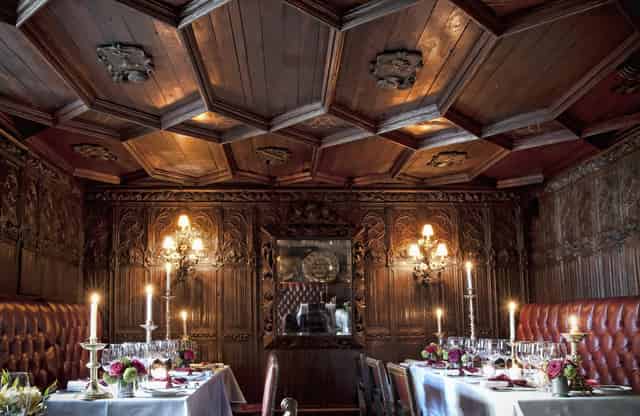
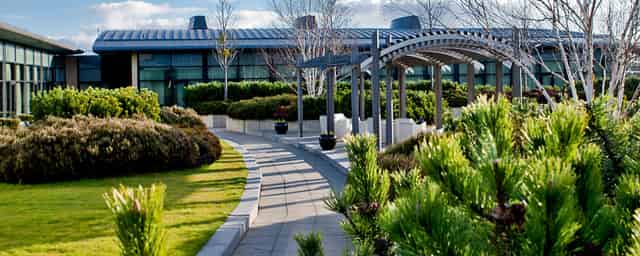
The Glasshouse, Autograph Collection
Estimate£90 to £270 per night in November
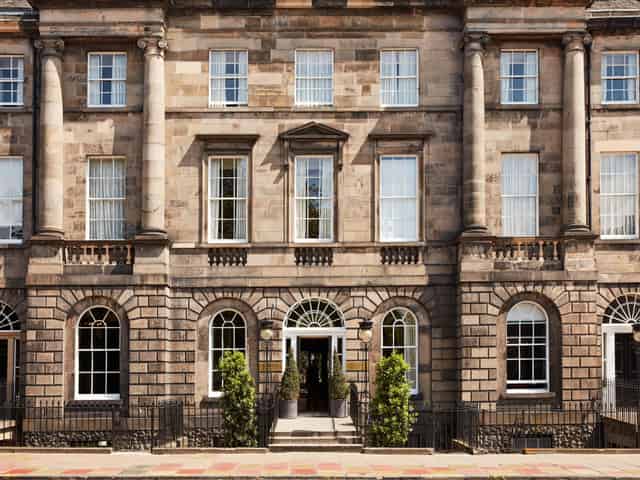
Kimpton Charlotte Square Hotel
Estimate£140 to £450 per night in November
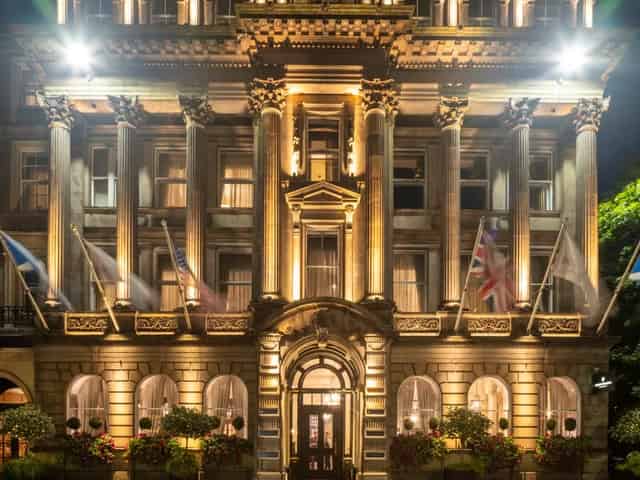
InterContinental Edinburgh the George by IHG
Estimate£110 to £360 per night in November
Explore more NEW
About 5 Star Hotels in Edinburgh City Centre
Selecting the right size of 5 star hotels in Edinburgh City Centre for your group
Room counts run from 9 to 289 rooms across the central district, where every hotel has 5 stars. The majority of the hotels have 100 or more rooms, providing the physical capacity required to assemble larger delegations under one roof.
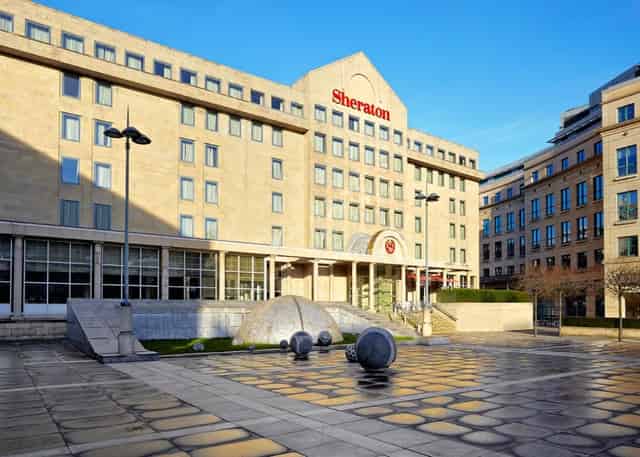
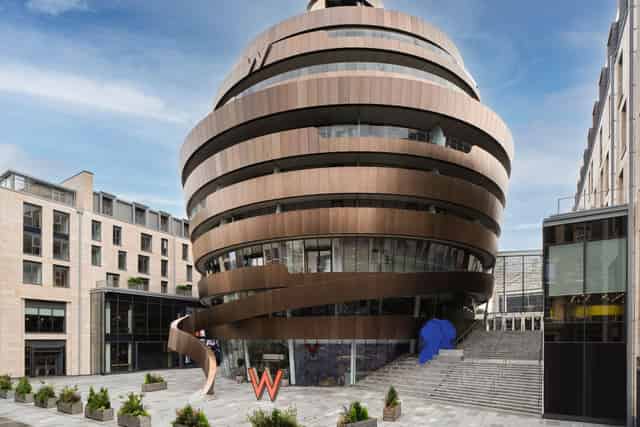
Around half of the hotels have 200 or more rooms, including the three largest hotels on the list. For sizeable room allocations, central properties include W Edinburgh with 289 rooms, Sheraton Grand Hotel & Spa, Edinburgh with 269 rooms, InterContinental Edinburgh the George by IHG with 240 rooms, and Kimpton Charlotte Square Hotel with 211 rooms. Every one of these named hotels has its own event space on site. Larger properties provide faster breakfast turnaround and more flexible bed configurations for attendees.
Smaller room blocks suit different operational requirements. A small number of the hotels have 50 to 99 rooms, while only a few hotels have fewer than 20 rooms. These compact properties work well for executive boards prioritising privacy and quiet communal areas over large public spaces. Between these tiers, a few of the hotels have 100 to 199 rooms, bridging the gap between intimate boutique properties and central conference hotels.
How many rooms to hold in your block and when to reserve them
Attrition penalties make over-contracting expensive when managing delegate accommodation. Central accommodation providers enforce strict financial terms if held bedrooms go unallocated, so organisers should reserve rooms only for confirmed or highly probable travelling attendees.
Local calendar pressure dictates contracting deadlines. Edinburgh experiences intense demand during the August festivals, late May, June, September, and throughout December. Securing room allocations during these peak periods requires contracting nearly a year in advance. Quieter periods such as January or November allow shorter lead times and more room to negotiate terms.
Organisations should mitigate financial risk by building phased release milestones directly into the group agreement. Standard contracts generally require preliminary rooming lists several weeks ahead of arrival, followed by final delegate names confirmed a month out. Negotiating an attrition threshold allows planners to release a defined proportion of held rooms without financial penalty as these deadlines approach. Contracts should also confirm specific bed layouts across the block, because historic properties in central conservation areas often contain fixed double beds rather than twin arrangements. Setting clear operational parameters early prevents unneeded room commitments and avoids dispute when final numbers settle.
Typical nightly room rates across the year and what drives price changes
Nightly rates shift markedly across the calendar year. Typical rates run from £110 to £820 per night in November, £110 to £770 per night in December, and £80 to £440 per night in January. Each is based on the middle half of the hotels on this page with a typical price for that month. These figures are indicative estimates, not quotes or availability.
Corporate conferences and financial services gatherings maintain commercial demand through late autumn, sustaining higher price bands. December room rates remain elevated due to holiday parties and annual corporate dinners competing for central bedrooms. By January, transient corporate bookings drop sharply, lowering room rates across the city and creating an advantageous window for organisations with flexible dates.
Contracting blocks for late autumn demands early commitment before bedroom supply tightens and pushes rates toward the upper limits of the range. When negotiating the contract, verify whether breakfast, high-speed internet, and local taxes are included in the agreed room rate. Confirming these elements up front prevents secondary expenses from inflating the accommodation budget after arrival.
Getting your group smoothly between central hotels and the event
Edinburgh's steep topography shapes journey times between accommodation and external event sites. Although the city centre is geographically compact, moving between the Old Town and the New Town involves steep hills, uneven cobbles, and flighted public staircases. Planners should identify step-free pedestrian routes between accommodation and meeting rooms in advance, particularly because the dramatic gradient between Princes Street and the Royal Mile can challenge delegates with luggage or limited mobility. Bad weather makes pre-arranged taxi accounts or private shuttles an essential operational fallback.
Coordinating coach transfers demands precise timing. Historic street layouts, timed pedestrian zones along George Street and the Royal Mile, and limited kerbside bays outside central properties prohibit extended vehicle idling. Coaches must operate within tight pick-up windows to avoid urban bottlenecks during morning and evening rush hours.
Public transit networks offer a reliable alternative to road vehicles. Waverley railway station lies directly between the Old and New Towns, placing arrivals within easy reach of central hotel bedrooms. In addition, the tram line running through St Andrew Square delivers rapid transit links across the core area without delays from road congestion.
On-site event spaces, private dining and practical hotel amenities beyond a bed
Hosting meetings and private dinners on site eliminates evening transit and keeps complex itineraries running to schedule. For formal banquets, reserve a self-contained private dining room rather than a partitioned corner of a public restaurant to maintain conversational privacy. Review catering timings directly with the banqueting team so that multi-course group service runs without delays alongside regular restaurant covers.
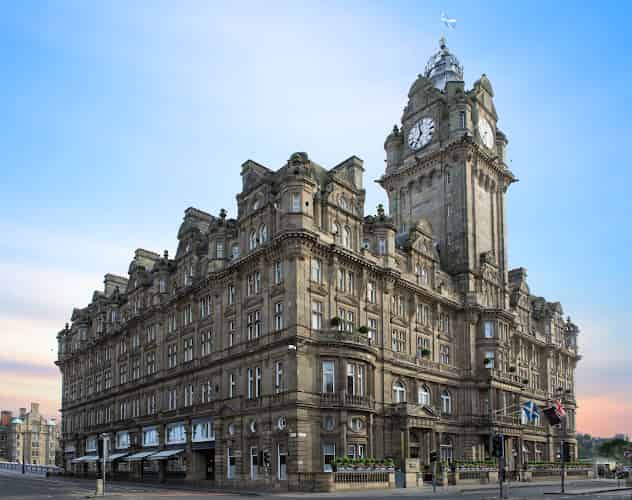
Using hotel meeting rooms requires attention to physical layout, particularly within listed Georgian buildings. Historic preservation rules often prohibit fixing temporary lighting, heavy displays, or acoustic panelling to ornate plasterwork and decorative ceilings. Planners should confirm adequate floor sockets for delegate devices, dedicated hardwired network connections for presentations, and soundproofing from adjoining public spaces.
Operational support outside meeting hours also affects the group experience. When large delegations arrive before standard afternoon check-in, arrange a secure, dedicated luggage holding room rather than relying on standard concierge storage. Coordinating designated breakfast sittings or private morning buffets prevents congestion in central dining rooms, giving attendees time to prepare before the business day begins.
To compare options for your group, explore the hotels listed below.
Questions about 5 Star Hotels in Edinburgh City Centre
How far ahead should I book rooms for a group in Edinburgh?
How much do 5-star hotel rooms in Edinburgh City Centre cost per night?
Why are hotels so expensive in Edinburgh?
What size of 5-star hotel suits a large group?
Do 5-star hotels in Edinburgh have their own event space?
What is the largest 5-star hotel in Edinburgh City Centre by rooms?
Are 5-star hotels in Edinburgh City Centre easy to reach on foot?
Where is the best area to stay in Edinburgh City Centre for a group?
What should I ask a hotel before booking a group room block?
Are 5-star hotels in Edinburgh worth it for corporate groups?
Need rooms across several hotels?
Our group bookings team can split a block between hotels near your venue. Free, no obligation.