5 Small Meeting Rooms in venues in Central London
No venues match these filters
Try widening your capacity, luxury level or event type.
Explore small meeting rooms in Central London for up to 500 people. Perfect venues for professional events.
No venues match these filters
Try widening your capacity, luxury level or event type.
For business events that need human judgement, talk to our team. Free for 100 person+ events organised by businesses.

Tell us what you need. Our deep research finds any venue, whether it's in our marketplace or not. No one else does this.
Here's something that might surprise you: when we talk about "small meeting rooms" for 500 people, we're actually referring to venues that are perfectly sized for this capacity without feeling overwhelming. These spaces, typically around 400-600 square metres, offer something unique that massive conference centres simply can't match – intimacy at scale.
I've organised countless events in Central London, and there's a sweet spot when it comes to venue size. The Small Meeting Rooms in Central London for 50 people might seem worlds apart from what you need, but the principles remain the same – it's about creating connection, not just accommodation.
The beauty of Central London's small meeting rooms lies in their flexibility. Take The Brewery's Sugar Rooms, for instance – at 500 square metres, it can comfortably host 500 in theatre style, 350 for a banquet, or 250 in classroom configuration. That's the kind of versatility that lets you adapt your event format without changing venues.
These spaces typically feature 4-metre minimum ceiling heights, which is crucial for proper AV setups and maintaining that airy feel despite the crowd. You'll also find dedicated 3-phase power supply (63 amps per phase) and minimum 100 Mbps internet – essentials that larger venues sometimes overlook in their rush to accommodate thousands.
Location matters enormously when you're bringing 500 people together. Central London's transport links mean your attendees can reach venues like those in Holborn or Fitzrovia within 10 minutes from major hubs like King's Cross or Liverpool Street.
Budget-wise, expect to invest £15,000+ for a full day hire in Central London. Yes, it's a significant investment, but consider this: your venue costs per delegate work out to around £30-50, which is remarkably competitive when you factor in the prime location and included amenities.
The key is understanding that these "small" meeting rooms aren't small at all – they're perfectly proportioned for creating memorable experiences that larger venues struggle to deliver. Your next step? Start by identifying venues with proven track records for 500-person events and book at least 6-8 weeks ahead, especially during peak seasons from May to July.
Planning a 500-person event in what's technically classified as a "small meeting room" requires a completely different approach than your typical large-scale conference. After years of managing these events, I've developed a systematic approach that prevents the chaos that can easily unfold when you're working with tighter spatial constraints.
The sweet spot for booking Central London venues is 8-12 weeks ahead, particularly if you're eyeing peak periods between May-July or November-December. I've seen too many event planners leave this until 4-6 weeks out, only to find their preferred venues in Mayfair or Marylebone fully booked. Budget around £15,000-£25,000 for a full day hire, with a 25% deposit typically required upfront.
This is where compact venues require extra attention. With 500 people in a 400-600 square metre space, you need designated entry and exit points to prevent bottlenecks. I always insist on at least three access points and plan for staggered arrival times – perhaps 30% arriving 15 minutes early, 50% on time, and 20% fashionably late.
Theatre style works brilliantly for 500 people, but consider hybrid configurations. I often recommend a 400-person theatre setup with 100 standing networking spaces at the back – this creates natural movement and prevents that "trapped in rows" feeling that can occur in smaller venues.
Your venue needs minimum 100 Mbps dedicated internet and 3-phase power supply. For 500 people, you'll need at least 10 wireless microphones, multiple projection screens, and crucially – backup systems. I always budget an extra £3,000-£5,000 for AV beyond what venues typically include.
Compact venues mean creative catering solutions. Instead of traditional buffet lines that create queues, consider stationed catering or pre-plated options. Budget £45-£75 per person for quality catering that won't overwhelm your space.
Central London venues near Liverpool Street or London Bridge offer excellent transport links, but parking remains challenging. I typically arrange group transport or negotiate corporate rates with nearby NCP car parks (expect £12+ per hour).
Weather, transport strikes, last-minute cancellations – they all happen. I always have a 10% capacity buffer and relationships with venues that can accommodate overflow if needed.
Your next step is creating a detailed timeline working backwards from your event date, ensuring each element has adequate lead time for a flawless execution.
Getting 500 people to your Central London venue efficiently is half the battle won – and frankly, it's where many event planners either shine or completely fall apart. The good news? Central London's transport network is genuinely world-class, but you need to think strategically about how your attendees will actually move through the city.
These three stations form what I call the "golden triangle" for Central London events. King's Cross connects to six Underground lines and offers direct Eurostar access – perfect if you're hosting international delegates. From King's Cross, it's just 10 minutes to Oxford Circus via the Victoria Line, putting venues in Fitzrovia or Marylebone within easy reach.
Liverpool Street is your gateway to the City and East London, whilst Paddington's Heathrow Express (15 minutes from the airport) makes it invaluable for corporate events with flying delegates. I always factor these journey times into my event scheduling – there's nothing worse than a 9am start when half your audience is still navigating the Tube.
Here's something most planners overlook: Central London's transport capacity varies dramatically by time. The 8:30-9:30am window is brutal – I've seen delegates arrive 45 minutes late simply because they underestimated rush hour. For 500-person events, I typically recommend 10am starts or later, allowing the morning chaos to settle.
Consider venues near Waterloo or London Bridge – both offer excellent connectivity without the worst of the City rush. Waterloo alone serves 100 million passengers annually, with direct links to the South Coast and excellent Underground connections.
Let's be honest about parking – it's expensive and limited. NCP Covent Garden charges around £12 per hour, and that's fairly typical. For 500 delegates, maybe 50-100 will drive, so I usually negotiate group rates with nearby car parks or arrange shuttle services from Park & Ride locations outside Zone 1.
With 500 attendees, you're statistically likely to have delegates with mobility requirements. Central London stations vary enormously in accessibility – Liverpool Street has excellent lift access, whilst some smaller stations still rely on stairs. Always check TfL's accessibility maps and provide alternative routes in your pre-event communications.
Your next step? Create a detailed transport guide for delegates, including multiple route options, estimated journey times, and backup plans for service disruptions. Trust me, your attendees will thank you for it.
Here's the reality about budgeting for Central London meeting rooms: most planners either wildly underestimate costs or throw money at problems that smart planning could solve. After managing hundreds of these events, I've learned that the difference between a £20,000 event and a £35,000 disaster often comes down to strategic thinking, not venue quality.
For a 500-person event in Central London, you're looking at £15,000-£25,000 for venue hire alone – but that's just the starting point. I typically budget using the 60-25-15 rule: 60% venue and catering, 25% AV and production, 15% contingency and extras. So if your total budget is £40,000, expect £24,000 for the venue package, £10,000 for technical requirements, and £6,000 for those inevitable last-minute additions.
The sweet spot for value? Tuesday-Thursday bookings in February or March. I've secured venues that cost £25,000 in June for £18,000 in these quieter periods. It's not just about avoiding peak season – venues in areas like Clerkenwell or Farringdon often offer better rates than their Mayfair counterparts whilst providing identical functionality.
Here's where experience pays dividends. Most venues quote day delegate rates of £55-£120+ per person, but there's always room for movement. I negotiate package deals that include AV basics, WiFi upgrades, and extended access hours. For 500 people, that might save £3,000-£5,000 compared to booking elements separately.
The key is timing your negotiations. Venues are most flexible 6-8 weeks before your event – early enough that they want to secure the booking, but close enough that they're realistic about availability. I've also found success in booking multiple events with the same venue group, leveraging volume for better rates across Small Meeting Rooms in North West London and South West London locations.
Security deposits, overtime charges, and equipment delivery fees can add £2,000-£4,000 to your final bill. I always request a detailed breakdown of potential extras upfront and build these into my initial budget. Service charges, often 12.5%, aren't always included in initial quotes either.
Your next step? Create a comprehensive budget spreadsheet with 15% contingency built in, then start your venue search with clear parameters. Remember, the cheapest option rarely delivers the best value when you factor in hidden costs and potential complications.
I've watched countless event planners make the same costly mistakes when booking small meeting rooms for 500-person events – and honestly, most of these errors could be avoided with a bit of insider knowledge. The challenge with these venues is that they require a completely different mindset from traditional large-scale conference planning, and that's where things often go wrong.
The biggest error I see? Planners booking 400 square metre venues thinking they'll comfortably fit 500 people in any configuration. Reality check: theatre style works brilliantly, but if you want networking space, exhibition areas, or catering stations, you need to plan for 1.2-1.5 square metres per person minimum. I've rescued events where organisers realised too late that their "perfect" venue in Soho couldn't accommodate both their audience and their ambitious networking reception.
Here's where the "small" in small meeting rooms becomes misleading. A 500-person event needs serious technical infrastructure – we're talking 3-phase power supply, dedicated internet lines, and professional AV systems. I've seen events fail because planners assumed standard meeting room tech would scale up. Always verify your venue can handle minimum 100 Mbps bandwidth and has backup power systems. Budget an extra £4,000-£6,000 for technical upgrades beyond basic venue packages.
Compact venues amplify crowd flow issues exponentially. I always insist on venues with multiple access points and plan staggered arrivals – 30% early, 50% on time, 20% late. Without this, you'll create bottlenecks that turn your professional event into a chaotic scrum. Venues near transport hubs like Barbican or Charing Cross help, but you still need a solid crowd management strategy.
Central London's premium venues book up 8-12 weeks in advance, especially during peak seasons. I've seen planners scramble for alternatives just 4 weeks out, ending up with subpar venues or paying premium rates. The sweet spot for both availability and pricing is booking 10 weeks ahead – early enough for choice, but not so early that you're paying peak advance rates.
For 500 people, you need premises licenses for alcohol service and potentially entertainment licenses for music or presentations. Many venues handle this, but always confirm. You'll also need minimum £5 million public liability insurance and potentially additional event-specific coverage.
Your next step? Create a detailed venue checklist covering space calculations, technical requirements, and licensing needs before you start your search. This preparation prevents costly mistakes and ensures your event runs smoothly from the start.
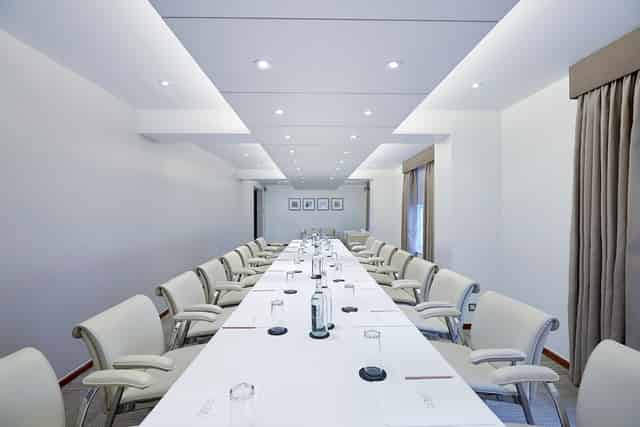
Looking for the coolest meeting rooms in London? From stylish interiors to unique settings, here are 8 venues that will definitely elevate your next meeting!

Located in the heart of the City, Salters’ Hall combines the rich heritage of the salt trade of medieval London with contemporary surroundings. Rebuilt in 1972 by Basil Spence and now a Grade II listed building, it is a rare example of a post-war livery building and has remained largely untouched until now... Architects de Metz Forbes Knight [http://www.dmfk.co.uk/projects/load/salters-hall] (dMFK) were tasked with the project to upgrade the building whilst retaining its sense of history and al

Creative ventures across the artistic spectrum are accommodated and embraced at Anomalous Space [https://hirespace.com/Venues/London/1551/Anomalous-Space], situated stunningly close to Angel Station on Pentonville Road. The venue's name captures its uniqueness, in that it deviates from the standard, unoriginal function space that's all too common. Anomalous Space combines the most contemporary of technological facilities with Art-Deco features, all set within an authentic Georgian townhouse.
Multiple venues and events. One agreement.