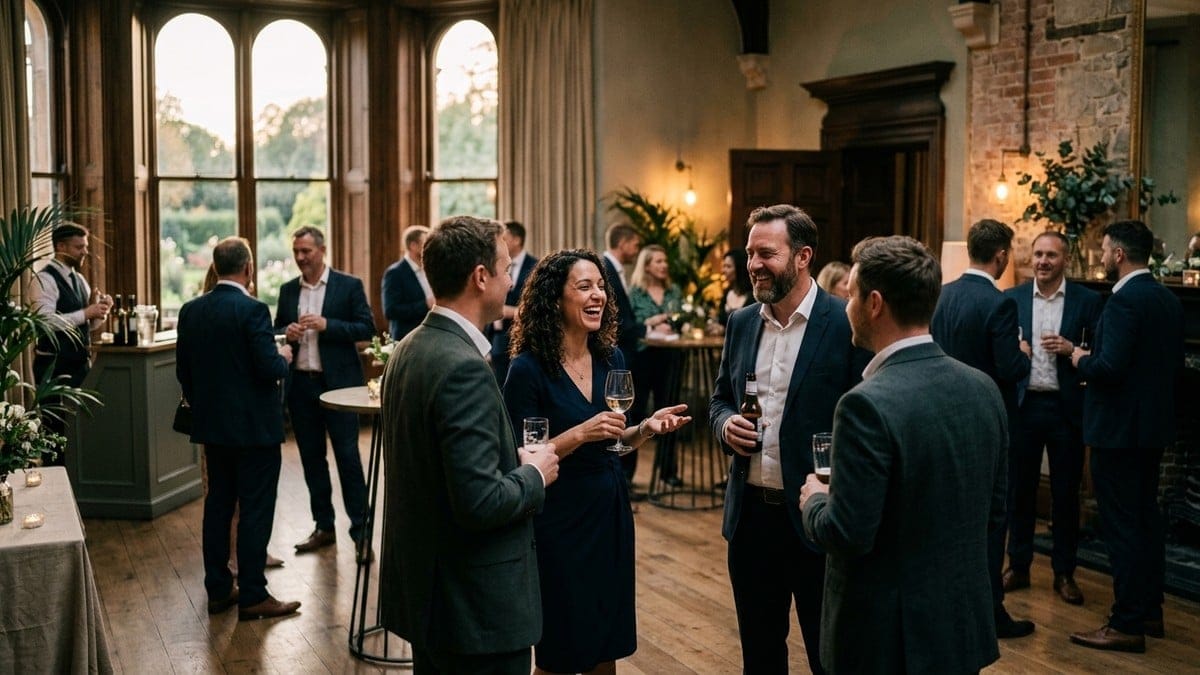
Two things are happening to corporate events at once. Budgets are tighter, and attendees are asking for different things from the ones a big production is built to deliver. Put those together and the same answer keeps coming up: spend on less, and spend on it well.
The instinct when money is tight is to trim everything evenly, a bit less of this, a bit less of that. The better move is to edit. Decide what actually changes how the day feels, spend there, and hold back on the rest. That is not a smaller event. It is a sharper one.
The budget squeeze is real
Start with the money, because it is the pressure everyone is planning around. Cost is the number one challenge for meeting professionals for the second year running, according to the Amex GBT 2026 Global Meetings and Events Forecast, and Cvent's planners agree, with two thirds expecting costs to rise. The squeeze is real.
What is not happening is events being cut. In Bizzabo's 2025 research, 78% of organisers still call in-person their most impactful marketing channel. So budgets are being defended and scrutinised at the same time. The room is trusted to do what a webinar cannot, which means every line of spend has to earn its place.
"In times where budgets get smaller, it is important to really make sure that the money you are spending on events is well spent."
Colja Dams, VOK DAMS, speaking at Event Tech Live 2025
Well spent is the phrase that matters. Restraint is not about spending less for its own sake. It is about making sure the money lands where guests will feel it.

What attendees actually rate
Here is where the case for restraint stops being a matter of taste. Ask attendees what they value and production polish rarely comes near the top. The Amex GBT forecast puts improving attendee experience as the number one priority for 2026, and what attendees ask for is more interactive sessions, more time to talk and more personalised moments, not more spectacle.
Bizzabo puts the gap plainly: 74% of attendees want immersive experiences that let them switch off, but only 38% of organisers prioritise creating them. Hilton's 2026 Why We Gather research points the same way, with nearly half of people attending work events mainly to meet others. The appetite is for connection and headspace, not a fuller programme.
Simple is not the same as cheap
This is the line to hold. Cheap is what happens when you trim evenly and hope no one notices. Simple is a decision, and one strong idea delivered properly usually beats five half-funded ones.
None of this means production never earns its place. A flagship product launch, a brand moment or a stage built to be filmed can absolutely justify the spend, and sometimes scale is the point. But for the everyday run of conferences, away days and team events, the returns tend to cluster around a few things guests actually feel, not the number of elements on the run sheet.
There is a softer argument too, and it is worth naming as a judgement rather than a data point. A room that is not trying too hard tends to signal a host who knows exactly what the event is for. A packed agenda and a wall of gimmicks can quietly suggest the opposite. That is our read from the events we help to run, not a rule.
Hire Space Top Tip:
Pick one hero element and protect its budget: the food, the space or a single memorable moment. Fund that properly, then strip back everything competing with it for attention. Guests remember one thing done brilliantly, not ten done adequately.
Where to spend, and where to stop
Spend on the things guests experience directly. Good food and drink. Enough space to move and talk. Time in the agenda that is not filled. A venue that feels like somewhere, not anywhere.
The venue is where this pays off most. Tellingly, 93% of planners say they will pay more to book a venue they trust to deliver, according to Cvent. That is budget moving towards the thing guests feel, and away from the things they do not.
Hold back on the spend that flatters the host more than the guest. Staging built for the photos rather than the room. Giveaways that travel home in the bin. A fourth keynote when the feedback keeps asking for time to talk.
Networking is where this shows up most. Teams hear "we want more networking" and reach for another drinks hour. That is rarely what people mean.
"They do not want sterile talks under neon light with a glass of wine, trying to find a meaningful stranger. They want more thoughtful, meaningful connection that will propel them, their business and their community forward."
Christine Renaud, Braindate, speaking at Event Tech Live 2025
What guests want is easier and cheaper to deliver than a bigger production. Fewer people, a reason to talk, somewhere comfortable to do it. Structure beats spend.

Let the venue do the heavy lifting
The single biggest lever on a lean budget is the space itself. A venue with its own character, good light, proportion, a view, texture, needs very little dressing. A blank room often needs significant production spend just to feel like an occasion, money that buys atmosphere the right venue would have given you for nothing.
So the venue brief changes. Instead of the biggest room for the money, look for the space that does the work for you. That is a design decision, not a logistics one, and it is usually where the savings and the atmosphere both come from.
This is what Hire Space is built for. Deep Research searches the full market for spaces with real character, not a pre-registered shortlist, and Instant Quotes tells you what each one costs before you enquire, so you can compare on value rather than guesswork.
Find a space that does the heavy lifting
Search venues with real character, and see what they cost before you enquire.
Search venuesLess, but better
Restraint is not the compromise it is made out to be. Done well it is the confident option, and often the premium one. The sharpest teams do this by cutting the spend that was not earning its place, then moving it to where guests will feel it.
Fewer moving parts. A clear point. A space that carries the room. That is what a good event looks like in 2026, and it usually costs less than the one it replaces.
Other platforms search their database. We search everything.
Tell us what you need. Our deep research finds any venue, whether it's in our marketplace or not. No one else does this.
One supplier. Every venue. Full visibility on what you spend.
Multiple venues and events. One agreement.

With 10 years in events, Kim leads growth at Hire Space. Writing about what's shaping the future of events, from personalisation and experience design to the technology making it all possible, turning industry insight into practical advice.
Related articles
The Hot List: Six Venues to Meet Before Everyone Else Books Them
Meet the venues our clients can't stop asking about at The BNC Show on 29 October, from a skyline space 254 metres up to Mayfair's newest opening.
Why UK Event Calendars Got So Tight (And How to Book Smarter)
Lead times for UK corporate events are up 39% since 2022, based on Hire Space booking data. The calendar is tighter, conversion rates fall sharply when you leave it late and the peak windows are getting more crowded. Here is what the numbers say and what to do about it.