1 Meeting Rooms in venues in City Of London
No venues match these filters
Try widening your capacity, luxury level or event type.
Explore top meeting rooms in the City of London for up to 300 people.
No venues match these filters
Try widening your capacity, luxury level or event type.
For business events that need human judgement, talk to our team. Free for 100 person+ events organised by businesses.
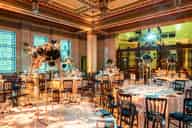
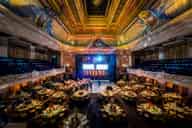
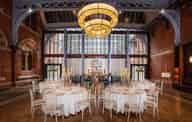
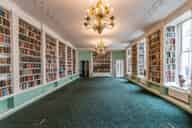
Tell us what you need. Our deep research finds any venue, whether it's in our marketplace or not. No one else does this.
When you're tasked with organising a meeting for 300 people, there's nowhere quite like the City of London to deliver that perfect blend of prestige and practicality. Having organised countless large-scale corporate events in the Square Mile over the years, I can tell you that this area continues to set the benchmark for serious business gatherings.
The numbers speak for themselves – with over 500,000 people working within the City's boundaries and proximity to major financial institutions like Goldman Sachs and Deloitte, your networking potential is unmatched. What really sets the City apart is its unique infrastructure designed specifically for large corporate gatherings. Unlike other London areas where you might struggle with venue capacity, the City boasts purpose-built spaces like The Brewery and Guildhall that can comfortably accommodate 300+ delegates with room to breathe.
The concentration of corporate headquarters means your attendees are likely already familiar with the area, reducing the usual pre-event anxiety about navigation. Liverpool Street and Bank stations handle over 100 million passengers annually, making them incredibly well-equipped for your delegate influx. I've seen events where 80% of attendees arrived within a 15-minute window – that's the kind of transport efficiency you simply can't replicate elsewhere.
What's particularly compelling for 2025 is the ongoing Culture Mile development, which is transforming the area's appeal beyond traditional business hours. This means your delegates can extend networking into evening events without the usual London venue-hopping logistics nightmare.
The City's venues have invested heavily in hybrid event capabilities – essential when you're dealing with 300-person meetings where some attendees might join virtually. Venues like The Top 3 London Hotels With Great Meeting Rooms showcase how traditional City venues have embraced cutting-edge technology without losing their prestigious atmosphere.
For context, day rates for premium 300-person meeting spaces in the City typically range from £10,000-£15,000, but the ROI in terms of attendee convenience and corporate credibility often justifies the investment. The proximity to Meeting Rooms in Blackfriars and Meeting Rooms in Temple also provides excellent backup options if your preferred venue isn't available.
The key is understanding that in the City, you're not just booking a room – you're securing access to London's most connected business ecosystem.
After two decades of booking large-scale meetings in the City, I've learned that certain requirements simply can't be compromised on when you're dealing with 300 delegates. Miss any of these seven essentials, and you'll find yourself managing a logistical nightmare rather than a successful corporate gathering.
Your venue needs a minimum of 250-400 m² to comfortably seat 300 people, but here's what most organisers miss – you need at least 30% additional space for registration, networking, and breakout areas. I've seen too many events where delegates were literally queuing in corridors because the venue looked impressive on paper but lacked practical flow space.
Theatre-style seating works for presentations, but if you're planning any interactive elements, ensure the space can accommodate classroom-style for 150 people or cabaret rounds for 200. The Churchill Room at Queen Elizabeth II Centre demonstrates this flexibility perfectly at 300 m².
With 300 people, you're looking at potentially 600+ devices needing power and Wi-Fi. Demand a minimum 100 Mbps dedicated line – shared bandwidth will crash during peak usage. I always insist on seeing the venue's power distribution plan; you need at least three-phase power with 63 amps per phase to handle professional AV setups without tripping circuits mid-presentation.
Your sound system needs line array speakers for even distribution across large spaces. I've witnessed presentations where the back third of delegates couldn't hear properly – it's a credibility killer. Ceiling height matters too; anything under 3.5m will create acoustic issues and limit your projection options.
Liverpool Street and Bank stations aren't just convenient – they're essential for managing 300-person arrivals. Peak morning capacity means your delegates can arrive within a tight window without overwhelming local transport. For comparison, venues near Small Meeting Rooms in Clerkenwell or Small Meeting Rooms in Farringdon simply can't match this infrastructure.
Your venue must have dedicated catering prep areas and service corridors. Serving 300 people breakfast, lunch, and refreshments requires industrial-level facilities – not just a small kitchen. Ask about simultaneous service capability; you want all delegates served within 15 minutes, not 45.
With 300 people, you need multiple fire exits, clear evacuation procedures, and £5 million public liability insurance minimum. The venue should provide detailed emergency protocols and have trained staff ratios of at least one security person per entrance.
Finally, negotiate cancellation policies that protect you beyond the standard 30 days. Large meetings often face last-minute changes, and venues like The Top 5 Historic Meeting Rooms in London understand this reality.
Before signing anything, walk the space during a similar-sized event to see how these requirements perform under real conditions.
The moment you're dealing with 300 delegates, transport logistics shift from simple coordination to strategic orchestration. I've learned this the hard way – watching perfectly planned meetings descend into chaos because we underestimated the complexity of moving that many people through London's transport network simultaneously.
The City's transport infrastructure is genuinely world-class for large-scale events, but you need to work with it intelligently. Liverpool Street Station alone handles 66 million passengers annually, while Bank Station processes over 50 million – these aren't just convenient stops, they're purpose-built for mass movement that smaller areas simply can't match.
Here's what most organisers get wrong: they assume delegates will arrive evenly over 30 minutes. In reality, 70% will arrive within a 10-minute window, typically 8:50-9:00 AM for a 9:00 AM start. Plan for this surge, not the theoretical spread.
I always recommend staggered registration times – invite your VIP speakers for 8:30 AM, senior management for 8:45 AM, and general delegates for 9:00 AM. This prevents the dreaded bottleneck where 200+ people hit your registration desk simultaneously.
Liverpool Street offers the best overall connectivity – direct links to Stansted Airport (32 minutes), excellent Tube connections, and the new Elizabeth Line providing 15-minute access to Heathrow. For international delegates, this connectivity is invaluable.
Bank Station works brilliantly for delegates coming from South London or those staying in hotels around Meeting Rooms in Waterloo area. The Northern Line direct connection means no changes required.
The 8:30-9:30 AM window is when the City's transport runs at maximum efficiency. Outside these hours, you'll face reduced service frequency. I've seen afternoon meetings where delegates struggled with 15-minute Tube intervals instead of the 2-3 minute peak service.
For venues near Small Meeting Rooms in Barbican, factor in the 5-minute walk from Barbican Station – multiply that by 300 people and you need a 20-minute arrival window minimum.
Always provide three route options in your delegate communications. Include walking times from each station (Bank: 3 minutes, Liverpool Street: 7 minutes, Moorgate: 5 minutes) and have venue staff positioned at key exits during arrival times.
The key is treating transport as part of your event experience, not just a necessary evil. When you get this right, delegates arrive relaxed and ready to engage – exactly the mindset you want for a successful 300-person meeting.
Let's talk numbers, because budgeting for a 300-person meeting in the City isn't just about the headline venue cost – it's about understanding the complete financial picture that many organisers discover too late in the process.
Based on current market rates, you're looking at £10,000-£15,000 per day for premium meeting spaces that can genuinely accommodate 300 delegates comfortably. But here's where it gets interesting – that's just your starting point. I've seen final invoices reach £25,000-£35,000 once you factor in the essential extras that venues don't always highlight upfront.
Your venue hire typically covers the basic room and standard AV, but professional sound systems for 300 people require line array speakers at £2,000-£3,000 additional. Dedicated Wi-Fi bandwidth capable of handling 600+ devices adds another £800-£1,200. Climate control for large spaces during peak occupancy can trigger supplementary charges of £500-£800.
Catering represents your biggest variable cost. Day delegate rates in premium City venues range from £75-£120+ per person, meaning £22,500-£36,000 for full catering. However, I've negotiated significant savings by booking Tuesday-Wednesday slots rather than Thursday peak times, sometimes reducing costs by 15-20%.
January-February bookings can slash venue costs by up to 30%, while April-June and September-November command premium rates. I once saved a client £8,000 by moving their annual meeting from October to February – same venue, same service, dramatically different price.
For venues offering similar capacity, consider exploring options like Small Meeting Rooms in Bloomsbury or Small Meeting Rooms in Holborn which might offer better value while maintaining professional standards.
Security requirements for 300-person events typically add £1,500-£2,500. Parking arrangements through venues like NCP Barbican cost £40 per space for pre-booked daily rates. Insurance upgrades for large gatherings can add £800-£1,200.
Book 6-8 months ahead for better rates, but maintain flexibility with cancellation terms. Venues are often willing to include additional services when you're booking multiple days or committing to annual events. I've secured complimentary registration desk setup and welcome coffee by bundling services rather than itemising everything separately.
The key is requesting a detailed quote breakdown upfront – transparency prevents budget surprises and gives you negotiation ammunition. Always factor in a 15% contingency for last-minute requirements that inevitably arise with large-scale meetings.
After orchestrating dozens of 300-person meetings in the City, I've developed five battle-tested strategies that separate smooth-running events from logistical disasters. These aren't theoretical tips – they're hard-won insights from managing real events where a single misstep could derail an entire corporate gathering.
Two days before your event, conduct a full walk-through with your core team during the exact time your meeting will run. I can't stress this enough – venues behave differently at 9 AM on a Tuesday versus 2 PM on a Friday. Test your AV systems under real conditions, time your registration process with mock delegates, and identify bottlenecks before they become problems.
During one recent 300-person board meeting, our rehearsal revealed that the venue's main entrance created a 15-minute queue during morning rush hour. We immediately arranged for delegates to use the secondary entrance, avoiding what could have been a credibility-damaging delay.
Divide your 300 delegates into manageable zones of 75 people each, with dedicated staff members responsible for each section. This prevents the common scenario where issues cascade across your entire audience. Your zone captains should have direct radio contact and clear escalation procedures.
I learned this approach from managing events at venues similar to 6 Quirky London Meeting Rooms to Inspire Creative Thinking, where creative spaces require more hands-on management than traditional corporate rooms.
Everything takes 15 minutes longer with 300 people than you expect. Registration, lunch service, bathroom breaks, room transitions – build this buffer into every timeline element. I've seen perfectly planned agendas collapse because organisers scheduled 30 minutes for lunch when 300 people actually need 45 minutes to be served and seated.
Establish WhatsApp groups for different stakeholder levels: one for your core team, another for venue staff, and a third for VIP delegates. During a recent financial services conference, this system allowed us to quietly manage a last-minute speaker change without disrupting the main event flow.
Always plan for 10% more attendees than confirmed. No-shows and last-minute additions typically balance out, but venues like Small Meeting Rooms in Fitzrovia can't accommodate sudden capacity increases. Secure overflow space or flexible seating arrangements upfront.
The difference between good and exceptional 300-person meetings lies in these operational details. Start implementing these strategies during your venue selection process – they'll influence which spaces can truly deliver the seamless experience your delegates expect.
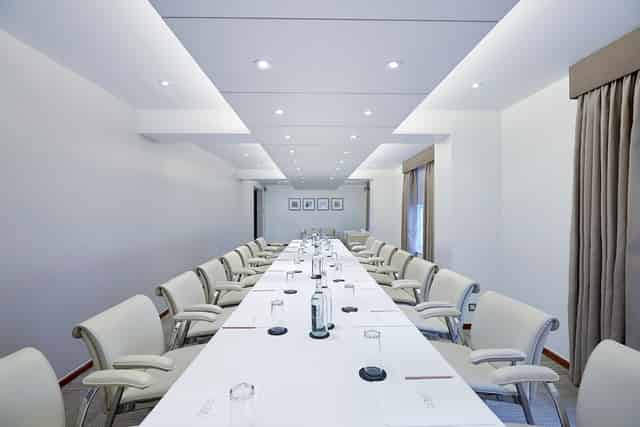
Looking for the coolest meeting rooms in London? From stylish interiors to unique settings, here are 8 venues that will definitely elevate your next meeting!

Located in the heart of the City, Salters’ Hall combines the rich heritage of the salt trade of medieval London with contemporary surroundings. Rebuilt in 1972 by Basil Spence and now a Grade II listed building, it is a rare example of a post-war livery building and has remained largely untouched until now... Architects de Metz Forbes Knight [http://www.dmfk.co.uk/projects/load/salters-hall] (dMFK) were tasked with the project to upgrade the building whilst retaining its sense of history and al

Creative ventures across the artistic spectrum are accommodated and embraced at Anomalous Space [https://hirespace.com/Venues/London/1551/Anomalous-Space], situated stunningly close to Angel Station on Pentonville Road. The venue's name captures its uniqueness, in that it deviates from the standard, unoriginal function space that's all too common. Anomalous Space combines the most contemporary of technological facilities with Art-Deco features, all set within an authentic Georgian townhouse.
Multiple venues and events. One agreement.


