The Talent Question: Why the Events Industry Must Act Now


An industry at a crossroads
The events industry has a talent problem, and it's not just about finding people. It's about keeping them, paying them fairly and recognising that the role of an event professional has fundamentally changed.
Across the industry, experienced professionals are developing exit strategies. Burnout isn't a buzzword, it's a measurable reality. Director-level roles are being advertised at salaries that wouldn't cover a junior position in comparable industries. And the people holding the events world together are increasingly asking whether the industry values their contribution enough for them to stay.
At the same time, something interesting is happening at the other end of the market. The fastest-growing companies in tech, particularly in the AI sector, are hiring aggressively for in-person event roles, with some offering salaries north of $200,000. They've recognised what much of the industry hasn't yet internalised: that live events are a strategic growth lever, not a line item to be squeezed.
This paradox, an industry struggling to retain talent whilst the most forward-thinking companies pour investment into event roles, tells us everything about where the profession is headed. The question is whether the wider industry will catch up before it loses its best people for good.
The compensation crisis no one wants to talk about
Let's start with the uncomfortable truth: event professionals are systematically underpaid relative to the value they deliver. Director-level event roles, positions requiring strategic thinking, budget management running into hundreds of thousands, stakeholder navigation and crisis management under pressure, are regularly advertised at salaries that wouldn't attract a mid-level marketing manager.
This isn't a niche complaint. It's a structural problem that's driving experienced professionals out of the industry entirely. When someone with fifteen years of experience managing complex, high-stakes event programmes can earn significantly more in adjacent fields like marketing, consulting or project management, the events industry is competing with one hand tied behind its back.
The consequences ripple outward. Junior professionals see limited earning potential and plan their exit early. Mid-career professionals take their institutional knowledge to other industries. And the organisations left behind wonder why their events aren't delivering the results they used to, without connecting the dots to the talent they've lost.
Burnout isn't a badge of honour
The events industry has long glorified the hustle, the all-nighters, the caffeine-fuelled load-ins, the pride in being the last person standing at the end of a gruelling event build. But a growing chorus of professionals is challenging this narrative, and rightly so.
The numbers paint a stark picture. As Adam Lewis, CEO of Boom, shared at Event Tech Live 2025: "68% of event marketers report that their workload is up, but guess what? Resources aren't. And now we've got AI, which is like the answer to it, according to the management, you don't need to hire anybody else. We've got AI." The expectation that technology will substitute for headcount is creating a pressure cooker for event teams already operating at capacity.
Adam went further, challenging the culture of multitasking that the industry wears as a badge of honour: "The studies show that multitasking reduces your memory, you're going to make more errors and it's going to create cognitive fatigue." Research from the University of London suggests that habitual multitasking reduces IQ by around 10 points, equivalent to the effects of sleep deprivation. In an industry that demands precision under pressure, that's not a trivial finding.
Hire Space Top Tip:
If you manage an events team, schedule regular check-ins that go beyond project updates. Ask about workload sustainability, career development and wellbeing - not just deadlines. The teams that retain their best people are the ones that treat wellbeing as a leadership responsibility, not an individual problem to solve.
The parent penalty
One of the most candid conversations at Event Tech Live 2025 tackled a question the industry rarely confronts directly: is events a career you can sustain as a parent?
Nancy Skipper, a director and co-founder in the live events sector, was unequivocal: "Events happen in the evening, at the weekend, so they are definitely not friendly to most sort of working in parenting environment." It's a structural truth that no amount of flexible working policies can fully resolve, the nature of live events means someone has to be there when the event happens, and events don't happen during school hours.

Matthew Allen, co-founder of CrowdComms, was disarmingly honest about the personal cost: "I think the person that I probably do neglect is probably my wife... because you've got the energy for your team, you've got your energy for your work. And I'm someone who is work obsessed." His candour reflects a wider pattern, the people who absorb the real cost of demanding events careers are often invisible in industry conversations about talent.
But it doesn't have to be all or nothing. Duncan Strain, business owner at Silent Seminars, offered a more hopeful perspective: "You can be a great boss, you can be a great business owner, a great leader, but you can also be a great parent. You don't have to choose between one or the other. There is room as long as you get that balance right." His approach at Silent Seminars includes building an empathetic team culture where people feel safe to say they need to be with their family, even when that means stepping away from work at short notice.
From coordinator to strategist: the role is changing
Job titles are evolving, and they're telling us something important. Organisations are increasingly hiring for Directors of Brand Experience, Managers of Education and Events, and Senior Event Producers who understand business outcomes, creative direction and client psychology. The logistics-first coordinator role is giving way to something broader, more strategic and more valuable.
This evolution reflects a real shift in what organisations need from their event teams. Events are no longer isolated marketing tactics, they're strategic business levers tied to pipeline generation, client retention and brand positioning. The event professionals who thrive in this new landscape are those who can articulate business outcomes, read data, manage stakeholder expectations and design experiences that drive measurable results.
But here's the catch: the industry hasn't fully caught up. Many organisations still hire for logistics execution whilst expecting strategic delivery. They advertise coordinator salaries for strategist-level responsibilities. Until the compensation and recognition structures align with the evolved role, the gap between what event professionals are asked to do and what they're paid for will continue to drive attrition.
The yes-people problem
There's a cultural dimension to the talent crisis that goes beyond pay and conditions. Matthew Allen identified it with characteristic directness: "People, particularly in this industry, the people that come into it are a little bit bonkers anyway. They're 'on people', aren't they? So they tend to be yes people."
The events industry attracts people who are naturally energetic, sociable and eager to please, qualities that make them exceptional at delivering experiences, but also make them vulnerable to overcommitting, undercharging and absorbing stress that should be shared. The culture of saying yes to everything, of being available at all hours, of treating every client request as urgent - this isn't dedication. It's a systemic failure to protect the people who make events happen.
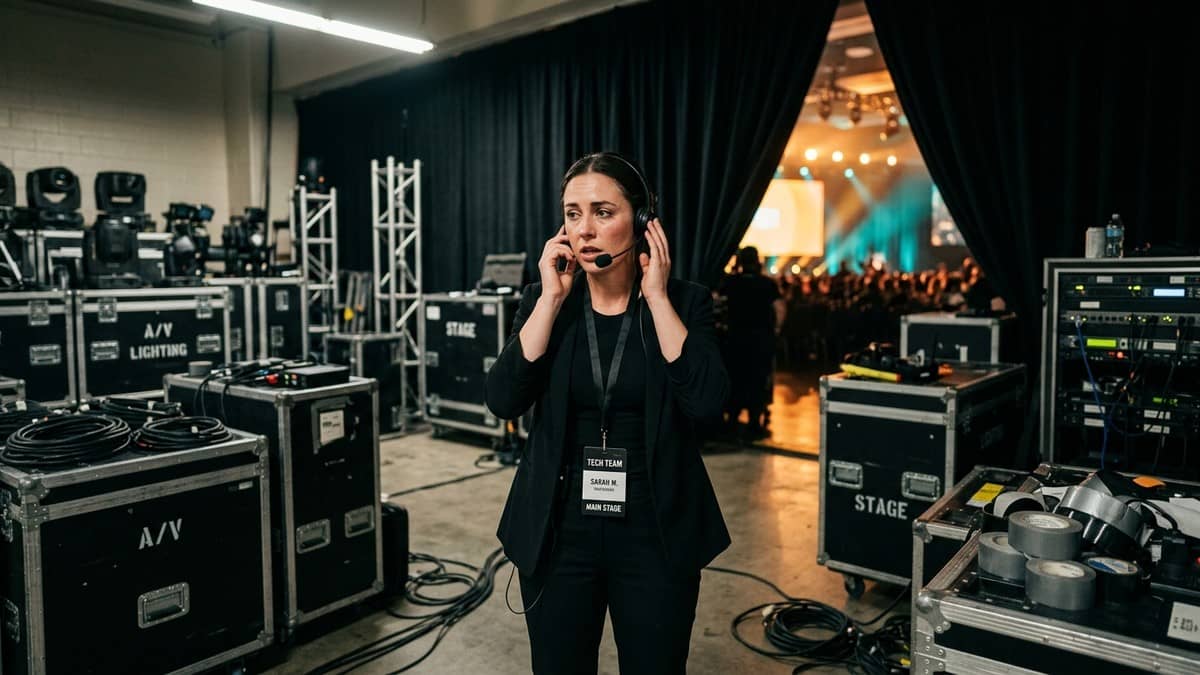
Matthew's advice was simple: "Protect yourself a little bit and learn how to give yourself a break and just go easy on yourself." But individual self-care can't solve a structural problem. The industry needs to build cultures where saying no is professional, where boundaries are respected and where sustainable working isn't seen as a lack of commitment.
The representation gap in leadership
Women make up the majority of the events workforce. Yet they remain significantly underrepresented in C-suite and boardroom-level leadership positions. This isn't a pipeline problem, the talent is there, excelling on show floors, managing complex programmes and driving operational excellence day after day.
It's a structural problem. Advancement pathways for women in events are limited, mentorship opportunities are inconsistent and the demanding schedule of event work disproportionately impacts those with caring responsibilities. Addressing this gap isn't just an equity issue, it's a competitive one. Organisations with diverse leadership teams make better decisions, produce more innovative events and build stronger client relationships.
What needs to change
The talent crisis in events isn't inevitable. It's the result of choices, about compensation, culture, recognition and career development, that the industry can choose to make differently. Here's what that looks like in practice.
Pay event professionals what they're worth. Benchmark salaries against comparable strategic roles in marketing, consulting and project management, not against outdated coordinator,level expectations. If you're asking someone to manage six-figure budgets, navigate C-suite stakeholders and deliver measurable business outcomes, pay them accordingly.
Invest in career development. Create clear progression pathways that reflect the evolving nature of event roles. Support your team's development in data literacy, business strategy and experience design, the competencies that will define the next generation of event leaders.
Normalise sustainable working practices. Challenge the culture of overwork. Measure success by event outcomes and attendee impact, not by the number of hours your team spent on-site. Build recovery time into project timelines and make wellbeing a non-negotiable part of your team culture.
Recognise the invisible work. The emotional labour, the behind-the-scenes problem-solving, the crisis management that attendees never see, these are core competencies, not afterthoughts. Acknowledge them in performance reviews, team communications and how you talk about your events internally.
Build parent-friendly cultures. Create environments where people feel safe to prioritise family when they need to, where flexibility is genuine and where career progression doesn't require sacrificing personal life.

The opportunity ahead
The talent question isn't just about retention, it's about the future of the profession. The event professionals coming up through the industry today are more data-literate, more tech-savvy and more strategically minded than any previous generation. They understand that events are business tools, not just logistics exercises. They expect to be valued, developed and paid accordingly.
The organisations that recognise this, that invest in their event teams, pay competitively, build sustainable cultures and create genuine career pathways, will attract and retain the best talent. They'll deliver better events, build stronger client relationships and gain a genuine competitive advantage.
The ones that don't will keep wondering why their events aren't what they used to be.
Other platforms search their database. We search everything.
Tell us what you need. Our deep research finds any venue, whether it's in our marketplace or not. No one else does this.
One supplier. Every venue. Full visibility on what you spend.
Multiple venues and events. One agreement.

With 10 years in events, Kim leads growth at Hire Space. Writing about what's shaping the future of events, from personalisation and experience design to the technology making it all possible, turning industry insight into practical advice.
Related articles

The Hot List: Eight Venues to Meet Before Everyone Else Books Them
Meet the venues our clients can't stop asking about at The BNC Show on 29 October, from a skyline space 254 metres up to Mayfair's newest opening.
Simple Events Win: Why Restraint Beats Spectacle
Budgets are tight and audiences want connection over spectacle. The events that land in 2026 are the deliberately simple ones. Here is how to edit rather than cut, grounded in the 2026 industry data, and why the right venue does the heavy lifting.