Unusual Event Venues in London
Explore unusual London venues with private spaces, full catering and drinks setups for corporate events that need something beyond standard meeting rooms.
3,328 Unusual Event in venues in London




















































































No venues match these filters
Try widening your capacity, luxury level or event type.
Don't have time to search? We'll find it for you.
For business events that need human judgement, talk to our team. Free for events of 100+ people, budgets over £10k or ongoing programmes.




Explore more venues in London











Frequently asked questions
What are some of the best unique venues in London?
What are the best unique venues to have a conference in?
What are the best unique venues in London for a Christmas party?
What is a blank canvas venue?
What are the best unique blank canvas venues in London?
Other platforms search their database. We search everything.
Tell us what you need. Our deep research finds any venue, whether it's in our marketplace or not. No one else does this.
About Unusual Event in London
Matching the room to your event format
Standard corporate meeting rooms are predictable by design. They offer neutral carpets, drop ceilings and fluorescent light panels that keep people awake through slide decks. When you move away from that template, the setting changes how attendees behave the moment they walk in. A dramatic space breaks down social hierarchies faster than any forced icebreaker. People put their phones away, look up at the architecture and start conversations without needing a formal prompt.
The challenge is matching that setting to what you need your guests to do. A presentation requires sightlines, controlled acoustics and reliable projection. A networking drinks reception needs clear pathways between bars, comfortable standing pockets and room for waiting staff to circulate trays of food. If you pick a space designed for one purpose and try to force another onto it, the event suffers.
Consider the physical layout before looking at the visual impact. Historic maritime spaces, such as Cutty Sark in Greenwich, offer extraordinary backdrops where up to 400 guests can gather for a reception directly beneath the copper-clad hull of a nineteenth-century tea clipper. The drama is built into the architecture, meaning you spend very little on dressing the room. However, long spaces built around historic structures naturally separate guests into conversational clusters rather than keeping them in one unified crowd. That works brilliantly for client dinners or relaxed networking, but it makes formal speeches harder to deliver without a distributed PA system.
If your priority is a social gathering where you want guests talking in smaller groups, botanical and garden settings offer a completely different atmosphere. The covered conservatory at Barbican Centre accommodates up to 100 standing guests surrounded by 1,500 species of tropical plants and pools of fish. It gives an evening reception an outdoor feel without the threat of English rain, while the greenery dampens ambient noise so people can speak without shouting. For daytime away days or strategy sessions that need to avoid corporate grey, reviewing unconventional conference venues you'll love can help you identify spaces that stimulate productive discussion.
For high-energy evening receptions or company milestone celebrations, industrial warehouses provide volume, scale and freedom. At Electrowerkz in Angel, a multi-room warehouse layout accommodates up to 650 standing guests across spaces that include a courtyard, glasshouse and dedicated performance stage. The raw brickwork and industrial infrastructure suit late-night celebrations, product reveals and internal social events where loud music and late hours are central to the brief.
Match the energy of the room to your agenda:
- Architectural landmarks: Best for client hospitality, annual celebrations and high-impact drinks receptions where the venue itself acts as the entertainment.
- Industrial and warehouse buildings: Best for evening parties, brand activations and creative internal summits where you want loud sound, dramatic lighting and flexible staging.
- Botanical and subterranean spaces: Best for conversation-heavy networking, intimate dinners and relaxed team social events where acoustic control and intimacy matter.
The true cost of non-standard venues: unpacking the quotes
Budgeting for an unusual venue requires a different approach than booking a hotel ballroom. Hotel packages usually bundle the room, basic AV equipment, a three-course dinner, wine and waiting staff into a single delegate rate. In character spaces, heritage institutions and former industrial sites, pricing structures vary widely.
Based on 13 quotes from the venues on this page, the indicative cost for corporate events typically sits between £140 to £250 per head. This figure assumes a party size of about 50 guests. It provides a realistic benchmark for London, but understanding where your brief lands within that band depends on how the venue charges for its space, staff and utilities. As an event planning and venue booking platform backed by a team of real people who take ownership of the outcome, Hire Space provides instant, data-backed price estimates drawn from actual booking figures. That allows you to see what an unusual space will realistically cost for your guest numbers and timings before you enquire, while highlighting similar venues at a lower price if a preferred option stretches the budget.
Towards the £140 end of the range, quotes usually reflect venues that already operate as hospitality spaces with existing bars, commercial kitchens and fixed audio setups. In these locations, the price per head largely covers food, beverages and basic service staff. You are paying for a minimum spend on food and drinks, or a modest hire fee paired with a standard reception package.
Towards the £250 end of the range, quotes typically reflect dry hire properties, Grade-listed livery halls or high-demand cultural spaces. In these locations, the base hire fee merely secures the empty building. Every operational element must be brought in from the outside. That includes temporary kitchen equipment, security guards, cleaning crews, furniture hire, audio rigs and waste management. What looks like an affordable room hire fee at the start of planning can double once production and catering logistics are added.
| Cost element | Hospitality-led spaces | Dry hire and historic spaces |
|---|---|---|
| Base hire | Often low hire fee or minimum spend | Substantial fixed hire charge |
| Catering | In-house kitchen team and menu | External approved caterers only |
| Kitchen equipment | Included on site | Often hired in via catering flight cases |
| Audio and visual | Basic background music system included | Production supplier must build from scratch |
| Staffing | Floor team and bar staff included | Billed separately by caterer and production crew |
| Licensing fees | Covered by premises licence | May require temporary event notices or extensions |
| Waste disposal | Handled by venue | Rubbish must be removed at the end of load-out |
Before signing a contract, ask for a complete breakdown of mandatory charges. If a venue enforces an approved supplier list, request sample menus and pricing from those approved caterers before paying your deposit. When looking at celebratory gatherings or corporate dinners, reading about top unique and unusual venues for an awards ceremony will give you a clear sense of how staging, dining and production costs balance against each other. Hire Space 360 is enterprise venue and hotel procurement for companies spending £1m or more a year on meetings and events: a managed meetings and events programme, the kind procurement teams call strategic meetings management. It puts every venue contract, production crew and hotel stay on one central agreement, keeping bookings aligned with your company event policy and replacing multiple supplier accounts with a single consolidated invoice. Finance and procurement teams also gain live spend reporting and an audit trail across every team and region.
Production, AV and acoustic realities in unusual spaces
Many of the most striking venues in London were built hundreds of years before anyone needed to project a slide deck or run a wireless microphone. The very architectural features that make a venue memorable (such as vaulted stone ceilings, marble floors, metal girders and vast glass atriums) can create severe acoustic and technical complications.
Hard surfaces bounce sound waves. If you host 150 people in a subterranean brick arch or a stone-lined gallery, the ambient chatter quickly escalates into a deafening roar. Add a single microphone plugged into a portable speaker on a stand, and the speech will dissolve into unintelligible echo. In venues like the subterranean Champagne Bar at 116 Pall Mall, which holds up to 150 standing guests beneath historic vaulted ceilings, the atmosphere is naturally cosy, but vocal presentations require careful speaker placement to avoid reverberation off the brickwork.
If your event includes a presentation, awards handover or panel discussion, you must account for technical infrastructure early in your venue search. Locations built specifically around performance avoid these headaches. For example, the Lower Ground Floor at Hard Rock Cafe Piccadilly Circus accommodates 450 guests for a reception with a built-in stage, professional lighting rigs and integrated AV equipment ready to use. That eliminates thousands of pounds in equipment rental and hours of rigging time.
When planning production in an unconventional space, evaluate four critical technical factors:
- Power distribution: Historic halls and converted industrial buildings rarely have three-phase power sockets near where you want your stage. Check whether your production supplier can plug into existing outlets or if they need to run heavy cabling through access corridors.
- Acoustic treatment: If the room features exposed brick, high glass walls or bare plaster, instruct your AV supplier to use multiple smaller speakers spaced along the room rather than two large speakers at the front. This drops the volume at source and delivers clear speech across the entire crowd.
- Rigging restrictions: Listed buildings, galleries and museum spaces almost never allow you to attach equipment to walls or ceilings. All lighting trees, speakers and screens must be ground-supported on heavy baseplates, which eats into your usable floor space.
- Ambient light control: Glass conservatories and skylit atriums look spectacular during afternoon sunshine, but high ambient light washes out standard projectors. If you are presenting during daytime hours in a naturally lit space, budget for high-lumen LED screens instead of standard projection surfaces.
Catering logistics and operational rules in listed settings
Food and drink service in unusual settings requires meticulous planning because back-of-house facilities are frequently minimal. In a purpose-built hotel, the kitchen sits behind a soundproof door with direct service lifts and dishwashing lines. In an unusual venue, the caterer might be working out of a converted cloakroom, a temporary marquee or a narrow corridor with no running water.
Heritage properties and institutional buildings enforce strict operational rules to protect their fabric and collections. At Saddlers' Hall, a Grade I-listed livery hall near St Paul's holding up to 200 standing guests with a secluded courtyard, the surroundings are formal and steeped in history. In properties of this calibre, venues typically restrict catering to a curated panel of approved suppliers who understand how to operate without damaging antique flooring, wood panelling or historic paintings.
These protective guidelines affect what you can serve and how your evening runs:
- Naked flame prohibitions: Most museums, historic galleries and listed spaces ban naked flames entirely. That rules out open gas burners for cooking, flambé stations and wax table candles. Caterers must use induction hobs and electric holding ovens brought in inside flight cases.
- Red wine and staining restrictions: Some heritage sites and contemporary art spaces forbid red wine, dark fruit juices and tomato-based canapés in carpeted rooms or exhibition galleries to prevent irreversible staining.
- Waste and recycling removal: Standard commercial venues handle rubbish internally. Unusual and dry hire venues often require caterers to bag, seal and transport all food waste, glass bottles and dirty water off the premises at the end of the night. If your caterer has to hire a private waste van, that cost appears on your final catering invoice.
- Access windows and loading docks: Loading heavy equipment into central London venues is rarely straightforward. At The Inner Temple, where the garden can hold 300 guests for a summer reception overlooking the Thames, vehicular access through the historic legal district requires precise timing and pre-registered supplier vehicles.
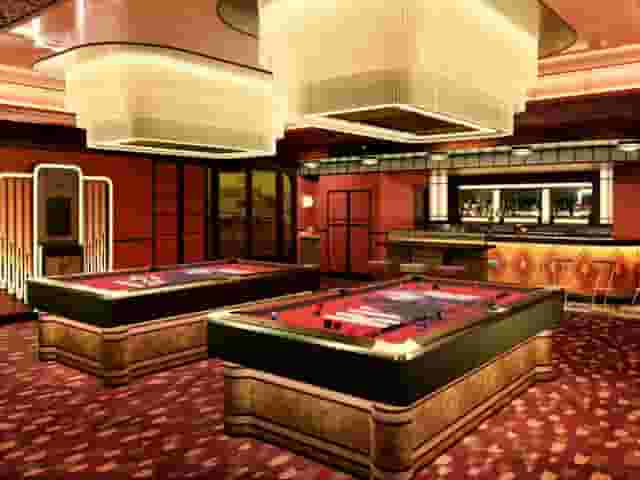
For informal events where traditional sit-down dining or formal tray-passed canapés feel too rigid, activity-driven hospitality provides a completely different rhythm. Venues like Poolhouse near Liverpool Street offer space for 50 standing guests around AI-powered pool tables. Here, food is designed to be eaten with one hand between games, service is informal and you avoid the operational complexities of external catering teams entirely.
Curfews, transit and guest management across London
Getting guests to an unusual venue is usually easy because London boasts one of the most comprehensive public transport networks in the world. The harder challenge is managing their departure, particularly when dealing with non-standard venue licences and local residential curfews.
Central London boroughs like Camden, Westminster, Islington and Kensington and Chelsea enforce strict environmental health and noise restrictions. Many historic venues, museums and open-air rooftop terraces operate under premises licences that cut off live music at 22:30 or 23:00, with all guests off-site by 23:30. If your company culture leans towards celebrating until the early morning, booking a venue with an early curfew leads to frustration and leaves attendees hunting for nearby public bars that cannot hold a large group.
Warehouse spaces and dedicated entertainment venues give you far more latitude. Locations licensed for late trading allow you to run DJ sets, bands and open bars well past midnight without worrying about council enforcement officers shutting down the sound system mid-song.
Use this operational comparison to evaluate your shortlisted venue types:
| Venue category | Typical entertainment curfew | Loading access | Key logistical risk |
|---|---|---|---|
| Museums and galleries | 22:30 to 23:00 | Strict after-hours loading only | Setup cannot begin until public closing time |
| Livery halls and historic institutions | 23:00 | Narrow gates, historic courtyards | Strict approved catering lists and noise caps |
| Warehouses and late spaces | 02:00 to 06:00 | Ground level roller shutters | Heavy production needed to make space comfortable |
| Subterranean bars and vaults | 00:00 to 02:00 | Stairs only, no direct lift access | Carrying equipment down steps extends crew hours |
When selecting a location, look at the end-of-night transport links just as closely as the arrival route. If your venue sits within a short walk of an interchange like King's Cross, London Bridge or Piccadilly Circus, guests can head home via Night Tube lines or mainline rail services easily. If you pick a venue tucked away along an industrial wharf or within a quiet conservation area, ensure guests have clear travel directions and consider pre-booking black cabs or executive coaches for the team. Providing simple transit details on the invitation keeps arrivals calm and ensures everyone leaves the event safely at the end of the night.
What our customers say
Inspiration and planning guides

Your Guide to (Last Minute) London Christmas Party Venues
Organising a Christmas party [https://hirespace.com/Top/London/London-Christmas-Party-Venues] may sound exciting but let's be honest, sometimes it's more than a little bit stressful, especially when you've left it to the last minute. But never fear, there are still some brilliant venues available for a fantastic festive shindig if you think outside the box a little. Thankfully, the Venue Expert Team is here to help. With these five unique venues [https://hirespace.com/Top/London/Unusual-Christm

6 Top Venues For A 30th Birthday Party
If your 30th is approaching, it's the perfect excuse for having a big old birthday bash in our books - here's a whirlwind tour of 6 of our favourite venues!

This Is Why London Has Such Unique Venues
At Hire Space, unusual venues [https://hirespace.com/Browse/Unusual-Event-Venues-London] are the name of the game. Passion to find a unique venue for an event seems to be unabated in London, but it's of little surprise when taking into account all the amazing spaces the capital has to offer. But just why is London filled with so many unusual venues for hire? We investigated: Romans, Saxons, Normans, Tudors and Stuarts. The Black Death, two World Wars and one Great Fire. London has seen it a
One supplier. Every venue. Full visibility on what you spend.
Multiple venues and events. One agreement.