Filming Locations in Central London for 400 people
Discover top filming locations in Central London suitable for 400 people.
About Filming Locations
### Why Central London's Filming Locations Are Perfect for Large-Scale Productions of 400 People When you're planning a major film production for 400 people in Central London, you're not just booking a venue – you're securing access to one of the world's most cinematic cities. Having coordinated dozens of large-scale shoots across the capital, I can tell you that Central London offers something truly unique: the perfect blend of iconic backdrops, world-class infrastructure, and production-ready facilities that simply can't be replicated elsewhere. The numbers speak for themselves. Central London's filming locations for this scale typically offer 600-800 m² of space with ceiling heights of at least 4m – essential when you're dealing with professional lighting rigs and camera equipment for 400 cast and crew. Take The Old Truman Brewery, for instance, which provides up to 6m ceiling height and can comfortably accommodate your entire production team in theatre-style configuration. #### What Makes Central London Unbeatable for Large Productions The infrastructure here is genuinely world-class. Every major filming location comes equipped with minimum 200 amps, three-phase power supply – crucial when you're running multiple camera setups, lighting arrays, and catering facilities simultaneously. You'll also find dedicated 100 Mbps internet lines as standard, which is absolutely vital for real-time footage review and client approvals during production. From a logistical standpoint, Central London's transport links are unmatched. Your cast and crew can reach venues like The Steel Yard within 10 minutes from King's Cross via the Victoria Line, whilst equipment trucks have direct access from major arterial routes. This accessibility becomes crucial when you're coordinating 400 people's schedules and managing tight production timelines. The commercial reality is that you'll be looking at £15,000+ per day for venues of this scale, but the value proposition is extraordinary. These locations come with built-in production support – from rigging points and blackout curtains to dedicated green rooms and 50 m² minimum storage space for equipment and wardrobe. What really sets Central London apart is the diversity of authentic backdrops within walking distance. You can shoot period drama scenes against Georgian architecture in the morning, then move to ultra-modern glass facades for contemporary sequences in the afternoon – all without relocating your base of operations. For productions requiring this scale, I'd recommend exploring [Filming Locations in Central London for 50 people](https://hirespace.com/GB/London/Central-London/Filming-Locations) first to understand the venue landscape, then scaling up your requirements. The key is booking 6-8 weeks ahead during peak filming season (May-July) to secure your preferred dates and negotiate the best rates. ### Essential Technical Requirements and Space Planning for 400-Person Film Shoots in Central London Getting the technical specifications right for a 400-person film shoot is where many productions stumble, and frankly, it's the difference between a smooth operation and a logistical nightmare. After managing countless large-scale productions across Central London, I've learned that the devil truly is in the detail when it comes to space planning and technical requirements. #### Power and Infrastructure: The Foundation of Success Your venue absolutely must provide minimum 200 amps, three-phase power supply – this isn't negotiable when you're running multiple camera setups, extensive lighting rigs, and catering facilities for 400 people simultaneously. I've seen productions grind to a halt because someone assumed standard domestic power would suffice. The Old Truman Brewery, for instance, provides robust electrical infrastructure that can handle even the most demanding production requirements without breaking a sweat. Climate control becomes critical at this scale. You'll need HVAC systems maintaining noise levels below NC30 to ensure clean audio recording, whilst managing the heat generated by 400 bodies plus professional lighting equipment. Most Central London filming locations now include acoustic panels as standard, but always verify this during your site visit. #### Space Configuration and Flow Management The magic number for 400-person productions is 600-800 m² of usable space, but it's how you configure this that matters. You'll need dedicated zones: main filming area, equipment storage (minimum 50 m²), catering space, and crucially, separate green rooms for talent. The Steel Yard excels here with its flexible 600 m² layout that allows for seamless flow between these essential areas. Ceiling height of at least 4m is non-negotiable – 6m is preferable when you're rigging professional lighting grids. This extra height isn't just about equipment clearance; it's about creating the visual depth that separates professional productions from amateur attempts. #### Technology Integration That Actually Works Every venue should provide dedicated 100 Mbps internet lines – essential for real-time footage review and client approvals. I always recommend testing bandwidth during peak hours, as shared connections can throttle when neighbouring businesses are active. For productions exploring different scales, [Filming Locations in East London for 200 people](https://hirespace.com/GB/London/East-London/Filming-Locations) offers excellent comparison points for technical requirements. The key is conducting thorough technical surveys 4-6 weeks before your shoot date, allowing time to address any infrastructure gaps without derailing your production schedule. ### Navigating Permits, Logistics, and Location Access for Major Productions in Central London The permit maze for 400-person film productions in Central London can feel overwhelming, but having navigated these waters for over a decade, I can tell you there's a clear pathway through the bureaucracy – you just need to know where to start and what actually matters. The reality is that productions of this scale require multiple layers of approval, and the timeline is longer than most people expect. You'll need a premises license for any venue serving alcohol or playing music, which you can obtain through Westminster City Council's online portal. But here's what catches most producers off-guard: the application process takes 28 days minimum, and that's assuming no objections from local residents or businesses. #### The Critical Path for Large-Scale Production Permits For 400-person shoots, you're looking at three essential permits: premises license (£315 application fee), temporary event notice if you're extending beyond standard hours (£21), and crucially, road closure permits if you need equipment access or crowd control. The road closure applications through Transport for London can take 6-8 weeks during peak filming season, so factor this into your pre-production timeline. Insurance requirements are non-negotiable at this scale – you'll need £10 million public liability coverage as standard. Most venues won't even discuss bookings without seeing your certificate first. I always recommend securing this through specialist film insurance brokers who understand the unique risks of large-scale productions. #### Logistics That Make or Break Your Shoot Equipment access becomes complex when you're coordinating 400 people plus substantial gear. Most Central London venues have restricted loading times – typically 7am-11am and 6pm-10pm to avoid peak traffic. The Steel Yard, for example, provides dedicated loading bays, but you'll need to coordinate with their facilities team at least two weeks ahead. Parking is genuinely challenging for productions this size. NCP Car Park Covent Garden charges approximately £12/hour, but for 400 people, you're better negotiating group rates with nearby facilities or arranging shuttle services from designated parking areas outside the congestion charge zone. The key insight I share with all my clients is this: start your permit applications 8-10 weeks before your shoot date. It sounds excessive, but I've seen too many productions scramble because they underestimated the approval timeline. For smaller-scale comparisons, [Filming Locations in South London for 200 people](https://hirespace.com/GB/London/South-London/Filming-Locations) often have more flexible permit requirements, which can help you understand the scaling challenges. Your next step should be creating a comprehensive permit checklist and assigning a dedicated production coordinator to manage applications – this isn't something you can handle alongside other pre-production tasks. ### Budget Planning and Cost Management for Large Filming Locations in Central London Let's talk money – because budgeting for a 400-person film shoot in Central London requires a completely different approach than smaller productions, and getting this wrong can derail your entire project before cameras even start rolling. The baseline reality is stark: you're looking at £15,000+ per day for venues capable of handling 400 people, with premium locations reaching £25,000-£35,000 daily. But here's what most producers miss – the venue hire is typically only 40-50% of your total location budget. The hidden costs are where productions often come unstuck. #### Breaking Down the Real Costs Your venue day rate covers the space, basic power, and standard facilities, but productions this size generate substantial additional expenses. Equipment power consumption alone can add £800-£1,200 daily in electricity surcharges – those 200-amp, three-phase systems aren't cheap to run when you're powering professional lighting rigs for 12+ hours. Security becomes essential at this scale, typically costing £150-£200 per guard per day, and you'll need minimum three guards for crowd control and equipment protection. Cleaning costs escalate dramatically too – expect £2,000-£3,500 for post-production deep cleaning when you've had 400 people plus catering and equipment in the space. Overtime charges catch many productions off-guard. Standard eight-hour hire periods rarely suffice for complex shoots, and overtime typically runs £500-£750 per hour. I always budget for at least two hours of overrun – it's cheaper than the stress of rushing your final shots. #### Smart Cost Management Strategies The 25% deposit structure works in your favour for cash flow management, but negotiate payment terms carefully. Many venues offer 5-10% discounts for off-peak bookings (January-February), which can save £1,500-£3,500 on larger venues. Catering costs scale exponentially – budget £25-£40 per person for basic craft services, but factor in dietary requirements and extended shoot days. For 400 people over a 12-hour day, you're looking at £15,000-£20,000 minimum for proper catering. Here's my insider tip: negotiate package deals that include basic AV equipment, security, and cleaning. Venues like The Old Truman Brewery often provide better value when bundling services rather than itemising everything separately. For comparison with different scales, [Filming Locations](https://hirespace.com/GB/London/West-London/Filming-Locations) in West London can offer insights into regional pricing variations that might influence your location decisions. Your next step should be creating a detailed budget spreadsheet with 15-20% contingency built in – trust me, you'll need it for a production this size. ### Proven Strategies for Booking and Managing 400-Person Film Productions in Central London Successfully booking and managing a 400-person film production in Central London isn't just about finding the right venue – it's about orchestrating a complex operation where timing, relationships, and strategic planning determine whether your shoot runs smoothly or becomes a costly disaster. The booking timeline is absolutely critical at this scale. I always tell producers to start their venue search 10-12 weeks before their intended shoot date, particularly during peak season (May-July and November-December). The best venues for 400-person productions – places like The Steel Yard or The Old Truman Brewery – often have waiting lists, and you'll need this lead time to secure your preferred dates and negotiate favourable terms. #### Building Relationships That Deliver Results Here's something most producers overlook: venue relationships matter enormously for large-scale productions. When you're bringing 400 people into a space, you're not just a client – you're a significant operational challenge for the venue team. I always arrange face-to-face meetings with venue managers at least 6 weeks before the shoot. This isn't just about logistics; it's about building trust and ensuring they're genuinely committed to your production's success. During these meetings, discuss contingency plans openly. What happens if your shoot overruns? How do they handle equipment failures or emergency evacuations with 400 people on-site? The venues that can answer these questions confidently are the ones you want to work with. #### Managing the Moving Parts Production coordination becomes exponentially more complex at this scale. I recommend appointing a dedicated location manager whose sole responsibility is venue liaison – they'll handle everything from coordinating 7am equipment deliveries to managing the inevitable last-minute changes that occur with large casts and crews. Create detailed run-of-show documents that include specific timings for catering deliveries, talent arrivals, and equipment setup. Share these with venue management 48 hours before your shoot – they need time to brief their staff and coordinate with building security. For productions exploring different approaches, [5 Great Photography Studios in London](https://hirespace.com/blog/5-great-photography-studios-in-london/) offers insights into venue selection criteria that scale effectively. Similarly, [The Top 5 Photography & Filming Venues In London](https://hirespace.com/blog/five-photography-and-film-spaces-for-hire-in-london/) provides valuable comparison points for different production requirements. Your immediate next step should be creating a venue shortlist of 3-4 locations, then scheduling site visits within the same week. This concentrated approach allows you to compare facilities while details are fresh in your mind, and gives you stronger negotiating position when venues know they're competing for your business.
Featured Venues for Filming Locations
Browse 16 venues perfect for Filming Locations
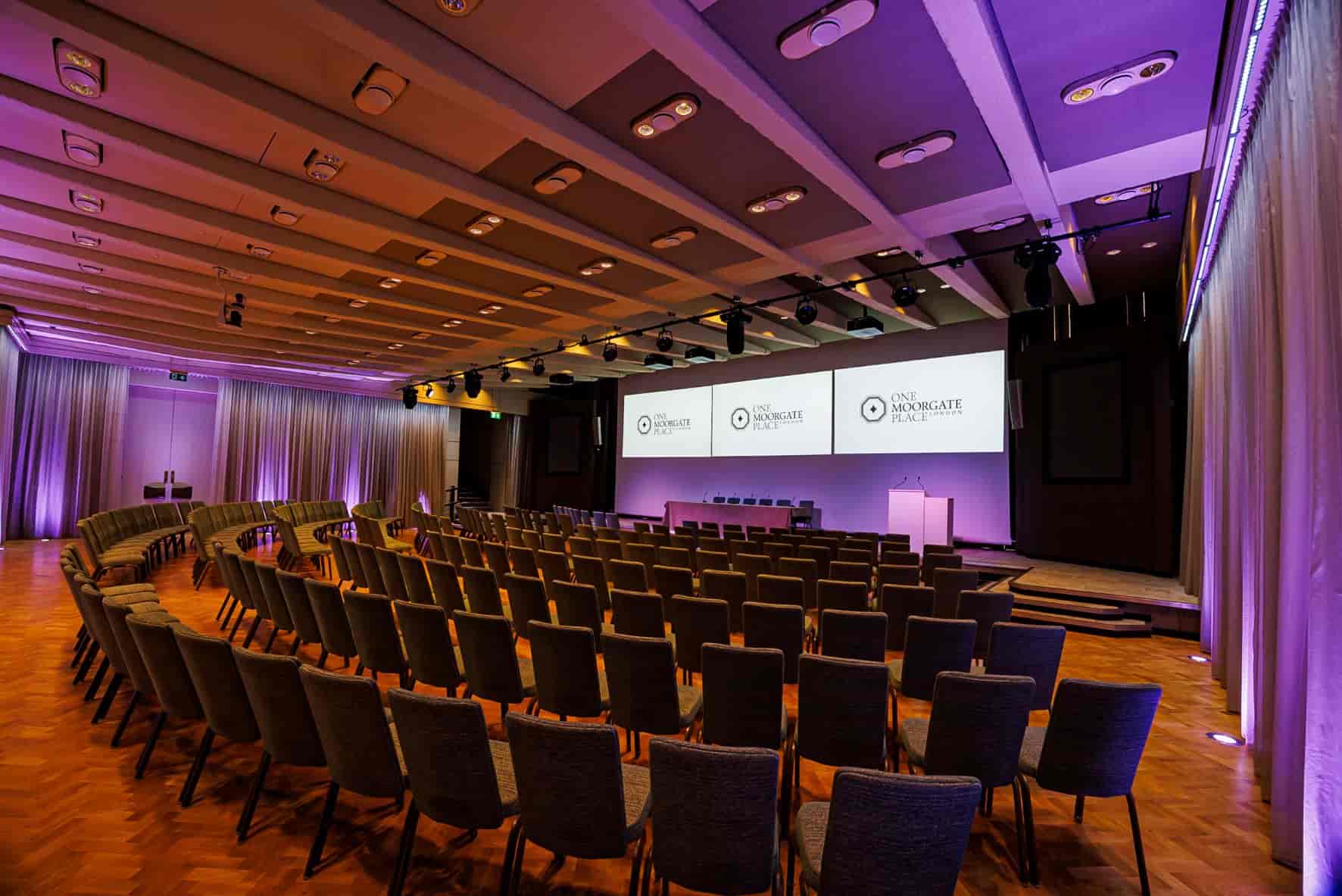
Business at One Moorgate Place
A historic hall with a 400-capacity, perfect for conferences, seminars, and presentations.
From: £140
Capacity: Up to 250 guests
Events at Troxy
An iconic art deco events space in East London for large events, award shows, conferences, and weddings.
From: £15975
Capacity: Up to 2100 guests
Dining at One Great George Street
A grand, historic hall in Westminster for up to 400 guests. Ideal for fine dining and large receptions.
From: £150
Capacity: Up to 260 guests
Events at Somerset House
A grand, iconic courtyard in a historic arts centre. Ideal for large-scale events.
From: £130000
Capacity: Up to 500 guests
Events at Vauxhall Arches
A modular 400-capacity event space under railway arches with a unique wraparound LED light system.
From: £500
Capacity: Up to 400 guests
Events at OXO2
A versatile blank canvas venue with Thames views, ideal for large events up to 400 guests.
From: £22000
Capacity: Up to 400 guests
Dining at Old Billingsgate
From: £8500
Capacity: Up to 700 guests
Business at Plaisterers’ Hall
Elegant neoclassical venue with versatile spaces for corporate events, weddings, and celebrations.
From: £65 per person
Capacity: Up to 550 guests
Business at Glaziers Hall
From: £18000
Capacity: Up to 450 guests
Dining at Town Hall Spaces
A grand, state-of-the-art venue with high ceilings and luxury design, ideal for large events and dinners.
From: £45000
Capacity: Up to 1300 guests
...and 6 more venues available
Related Event Types
- Filming Locations
- Filming Locations
- Photo Studios
- Recording Studios
- Photo Studios
- Recording Studios
- Filming Locations
- Filming Locations