Event Venues & Spaces for Hire in Edinburgh
Explore Edinburgh corporate event venues for private dinners, conferences and receptions. Compare catering, layout options and capacities.
179 Event Venues for Hire in Edinburgh


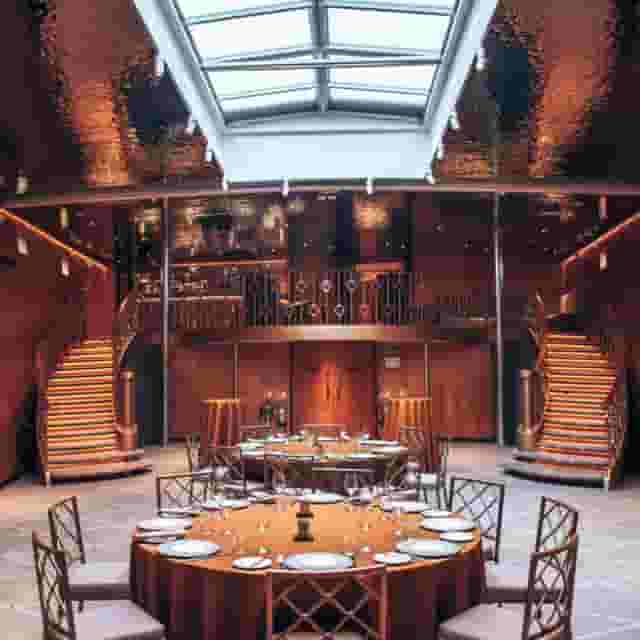
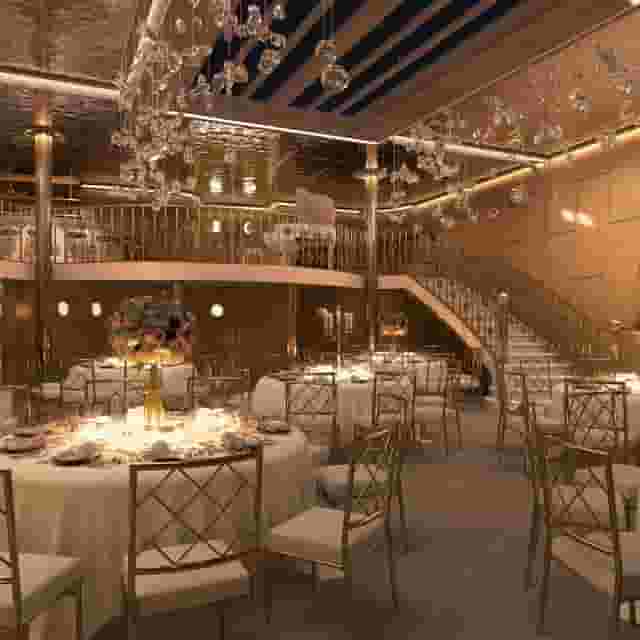
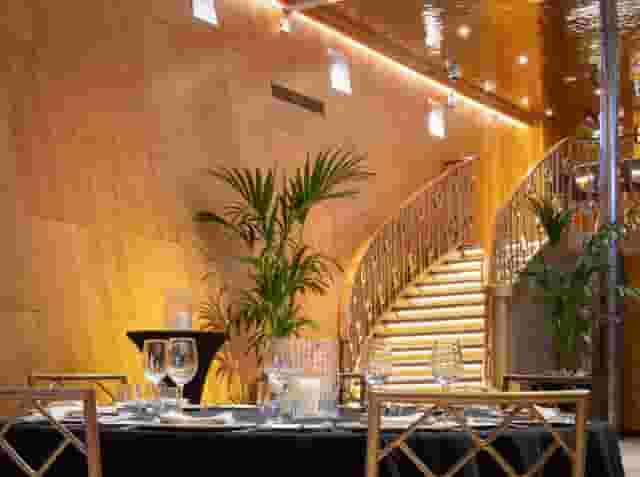
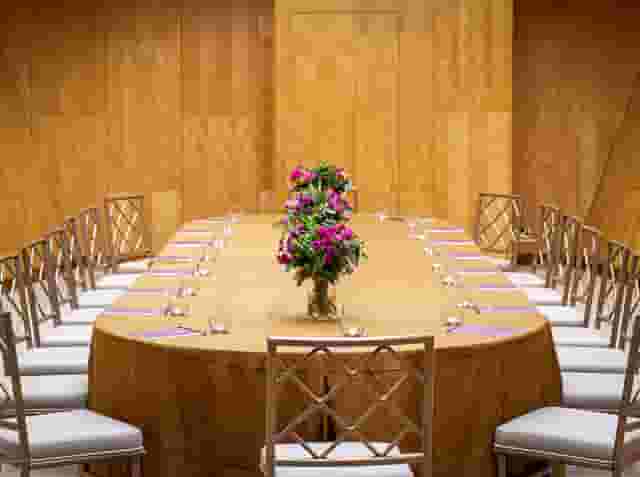
















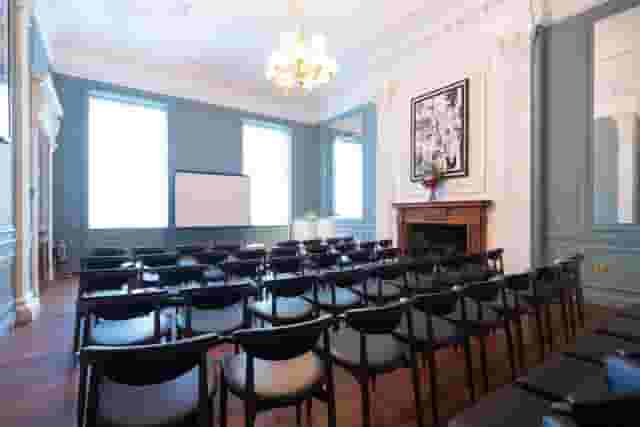
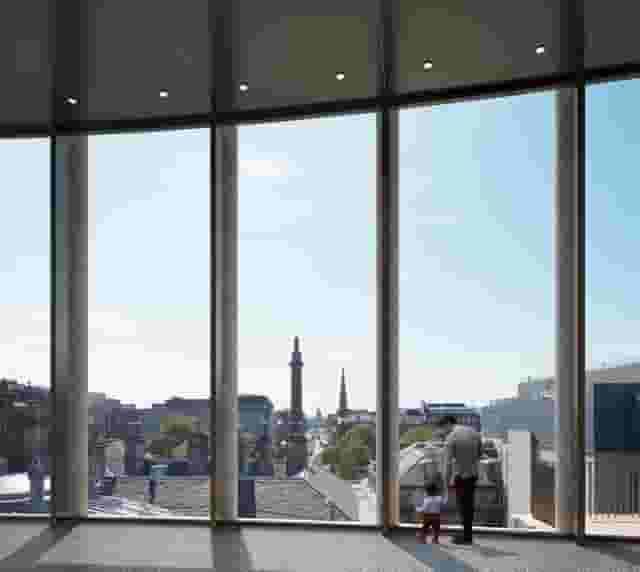
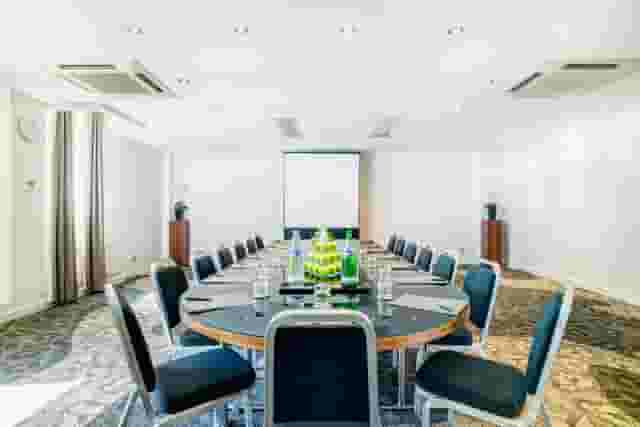
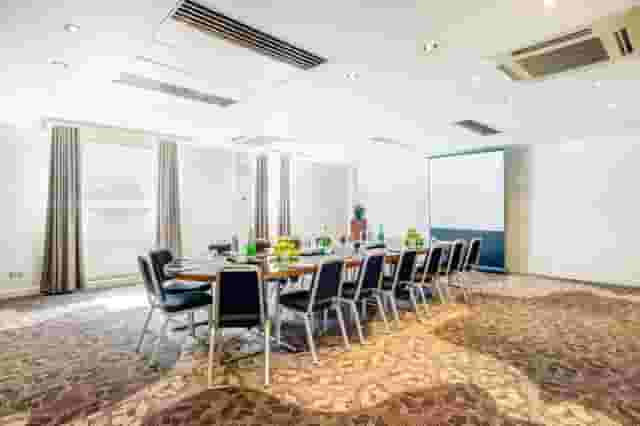





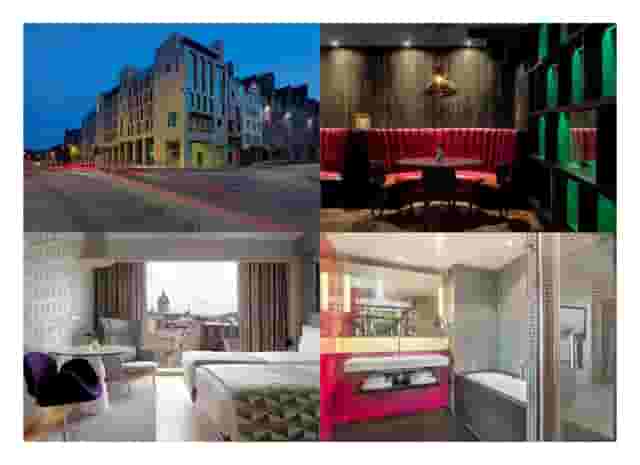
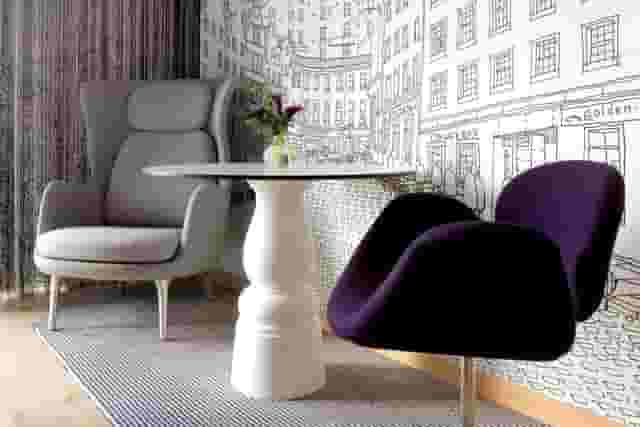
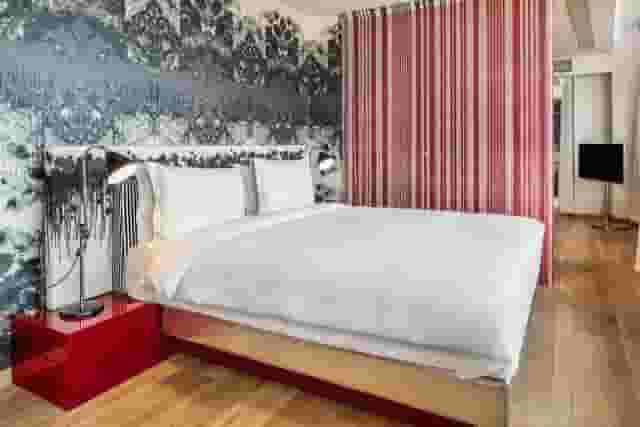
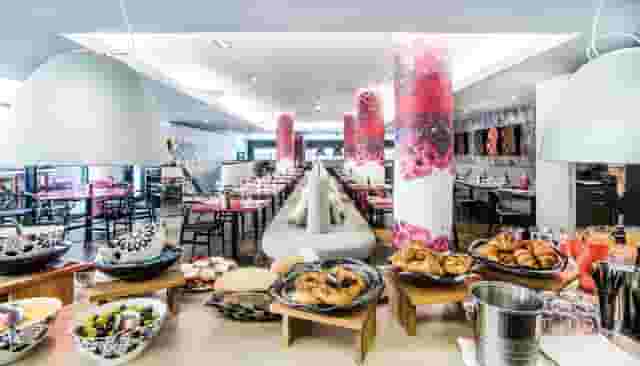









































No venues match these filters
Try widening your capacity, luxury level or event type.
Don't have time to search? We'll find it for you.
For business events that need human judgement, talk to our team. Free for events of 100+ people, budgets over £10k or ongoing programmes.




Explore more venues in Edinburgh

Frequently asked questions
What should I consider for outdoor events in Edinburgh?
Can I host a gala in a traditional Edinburgh venue?
Are Edinburgh's historic venues event-friendly?
How to find a private Edinburgh event venue?
What Edinburgh venues suit large conferences?
Are there versatile hotel options suitable for different budgets?
What should I consider when selecting an event venue's location?
How much space do I need for my event in Edinburgh?
How do I choose between historic and modern venues?
What are ideal venue types for corporate events in Edinburgh?
Other platforms search their database. We search everything.
Tell us what you need. Our deep research finds any venue, whether it's in our marketplace or not. No one else does this.
About Event in Edinburgh
Organising a company event in Edinburgh means balancing atmosphere with logistical reality. Scotland's capital offers an exceptional architectural backdrop, from medieval Old Town vaults to Georgian New Town halls. Yet turning an impressive historic room or a modern function suite into a smooth corporate evening requires careful attention to catering operations, licensing laws, transport and layout design.
Whether you are planning an annual company dinner, an executive reception, an awards banquet or an all-hands gathering with drinks, getting the fundamentals right early saves weeks of administrative friction later.
Matching venue style to your event format
The structure of your evening determines the type of space you need. Edinburgh venues broadly split into three categories: dedicated hotel suites, civic or academic historic halls, and unusual standalone settings. Each comes with operational trade-offs around catering control, sound limits and setup access. To help navigate these choices, event planning and venue booking platform Hire Space provides instant, data-backed price estimates drawn from real booking data so you can gauge costs before you enquire. Backed by a team of real people who oversee the process, the platform shortlists matching options in minutes and checks live availability directly with venues for gatherings of 100 guests or more.
Full-service hotels
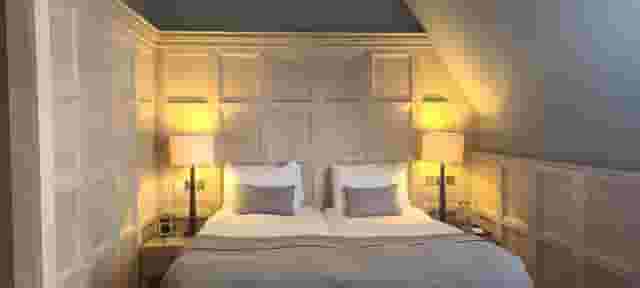
Hotels provide operational predictability. Having private dining, bar service, technical production and bedrooms under one roof removes multi-supplier coordination. For events drawing guests from outside the central belt, accommodation on site is a major operational advantage.
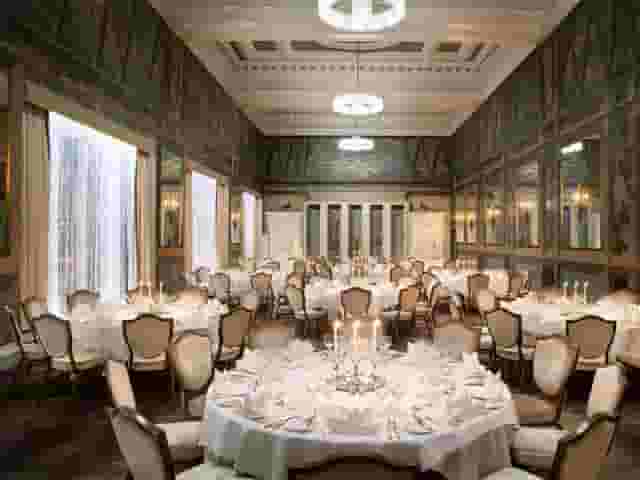
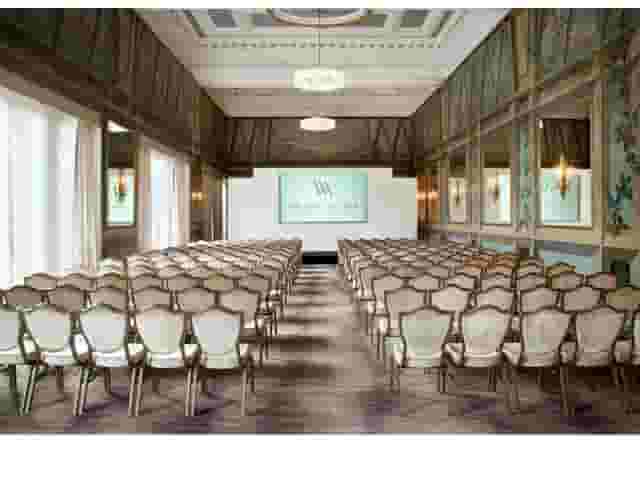
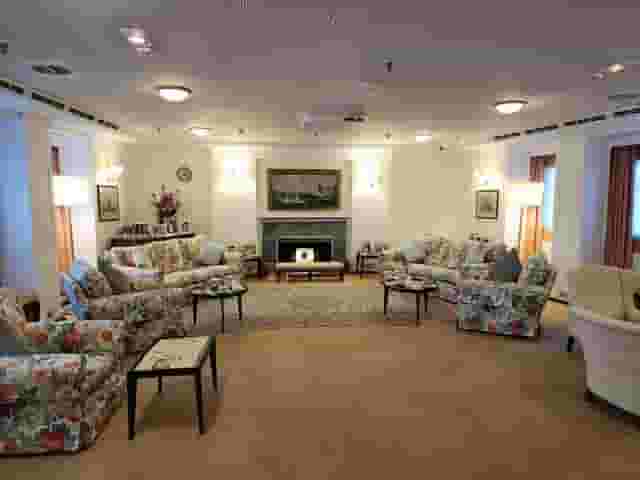
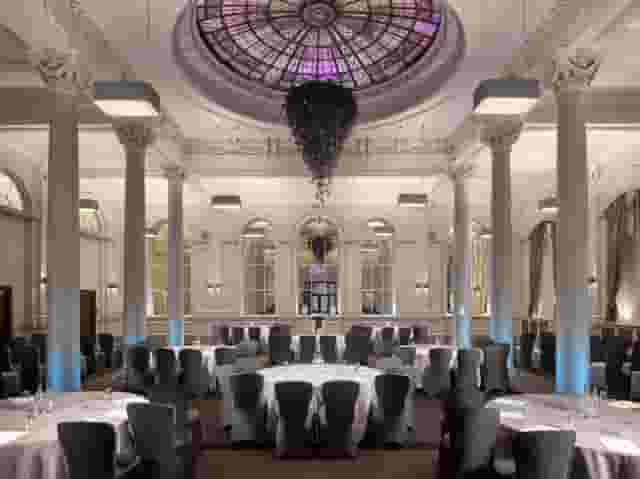
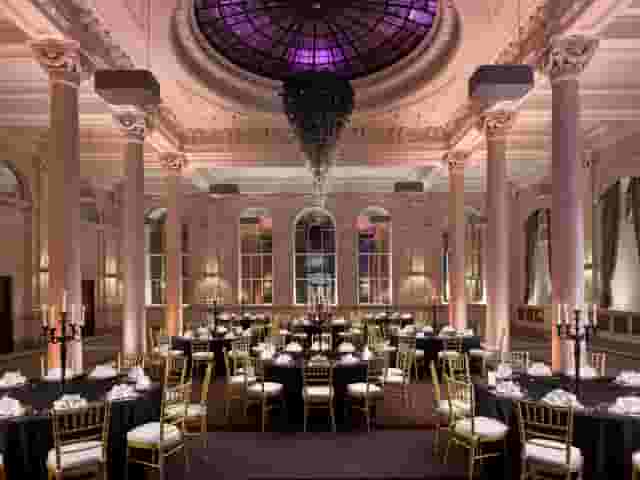
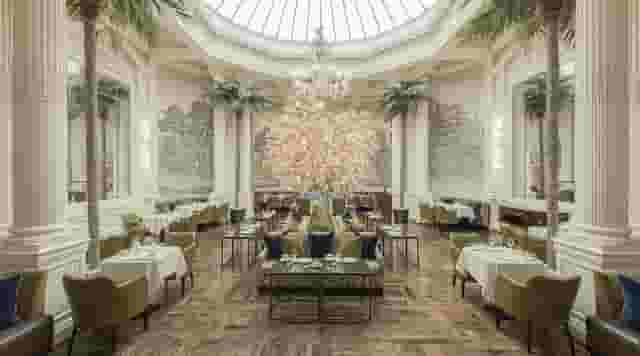
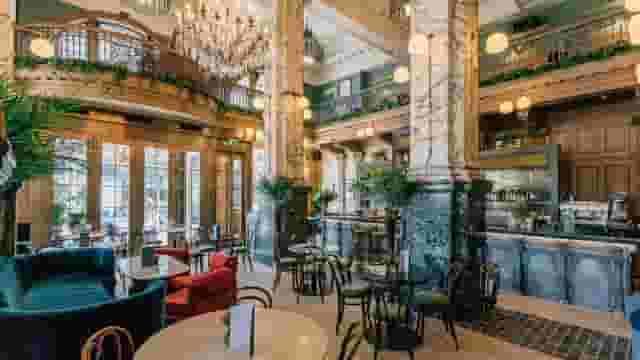
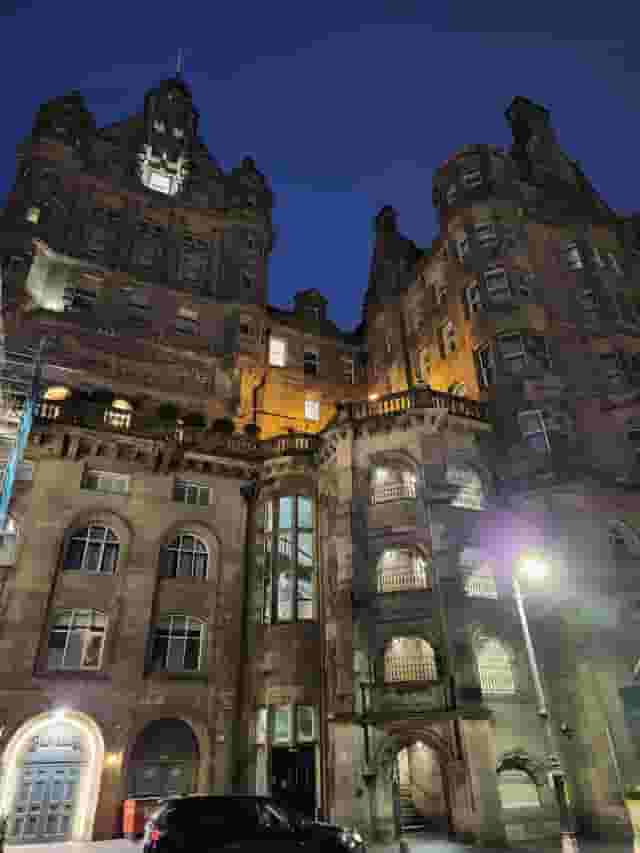
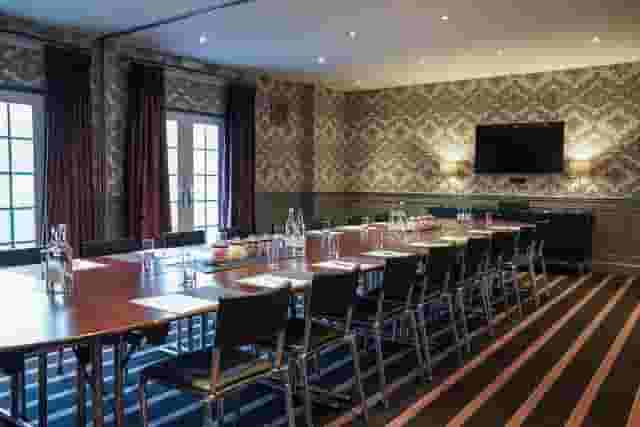
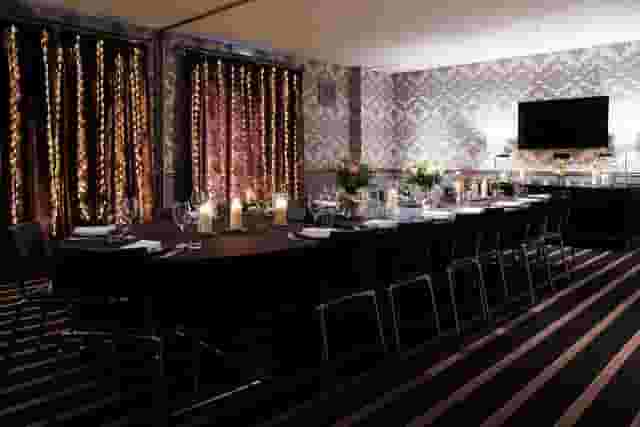
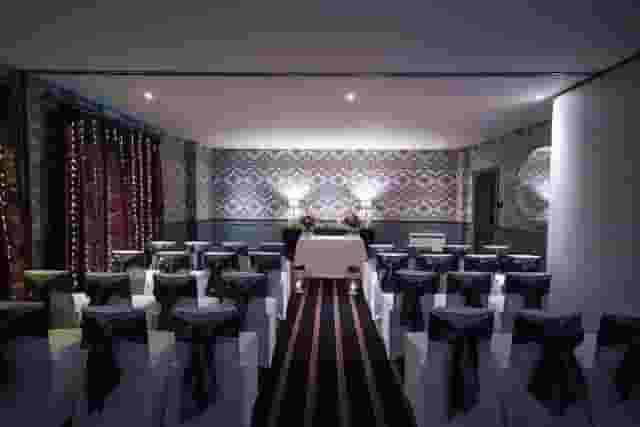
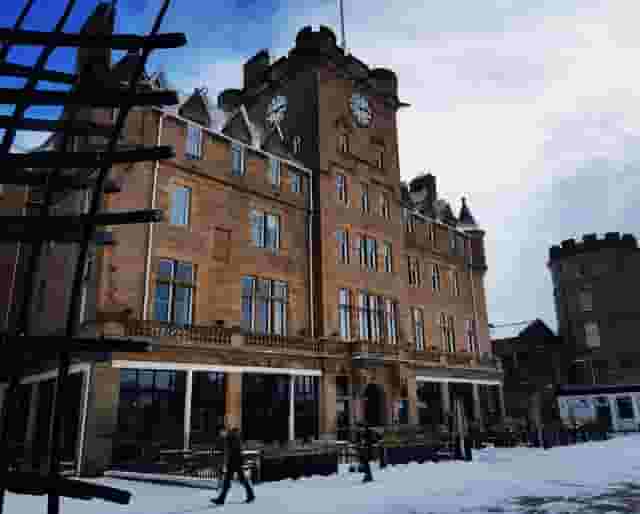
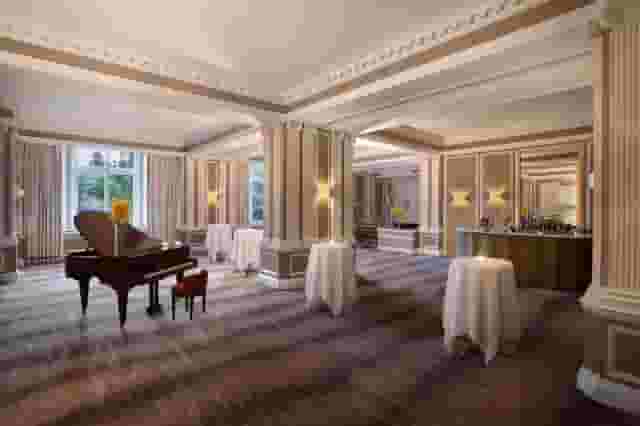
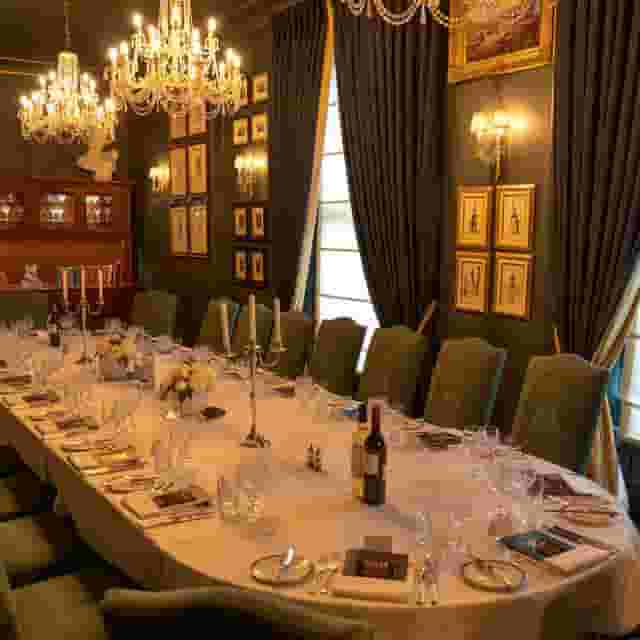
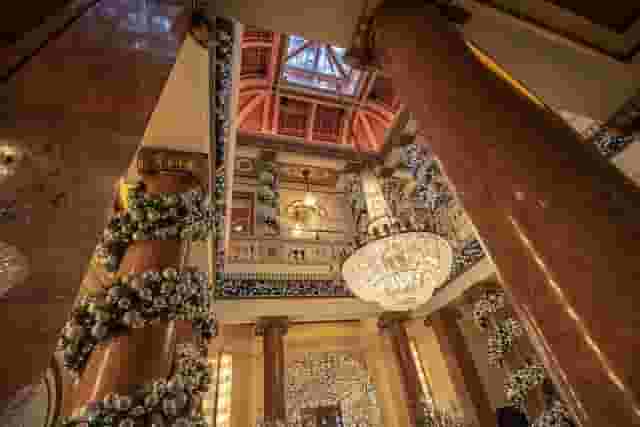
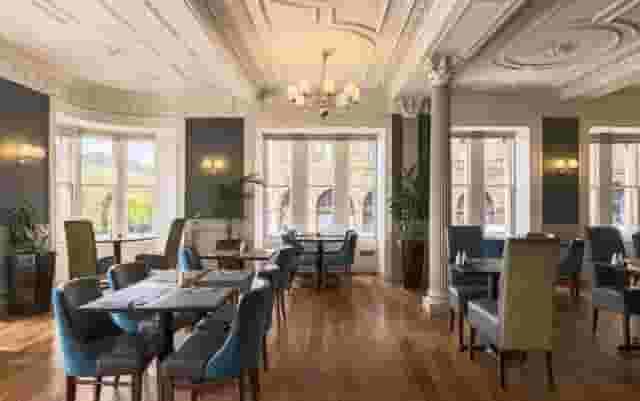
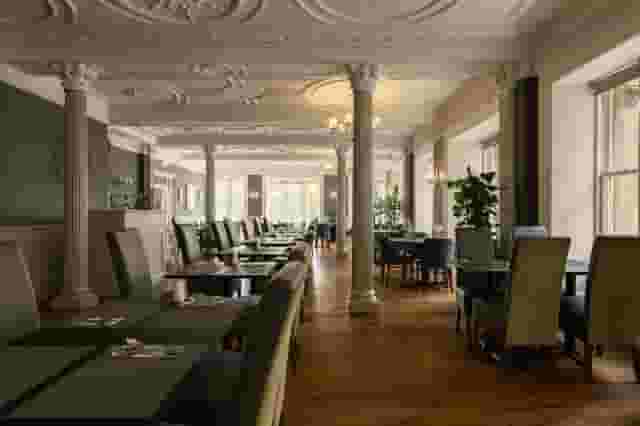
Venues like Suite at Waldorf Astoria Edinburgh - The Caledonian, which accommodates receptions of up to 500 people, combine historic Georgian architecture with established hospitality infrastructure. Similarly, The Kings Hall at InterContinental Edinburgh The George offers an 18th-century ballroom layout holding up to 400 guests for drinks receptions. In these spaces, kitchens sit adjacent to the function rooms, banqueting staff are employed directly by the hotel and audiovisual rigs are frequently built in or supported by established suppliers.
Hotel venues work best for company dinners, awards nights and conferences rolling straight into an evening reception. The potential constraint is exclusivity: your guests will likely share entrances, foyers or cloakrooms with hotel residents unless you negotiate a dedicated route or private foyer.
Heritage halls and historic institutions
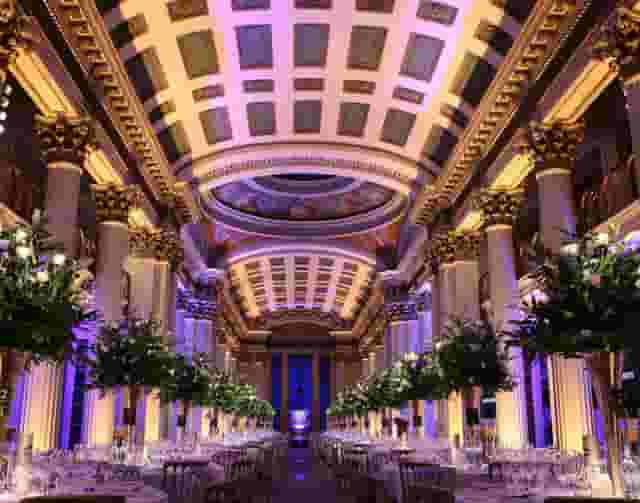
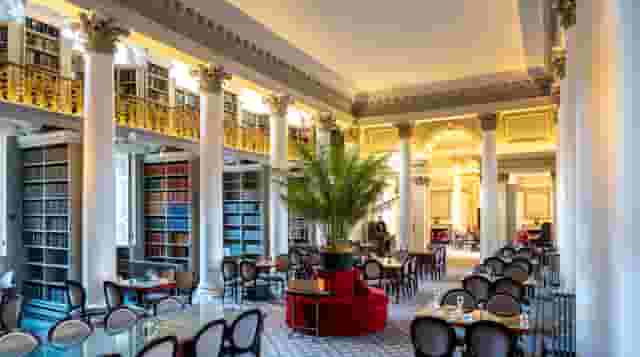
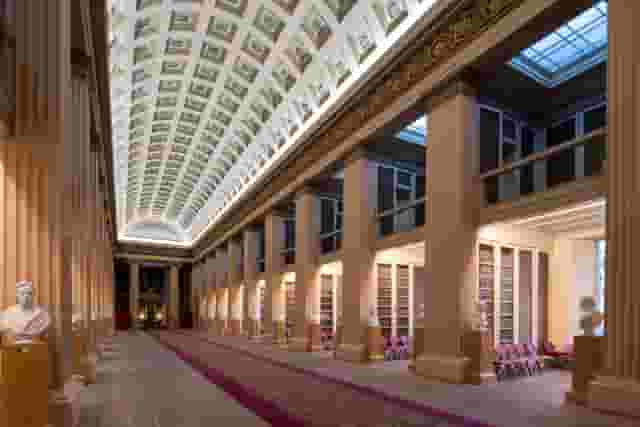
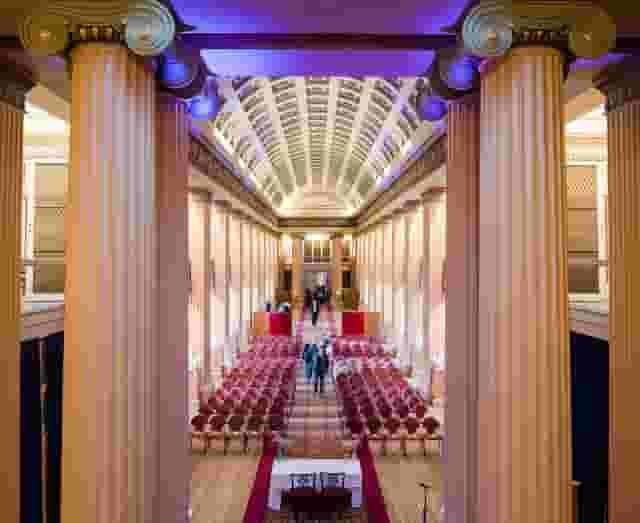
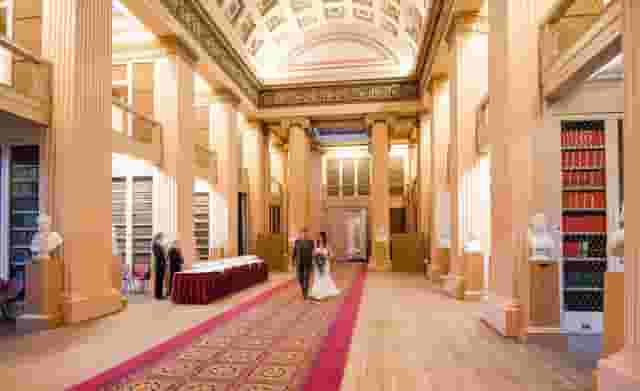
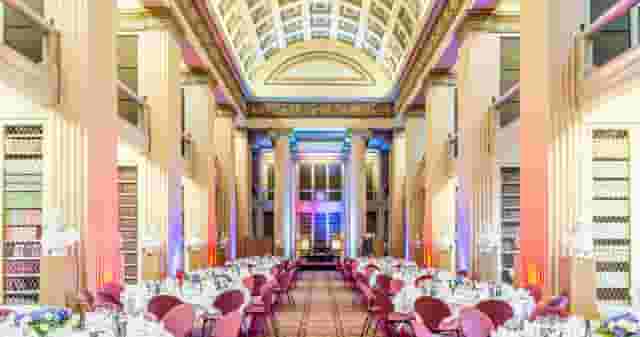
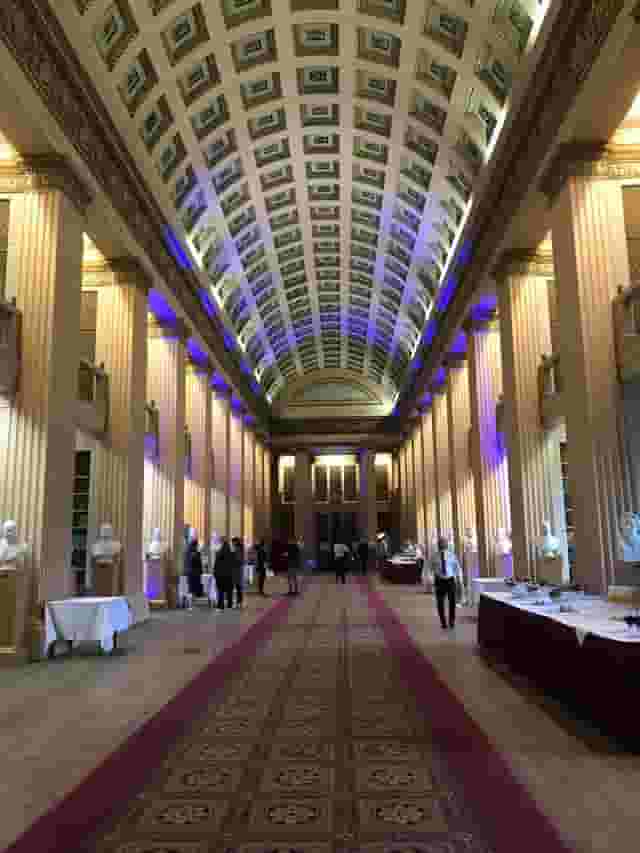
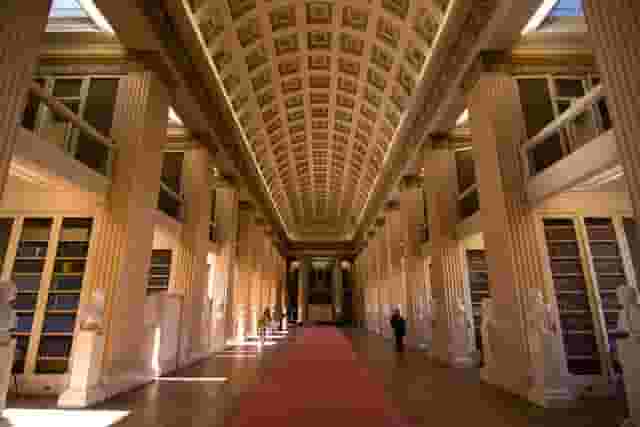
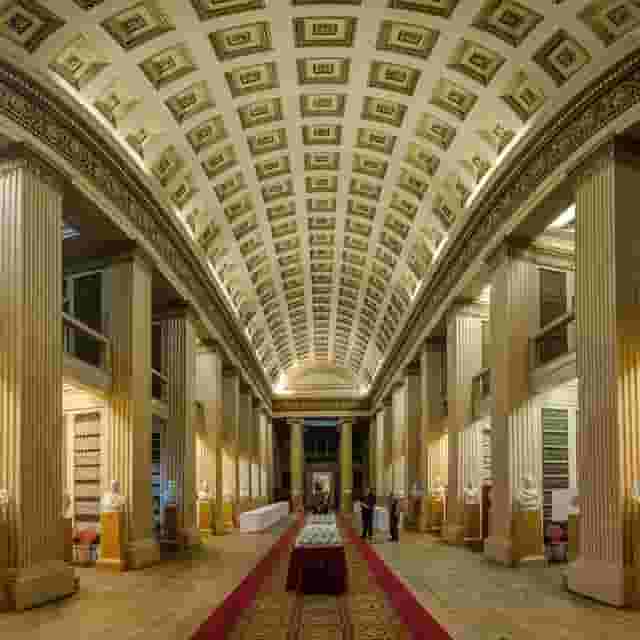
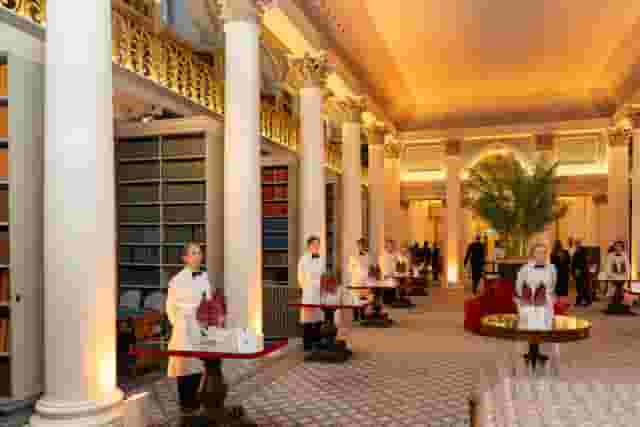
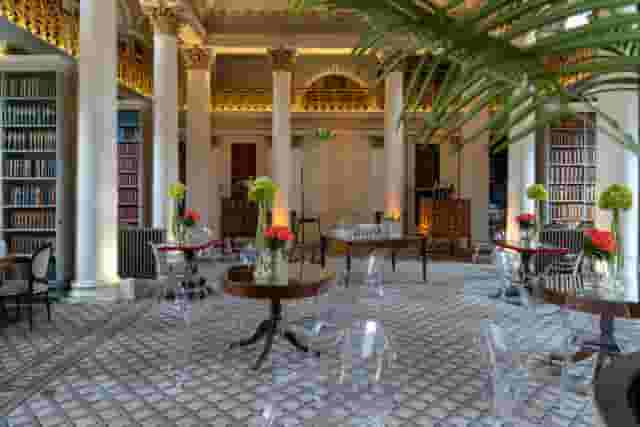
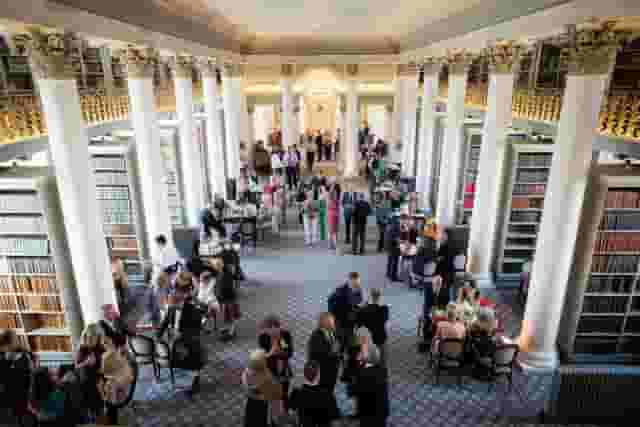
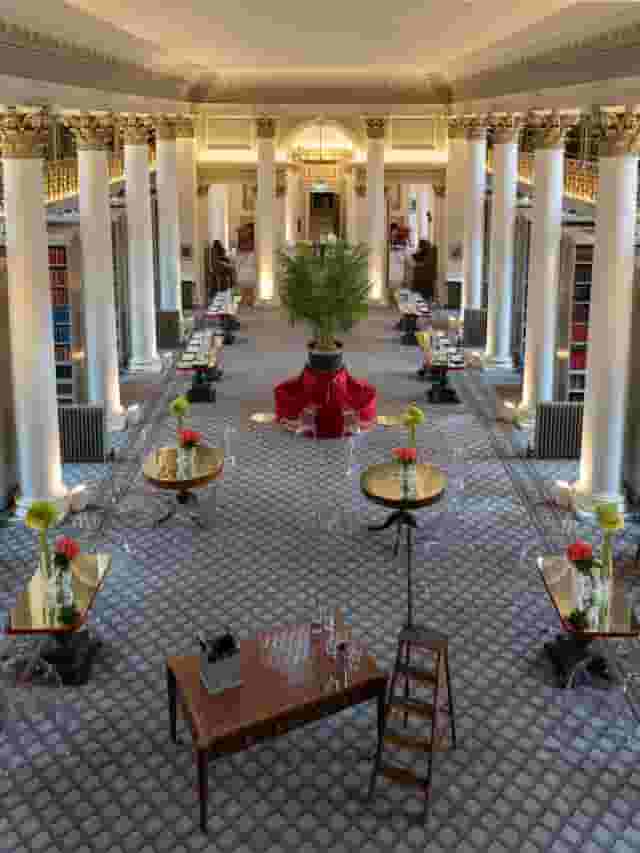
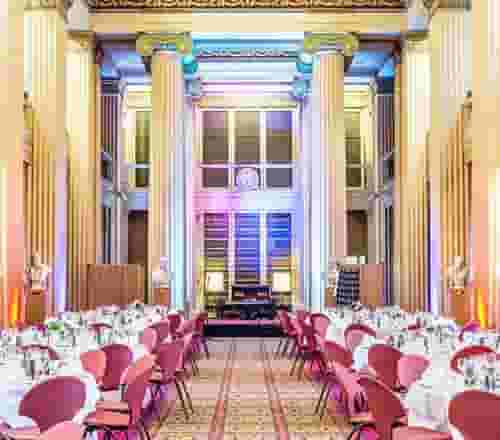
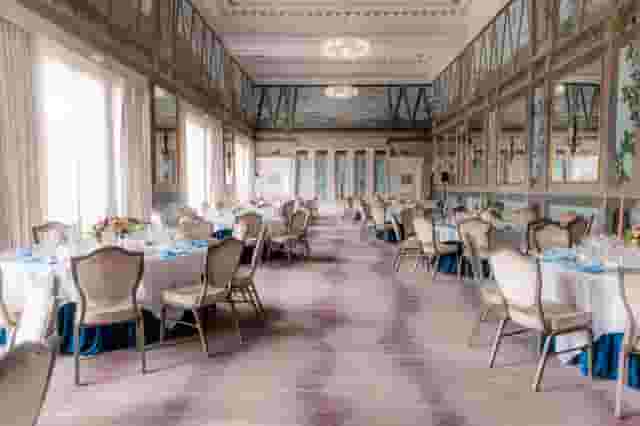
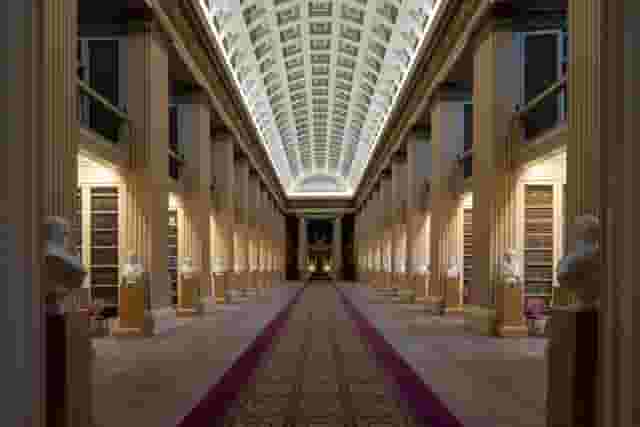
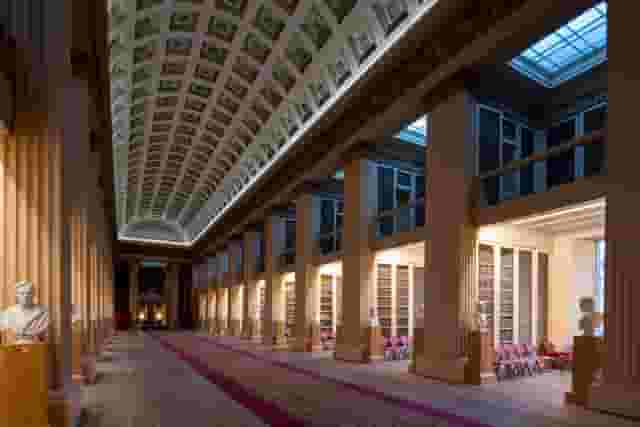
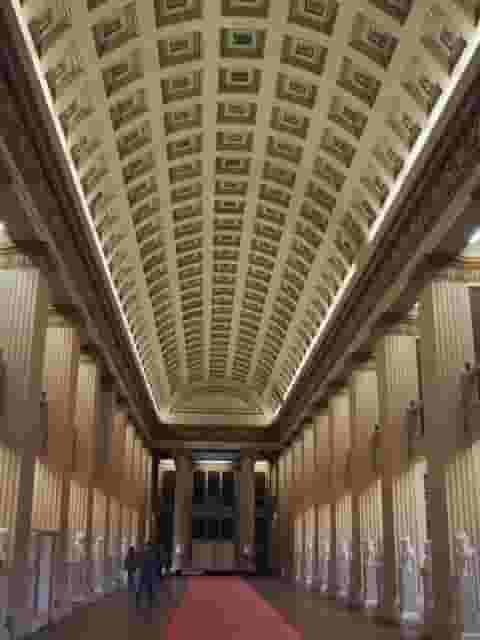
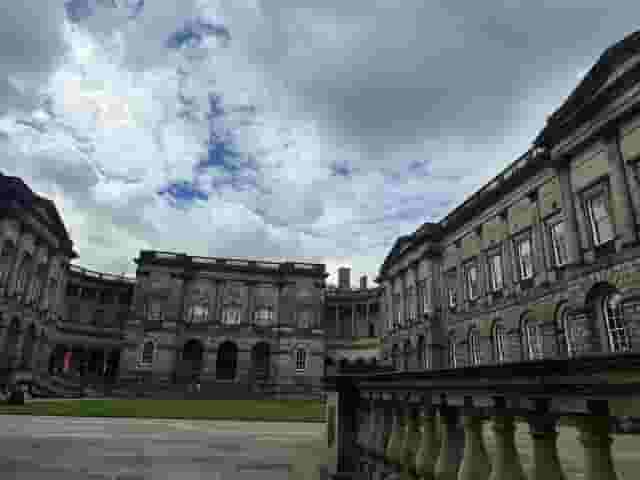
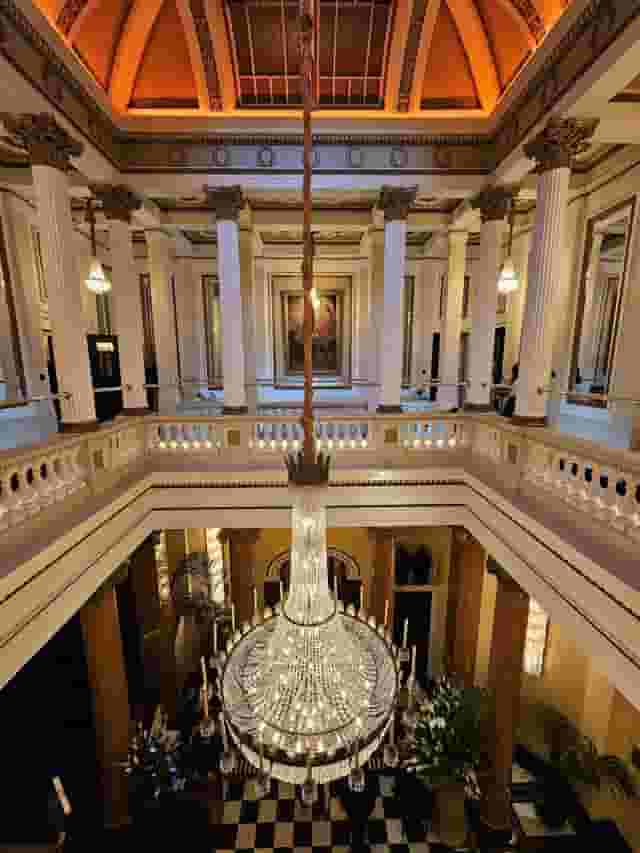
Edinburgh's Old Town and New Town contain some of Britain's most notable civic and educational halls. Spaces like Playfair Library Hall at the University of Edinburgh accommodate drinks receptions of up to 600 people beneath vaulted neoclassical ceilings. For formal seated dining, The Signet Library in the Old Town handles up to 400 seated guests surrounded by historic colonnades and gallery balustrades.
These spaces deliver immediate authority and a sense of occasion that modern conference boxes cannot match. However, historic buildings come with operational boundaries. Many operate strict conservation rules prohibiting naked flames, open red wine near sensitive stonework, or heavy tape on floors. Delivery windows may be tight because of central Edinburgh parking zones, and catering teams often have to build temporary field kitchens in adjacent rooms. If you are comparing venues, examine how modern installations function in older spaces, much as organisers evaluate hybrid-ready setups in legacy buildings elsewhere.
Repurposed and alternative settings
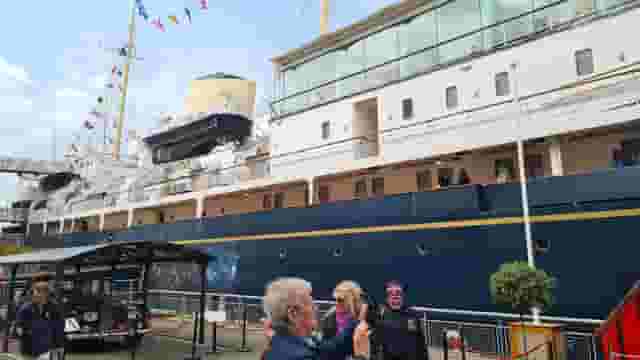
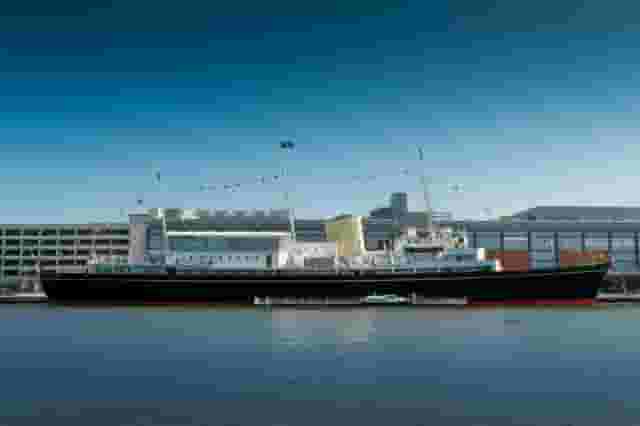
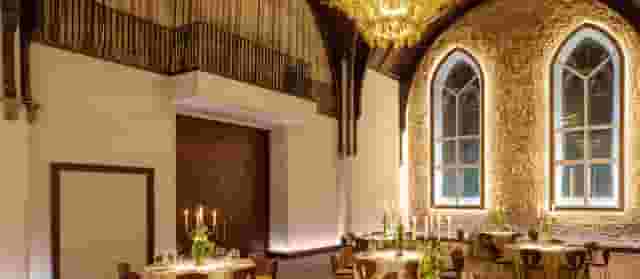
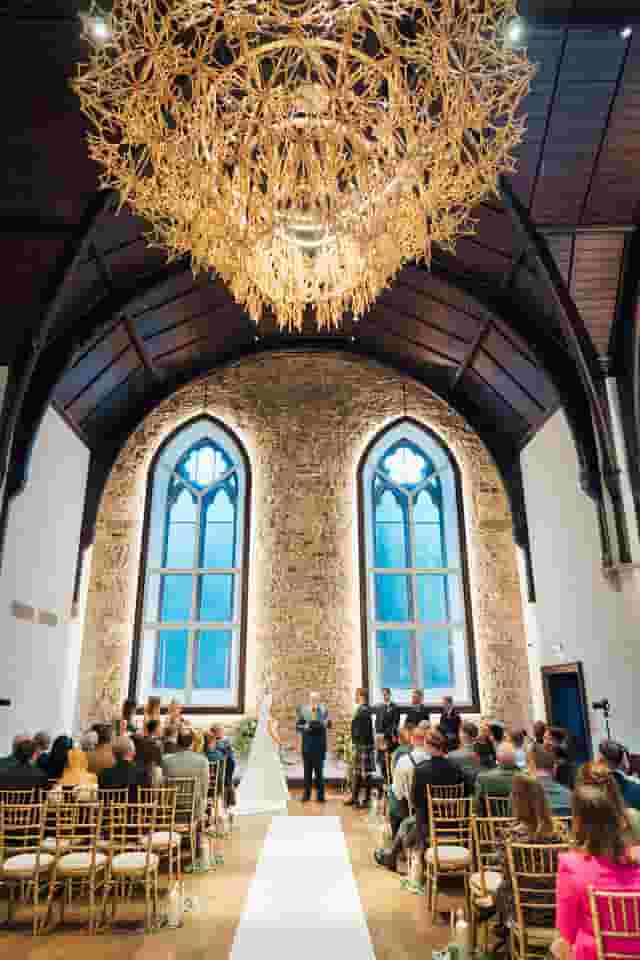
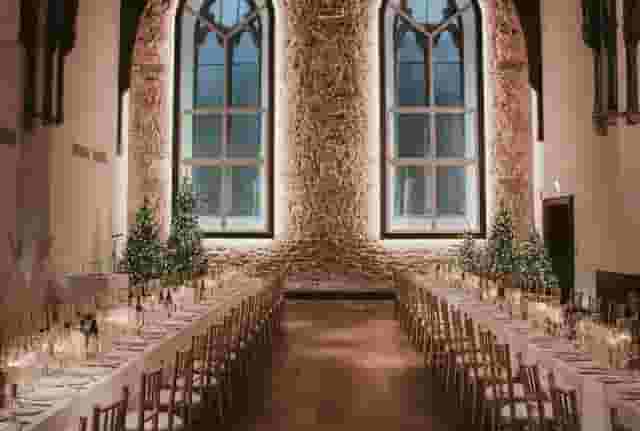
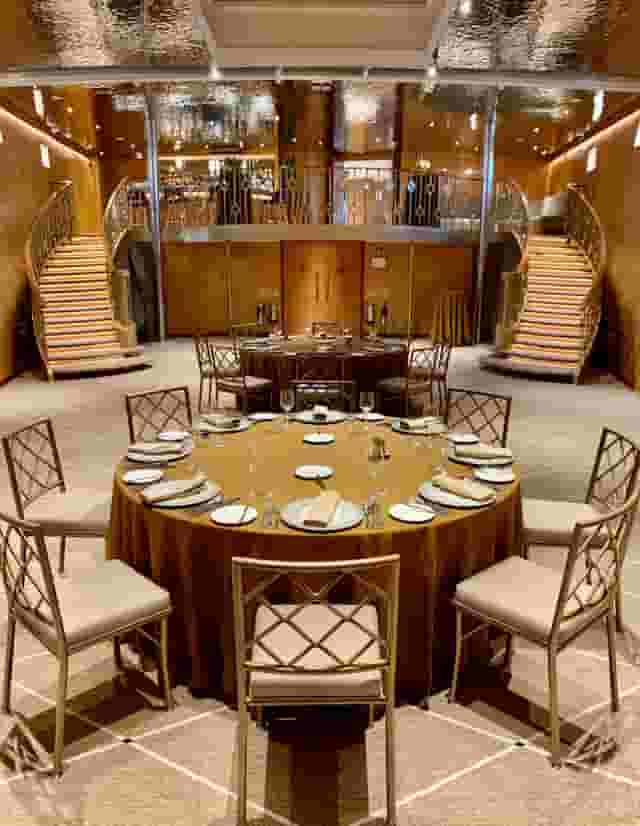
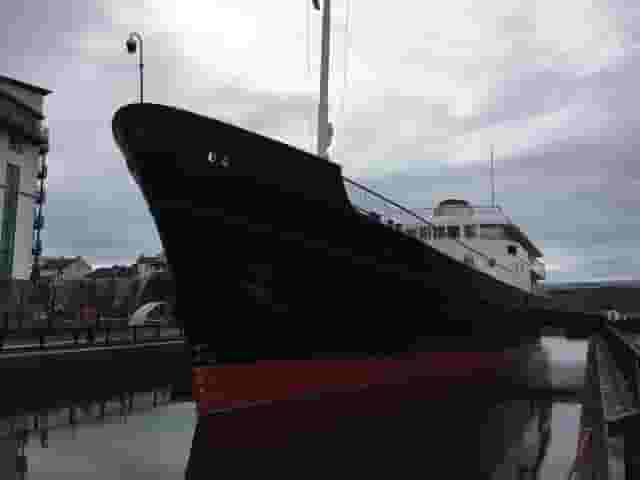
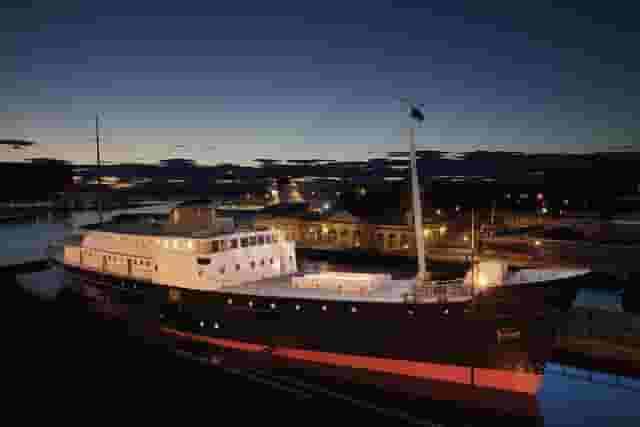
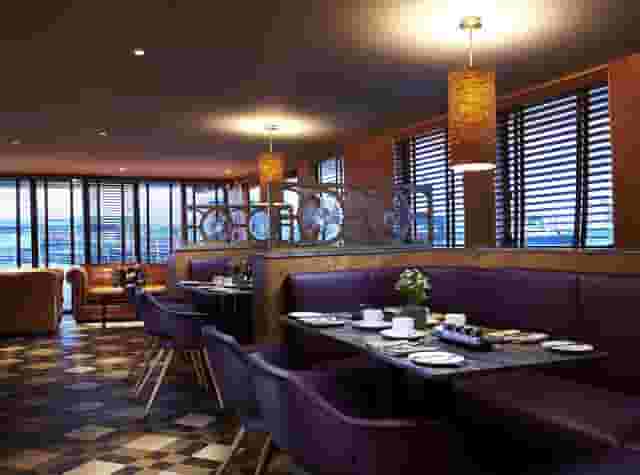
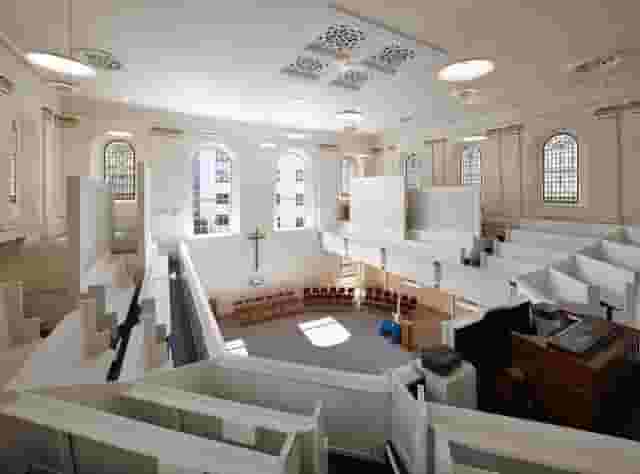
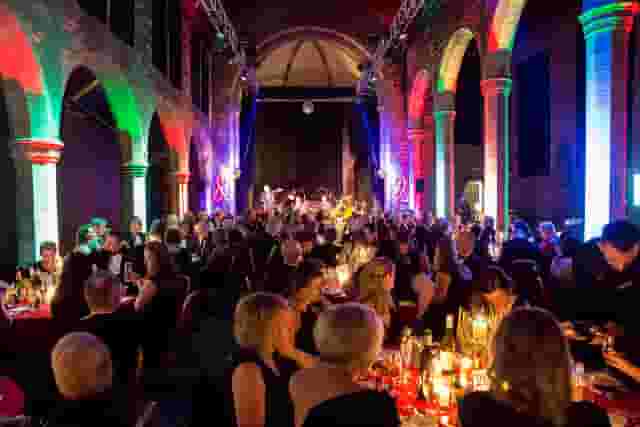
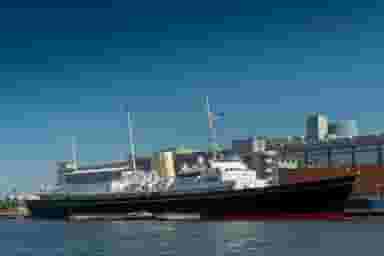
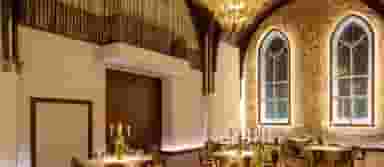
When you want an informal tone or an event that feels less institutional, alternative spaces offer character without the rigid formality of academic halls. Greyfriars at Virgin Hotels Edinburgh uses a restored church building to hold receptions for 200 guests or seated dinners for 150. Down in Leith, the Ballroom aboard the Fingal Hotel provides a floating event space for receptions of up to 100 people.
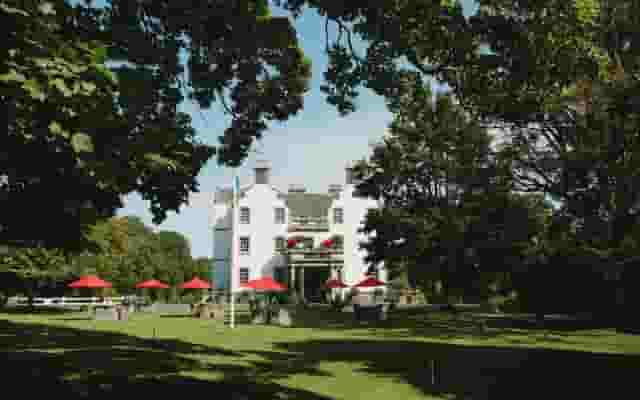
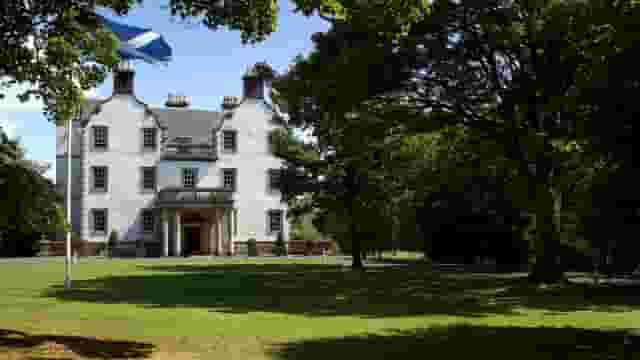
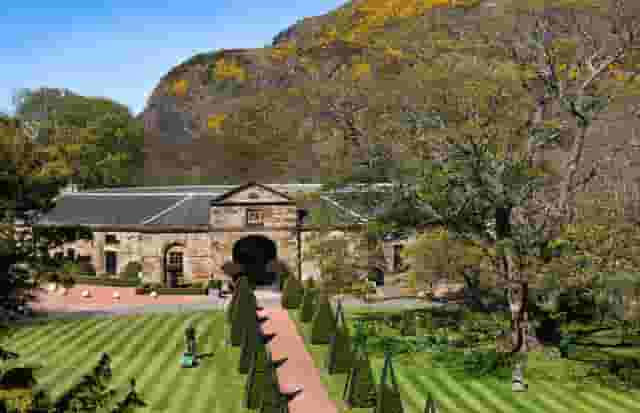
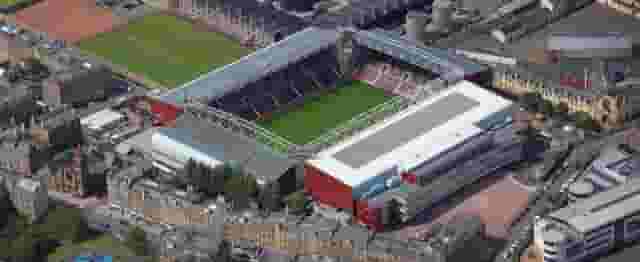
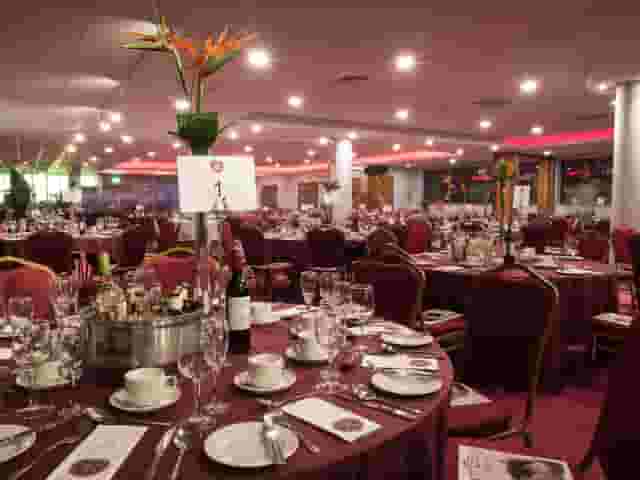
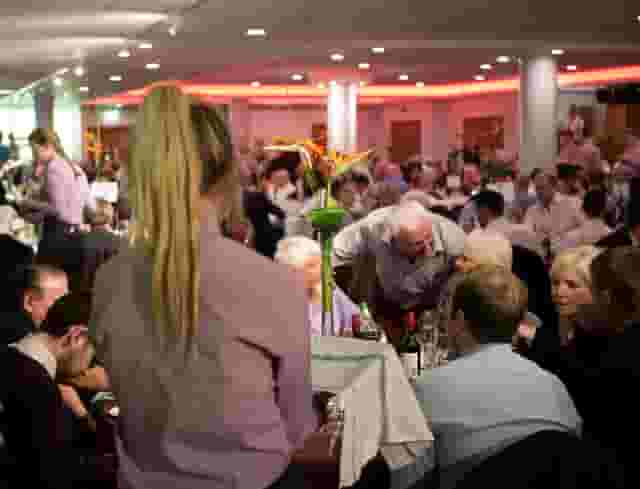
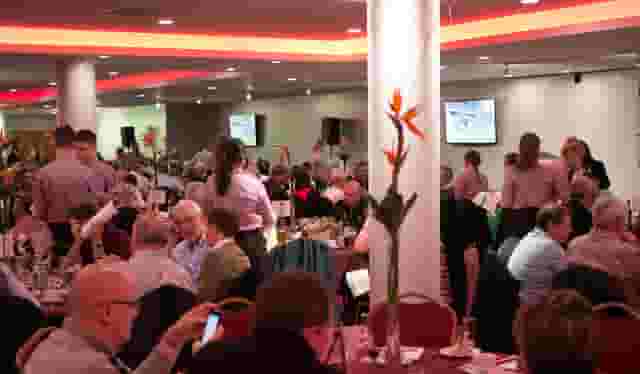
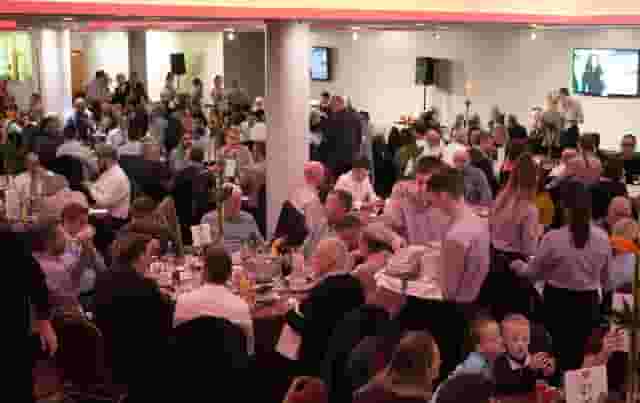
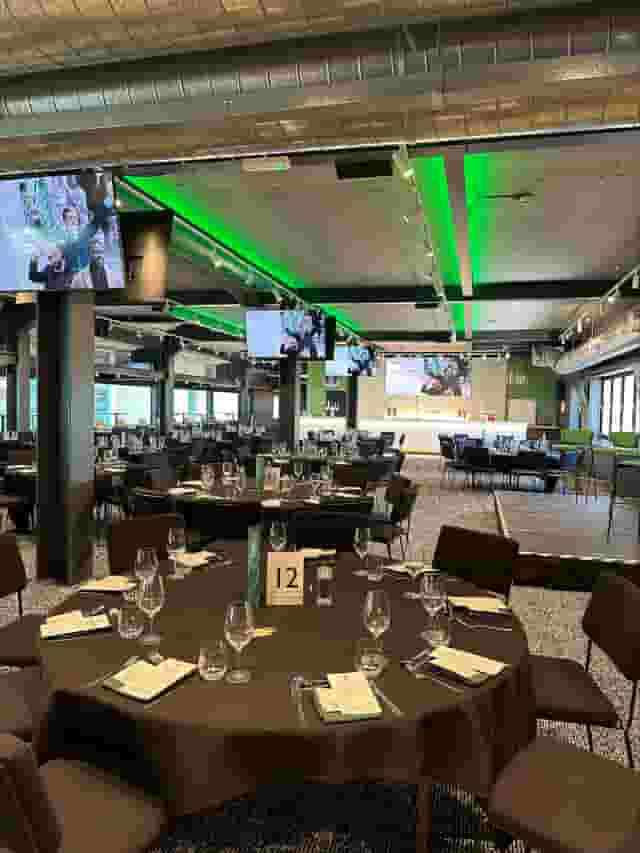
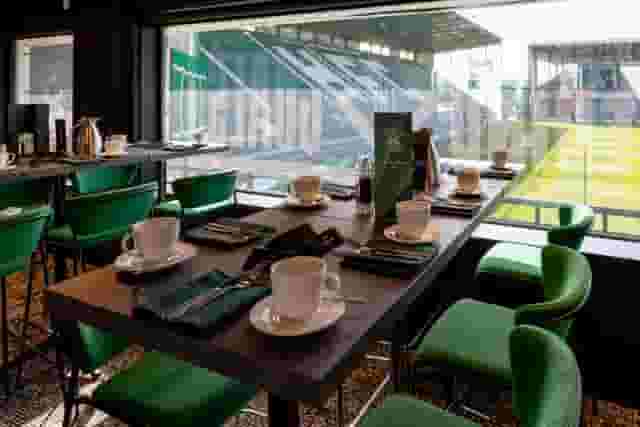
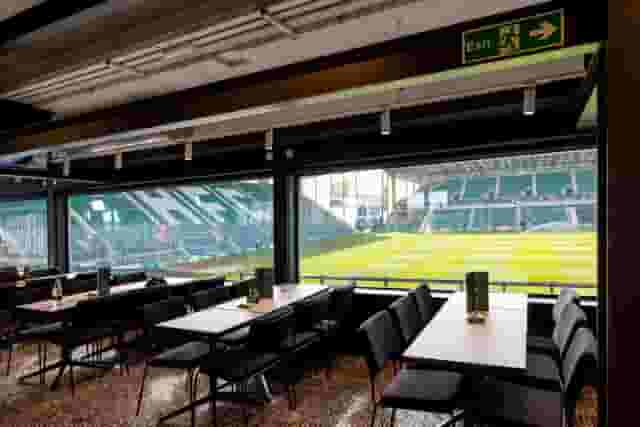
For large gatherings that require dedicated scale away from city centre traffic, President's Suite at Murrayfield Stadium can host dinners for up to 1,500 people, while Prestonfield Stables Ballroom at Prestonfield House accommodates seated banqueting for 550 guests with extensive private grounds.
| Venue type | Best suited for | Main advantages | Operational challenges to check |
|---|---|---|---|
| Large-scale hotel suites | Dinners, awards, multi-day company events | On-site kitchens, dedicated bedrooms, integrated AV | Shared public lobbies, rigid hotel beverage lists |
| Historic libraries and civic halls | Client receptions, formal galas, annual banquets | Prestigious architecture, distinct Edinburgh atmosphere | Complex loading access, heritage restrictions, off-site catering |
| Repurposed church and maritime spaces | Social evenings, creative showcases, team celebrations | Distinctive guest journey, high visual impact | Fixed room dimensions, specialised access requirements |
| Stadium and estate ballrooms | Large company celebrations, international summits | High guest capacities, extensive parking, large service yards | Out-of-centre travel logistics, higher production requirements |
Planning catering, drinks and service flow
Food and drink make up the core of your company budget and define how guests interact during the evening. A seated three-course dinner keeps people in assigned seats for two hours, encouraging focused conversation among tablemates. A drinks reception with continuous bowl food keeps the room circulating, which suits cross-departmental networking or business development mixers.
Seated dinners versus standing receptions
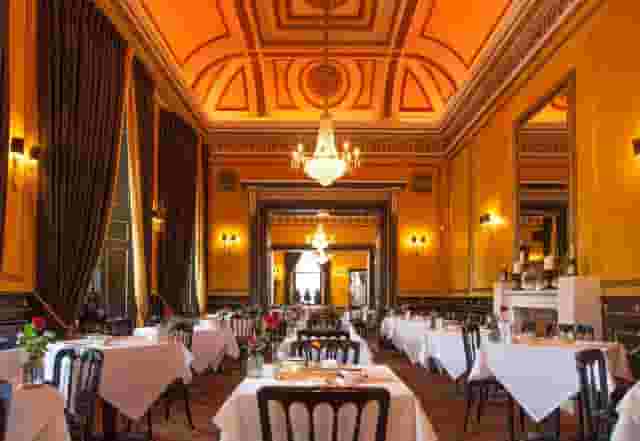
When choosing between dining and standing layouts, look closely at room changeovers. If your event includes a presentation, panel discussion or awards ceremony followed by food, check whether the room must be flipped while guests wait. A venue that accommodates 400 for a standing reception might only seat 200 for a banquet once staging, a dancefloor and service aisles are factored in.
Ensure the venue provides adequate circulation space:
- Seated banqueting requires roughly 1.5 to 2 square metres per person, including room for waiting staff to pass between tables with trays.
- Standing receptions require approximately 0.75 to 1 square metre per person.
- If you have an eight-piece band or a wide presentation stage, subtract at least 20 to 30 square metres of usable floor area from the venue's stated capacity.
In-house operations against approved panel caterers
Hotels provide their own culinary and beverage teams. This simplifies contracting, as your food, wine, bar staff and table linen are bundled into one agreement.
By contrast, standalone historic properties often work with an approved panel of external caterers. A caterer who knows the building understands the quirks of its service lifts, power supply limits and waste disposal routes. When speaking with external caterers, ask whether their proposal covers kitchen equipment hire, service staff, waste clearance and table settings, or whether those elements will appear as separate pass-through costs.
When designing menus for company events, sustainability is increasingly central to stakeholder sign-off. Sourcing Scottish produce from local suppliers reduces freight impacts and grounds your dinner in the region. If environmental standards are high on your corporate agenda, you can adapt principles from planning a green and impactful product launch to structure food waste reduction and low-carbon menu planning.
Bar service and licensing rules
Scottish licensing law differs from English regulations in several practical ways. Licensing boards in Edinburgh monitor alcohol service closely, and mandatory licensing conditions apply to all venues selling alcohol.
Key bar considerations include:
- Curfew and closing times: Check whether the venue's premises licence allows alcohol service until midnight, 1am or later. Some residential Old Town areas have earlier music and bar cut-offs than commercial New Town streets.
- Staffing ratios: Bar queues destroy the momentum of a company party. Budget for at least one bartender for every 35 to 40 guests for a cocktail or mixed drinks reception, or one per 50 guests for simple wine and beer service.
- Drink packages against consumption billing: A fixed package gives budget certainty by covering a set number of drinks per head. A consumption bar lets you pay only for what guests drink, but requires a pre-agreed financial cap so the account does not spiral before midnight.
Navigating costs, contracts and negotiations
Venues structure their proposals in several ways. Understanding how a space charges helps you compare quotes accurately across different properties.
Package rates against venue hire plus minimum spends
Most proposals arrive under one of two pricing models:
- Room hire fee plus catering: The venue charges a flat facility fee for private use of the room, and the caterer charges separately per head for food and drink. This model is standard in civic buildings, galleries and academic properties.
- Minimum spend or inclusive delegate rates: Common in hotels and private dining rooms. The venue waives or discounts the room rental provided your total spend on food and beverages reaches an agreed financial threshold.
| Cost category | What is typically included | What to check for hidden extras |
|---|---|---|
| Room hire | Basic access, house lighting, existing furniture, standard heating | Early setup access, late breakdown fees, cloakroom staffing |
| Catering and dining | Cutlery, crockery, glassware, table linen, front-of-house staff | Tasting sessions, kitchen equipment hire, dietary surcharge |
| Drinks and bar | Basic glassware, bar setup, chilling equipment, ice | Corkage charges, bar minimum spends, late-licence extensions |
| AV and technical | Fixed ambient lighting, basic PA system, handheld microphone | Dedicated AV technician, stage wash lighting, extra power drops |
| Operational staffing | Duty manager, standard security, post-event cleaning | Overnight porterage, dedicated coat check staff, extra door stewards |
What drives the quote
Total cost depends on several clear commercial levers:
- Date and seasonality: Edinburgh has a marked seasonal cycle. August (the Edinburgh Festival Fringe and International Festival) and December are peak months with high demand, meaning venues rarely negotiate on room hire or minimum spends. Off-peak months like January, February or mid-week dates from Monday to Wednesday offer substantially more room for negotiation.
- Guest numbers: Fixed costs like room hire, security and sound engineers get spread across more heads as your guest count rises, bringing down the effective per-person spend.
- Menu complexity: Plated three-course dinners demand significantly higher staffing ratios than buffet or bowl food formats, which increases the overall catering charge.
When reviewing proposals, ask venues whether service charge or VAT is included in their topline figures. In Scotland, venue quotes often present food and room hire exclusive of VAT, which adds 20% to the bottom line if your department budget is fixed inclusive of tax. Hire Space 360 is enterprise venue and hotel procurement for companies spending £1m or more a year on meetings and events: a managed meetings and events programme, the kind procurement teams call strategic meetings management. It puts every venue contract and hotel stay on one master agreement with consolidated invoicing, keeping all spend compliant with internal event policy. Finance and procurement teams also receive live spend reporting and a complete audit trail across departments, supported by named venue sourcing experts who manage the programme.
Accessibility, logistics and guest arrivals
Even the most striking venue will leave a poor impression if guests struggle to find the entrance, freeze in a draughty entrance hall or cannot navigate the stairs.
Geography and topography
Edinburgh is a city of hills, cobbles and multiple street levels. A venue that looks close to Edinburgh Waverley station on a map might require climbing steep stone steps or winding up steep hills like the Royal Mile.
For guests arriving in formal evening wear or those with limited mobility, consider the final 200 metres of the journey:
- Vehicle drop-off: Many historic streets in the Old Town have restricted vehicle access, bus gates or narrow closes where taxis cannot idle. Confirm whether taxis and executive coaches can pull right up to the door.
- Public transport access: Central venues along Princes Street, George Street or near St Andrew Square benefit from proximity to the tram line connecting directly to Edinburgh Airport, as well as easy walking routes from Waverley. Venues in Leith or outer districts will require pre-booked transport, coach shuttles or scheduled taxi accounts.
Physical access and heritage constraints
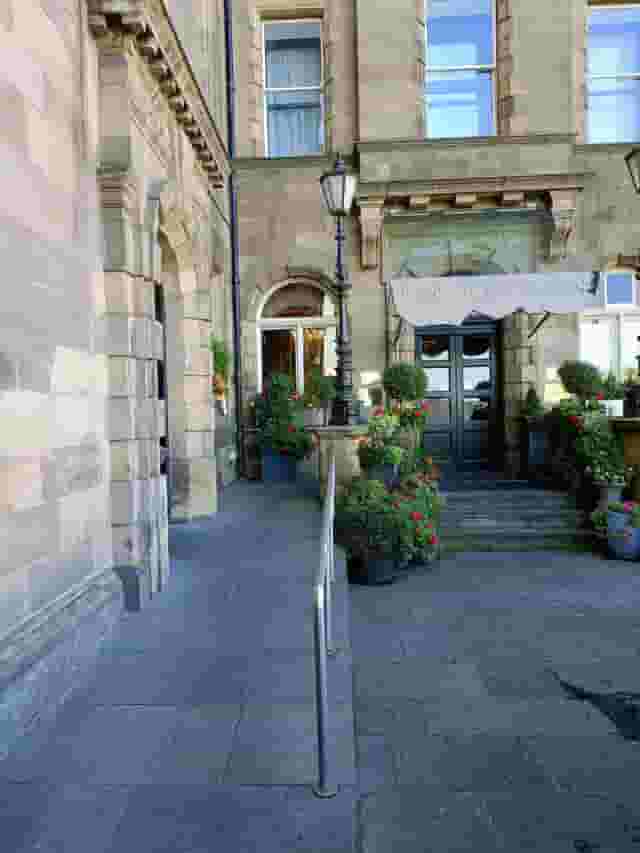
Accessibility is a vital requirement for any modern business event. Historic listings often mean older buildings rely on platform lifts, secondary entrances or ramped alternatives to grand front staircases.
Before signing a contract, verify:
- Whether step-free access is through the main entrance or via a service door. Guests should always enjoy an equitable arrival experience.
- The location of accessible toilets relative to the main function room. If the accessible facility is on another floor requiring staff escort through back corridors, this will disrupt your guest's evening.
- Hearing loops and acoustic dampening. Stone-walled halls and high-ceilinged libraries can create echoing acoustic environments that make speech hard to follow during presentations.
Managing the timeline and setup day
A corporate evening involves multiple moving parts coming together within a tight window. Planning the operational timetable prevents last-minute stress.
Bump-in and technical access
Ask the venue manager precisely when your team and suppliers can enter the room. In city centre properties, another event might conclude at 4:00 pm, leaving only two hours to reset tables, rig lights, test the sound system and lay places for a 6:30 pm reception.
Ensure your contract explicitly states:
- Access time for AV contractors, florists and branding teams.
- Loading bay arrangements: whether vehicles can stay parked during the event or must move immediately after unloading.
- Noise curfew for sound checks, especially in hotels where resident bedrooms sit directly above the ballroom ceiling.
Running the evening
Keep speeches and formalities concise. When alcohol is served, guest attention spans drop quickly after 15 to 20 minutes. Schedule any corporate addresses, awards presentations or keynote remarks early in the evening, ideally right at the transition from drinks reception to dinner, before guests settle into conversation at their tables.
Appoint a clear lead contact from your organisation to liaise directly with the venue's banqueting manager on the night. Having a single person authorised to sign off timing adjustments, bar extensions or extra catering spend keeps the event running smoothly and avoids disputed charges when the final invoice lands.
What our customers say
Inspiration and planning guides

5 Steps To Finding The Perfect Venue For Your Event
Finding the perfect venue for your event is the first step to creating a memorable experience for your guests. The venue finding pro's at Hire Space give their advice on some simple steps you can take to make sure you get it right.

Unique Venue Of The Month: Drink, Shop & Do
Drink, Shop & Do [https://hirespace.com/Venues/London/2123/Drink-Shop-Do] is a venue [https://hirespace.com/Top/London/Venues-For-Corporate-Entertainment] of two halves, both brilliant, both very different. The first is a light, bright café [https://hirespace.com/Spaces/London/107565/Drink-Shop-Do/Upstairs-Bar-Dome/Business] , jam-packed with multi-coloured paper balloons, taxidermy and sweets. They host imaginative day-play events for adults, like 'Bloody Marys & Boardgames', 'Benedict Cumber

London's 7 Most Mouthwatering Caterers
It's no secret that an event can live or die by the quality of the food. You're only a few lukewarm canapés away from a complete disaster. But it's also a huge opportunity: if you can dazzle your guests with sumptuous food all night, you'll transform their entire experience of your event. By taking care over your catering choice, you're giving your event the best chance to flourish. 1. Ampersand [http://www.ampersandcatering.co.uk] Price: Mid-range From gin and tonic 'glaciers', to donuts s
One supplier. Every venue. Full visibility on what you spend.
Multiple venues and events. One agreement.