Small Meeting Rooms for Hire in Digbeth
Compare small meeting rooms in Digbeth with AV, fresh refreshments and transparent pricing across Birmingham's creative quarter.
35 Small Meeting Rooms for Hire in Digbeth













No venues match these filters
Try widening your capacity, luxury level or event type.
Don't have time to search? We'll find it for you.
For business events that need human judgement, talk to our team. Free for events of 100+ people, budgets over £10k or ongoing programmes.




Frequently asked questions
What atmosphere do Digbeth venues offer?
Are Digbeth meeting spaces private?
Can I find intimate venues in Digbeth?
What tech should I expect in Digbeth venues?
How accessible is Digbeth by public transport?
What size is a 5 person meeting room?
What size is a 2 person meeting room?
What are the best meeting room setups for small groups?
What makes a good meeting room in Digbeth?
How does Digbeth's central location benefit attendees?
What tech amenities do Digbeth meeting rooms offer?
Why is Digbeth popular for creative meetings?
What can small meeting rooms in Digbeth be used for?
What is the typical delegate cost in Digbeth meeting rooms?
How small can a meeting room be in Digbeth?
Other platforms search their database. We search everything.
Tell us what you need. Our deep research finds any venue, whether it's in our marketplace or not. No one else does this.
About Small Meeting Rooms in Digbeth
Choosing the right setting for a focused half-day meeting
Planning a half-day session away from the usual office requires a space that balances focus with a fresh atmosphere. Digbeth, positioned just south-east of central Birmingham, has earned its reputation as the city's creative heartland. The former industrial quarter trades in red-brick warehouses, converted Victorian chapels and repurposed manufacturing plants. For a corporate team, stepping out of standard corporate suites and into a neighbourhood shaped by independent studios, digital agencies and street art can reset the tone of a meeting before anyone opens a laptop.
When you bring a team together for three or four hours, the physical environment dictates the pace. An all-hands quarterly review demands an efficient, clean setting with minimal distraction, while a creative strategy sprint or product workshop benefits from character, tactile surfaces and high ceilings. In Digbeth, spaces such as Fazeley Studios showcase how 19th-century architecture, including a restored Unitarian chapel, can translate into a calm, professional business environment that still feels rooted in Birmingham's industrial history. If your team draws inspiration from spaces with unconventional architecture, our guide to quirky London meeting rooms to inspire creative thinking examines how architectural character can help stimulate sharper problem-solving.
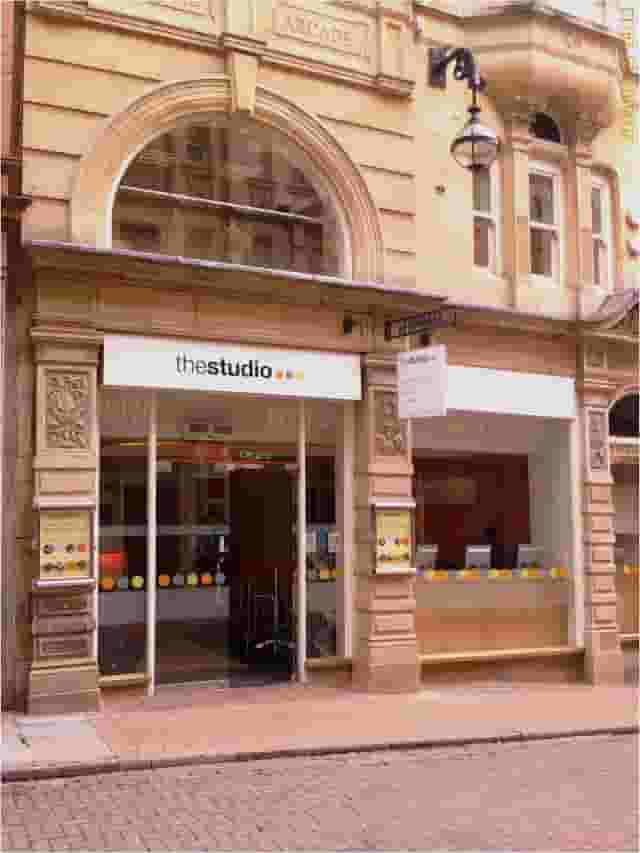
At the same time, character must not get in the way of utility. A meeting space in an arts-focused district only succeeds if it delivers on the corporate basics: comfortable seating, working climate control, reliable sound insulation and reliable presentation displays. If your attendees need rapid access from regional rail lines, looking slightly towards the city centre fringe near New Street and Moor Street can shave minutes off the commute. Dedicated conference facilities such as thestudio Birmingham offer purpose-built ground floor meeting rooms complete with integrated AV, designed specifically to keep business discussions punctual and self-contained.
The key to choosing the right room lies in understanding the core objective of the half-day block:
- Strategic planning and executive reviews: These require total acoustic privacy, comfortable ergonomic chairs and an enclosed room where confidential projections remain unseen by passers-by.
- Collaborative brainstorming and workshops: These thrive in rooms with movable furniture, plenty of perimeter floor space and writable wall surfaces or portable flipcharts.
- Client presentations and pitch rehearsals: These depend heavily on display quality, reliable audio playback, neat cable management and a polished reception area to welcome visiting guests.
Balancing these functional demands against the neighbourhood vibe will help you pinpoint whether a converted warehouse studio or an established commercial meeting suite will serve your team best. To speed up your venue sourcing, Hire Space operates as an event planning and venue booking platform backed by a team of real people who take ownership of the booking. Using Deep Venue Research, you can evaluate any space across the city and get instant, data-backed price estimates for your meeting, building a tailored shortlist in minutes instead of waiting days for venues to reply.
Room layouts, acoustic privacy and technology checks
A half-day session moves fast. With only three to four hours on the clock, you cannot afford fifteen minutes of wrestling with display adaptors or reorganising heavy tables. Booking the correct layout and confirming hardware requirements in advance protects your agenda.
Matching layout to meeting objectives
For smaller groups of 10 to 20 colleagues, the choice of furniture configuration directly affects participation:
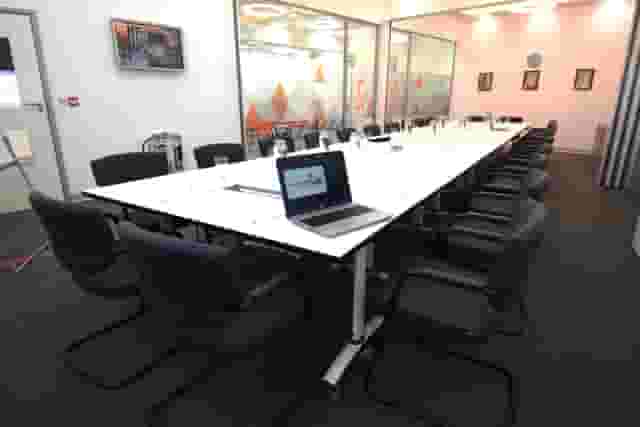
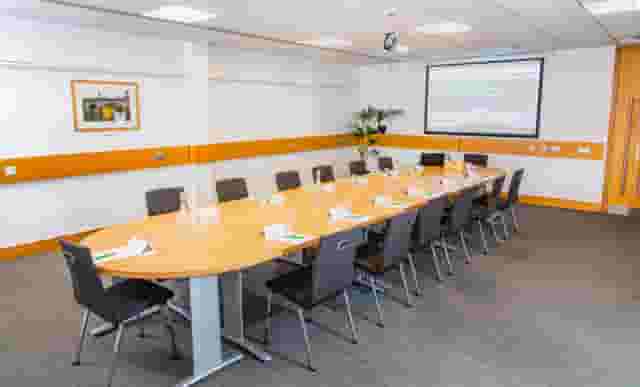
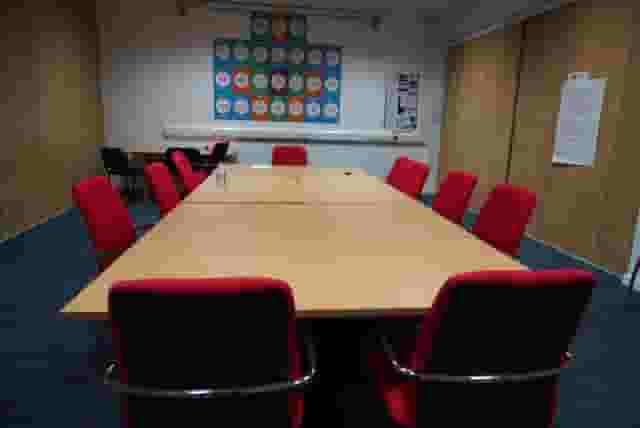
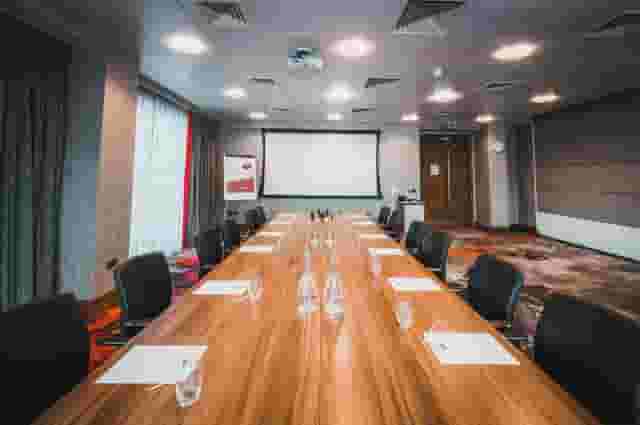
- Boardroom: A single central table keeps all eyes on one shared discussion. It is the natural choice for leadership meetings, budget approvals and formal decision-making. However, if everyone needs to view a screen at the end of the table, attendees seated closest to the display may have to crane their necks.
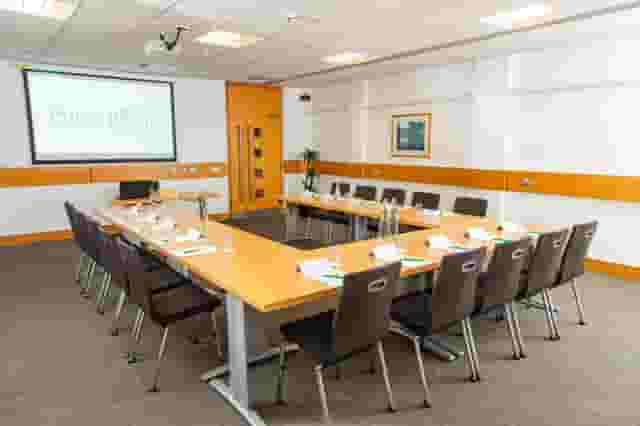
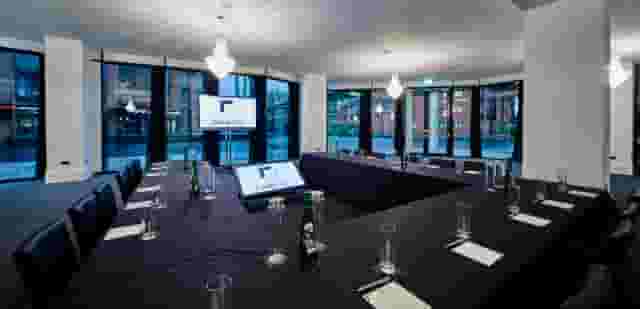
- U-Shape: Removing the front table from a boardroom rectangle allows every attendee an unobstructed view of both the screen and the speaker, while retaining ample desk space for laptops, notebooks and water glasses. This setup works exceptionally well for interactive training and software walk-throughs.
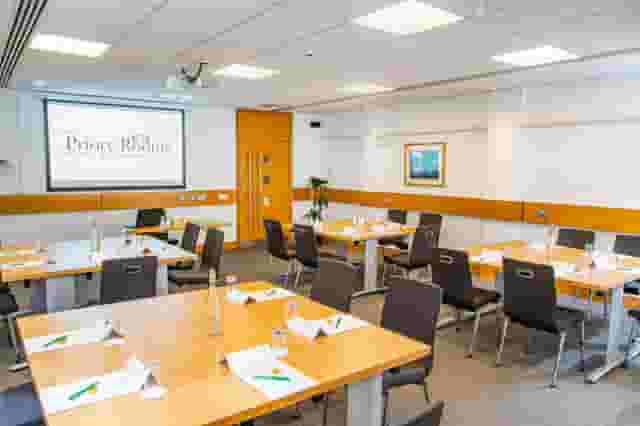
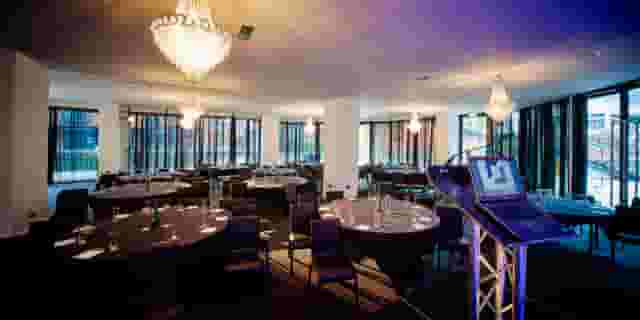
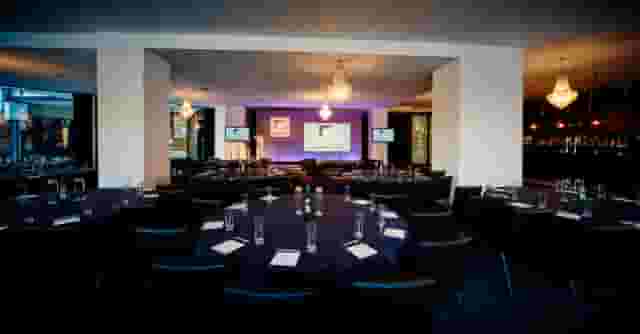
- Cabaret style: Small round or rectangular tables facing forward encourage group collaboration. If your morning involves short presentations punctuated by syndicate work or breakout exercises, cabaret seating gives teams room to work together without leaving the room.
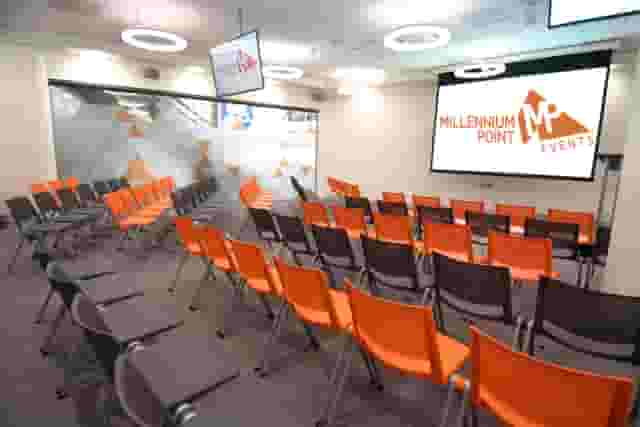
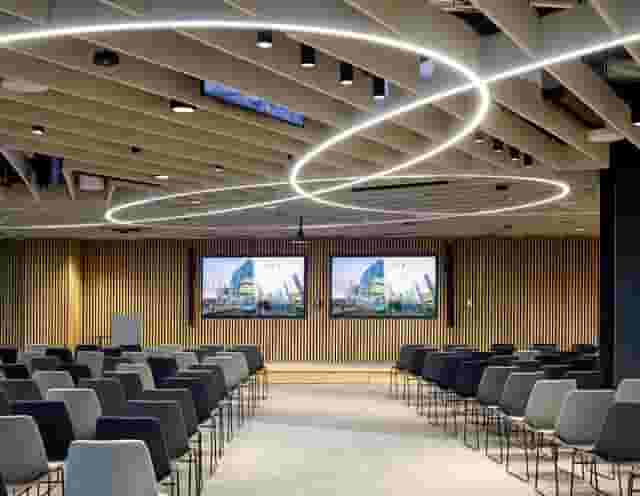
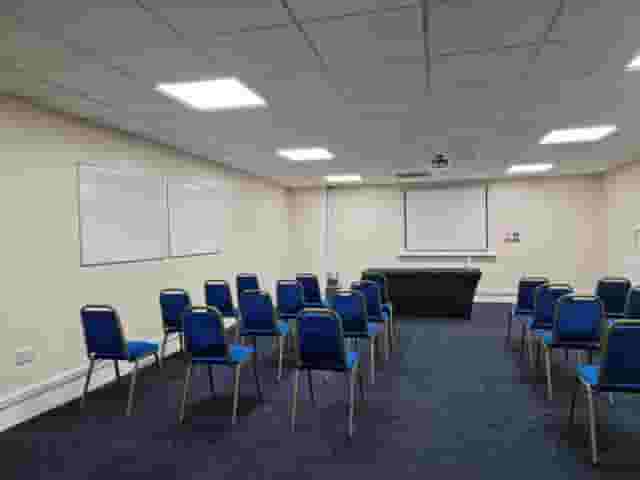
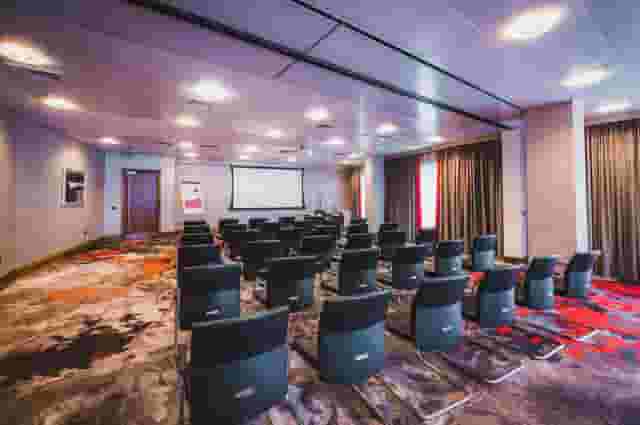
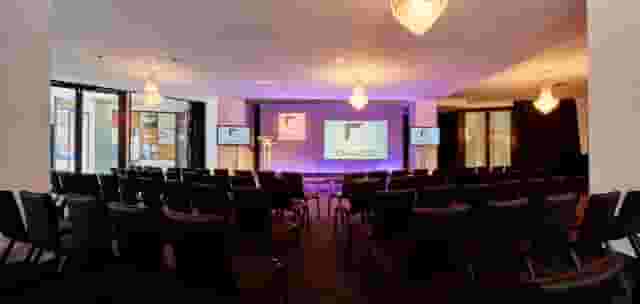
- Theatre: Useful primarily if the half day consists entirely of back-to-back presentations or briefings where attendees only need notepads on their laps. Dedicated facilities like Meeting Room Two at The Eastside Rooms offer pillarless sightlines that support theatre layouts for up to 58 people, ensuring clear visibility for every seat.
Securing acoustic and physical privacy
Digbeth's lively mix of hospitality, creative businesses and public venues means noise management is critical. When booking an intimate room, ask explicitly whether the room is fully enclosed with a solid door that closes securely. Sound leakage between adjoining meeting suites separated by thin partition dividers can disrupt sensitive HR discussions or board debates.
Check where refreshments are served. Having hot drinks and morning snacks positioned inside the private room keeps discussions contained and prevents attendees from drifting into public communal areas during short pauses. If you are comparing venues across urban centres, our review of 5 quirky meeting rooms shows how private layouts can be adapted to keep small groups insulated from surrounding activity.
Testing AV and connectivity
A standard meeting room screen must connect without drama. Before paying a deposit, request a breakdown of the room's technical inventory:
- Display screen: Ensure the display is sufficiently large for the room depth. A 55-inch television screen is suitable for up to eight attendees around a table, while groups of 15 to 20 benefit from a 75-inch screen or a calibrated short-throw projector.
- Cables and inputs: HDMI remains standard across corporate laptops, but newer ultrabooks rely exclusively on USB-C. Confirm whether the venue supplies reliable adaptors or if your team should pack their own dongles.
- Audio equipment: If remote team members are joining via video call, built-in laptop microphones will pick up room echo and air-conditioning hum. Look for meeting rooms outfitted with ceiling microphone arrays or centralised conference speakers.
- Wi-Fi bandwidth: Ask whether the venue provides a dedicated, password-protected guest Wi-Fi network rather than an open public feed, particularly if your team will be downloading heavy data decks or streaming high-definition video.
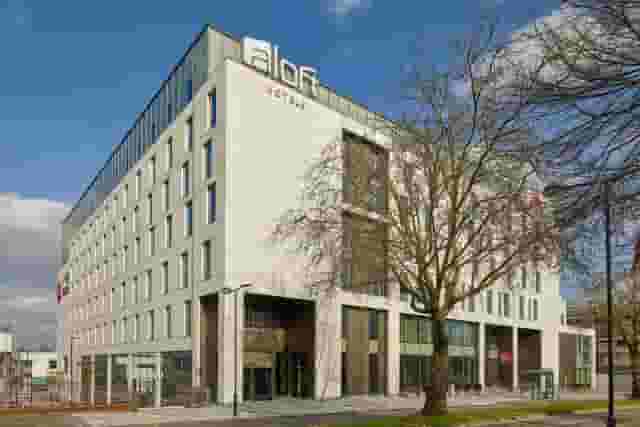
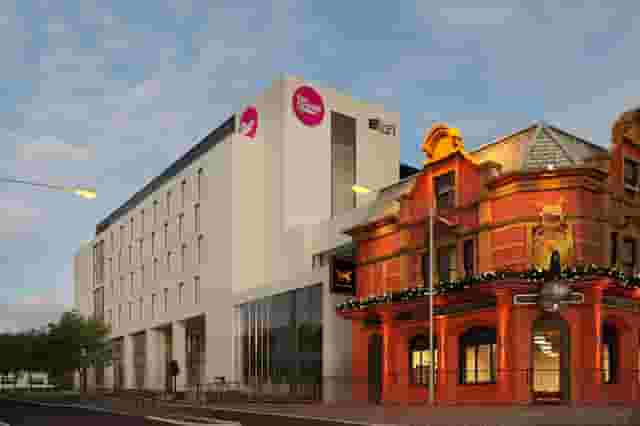
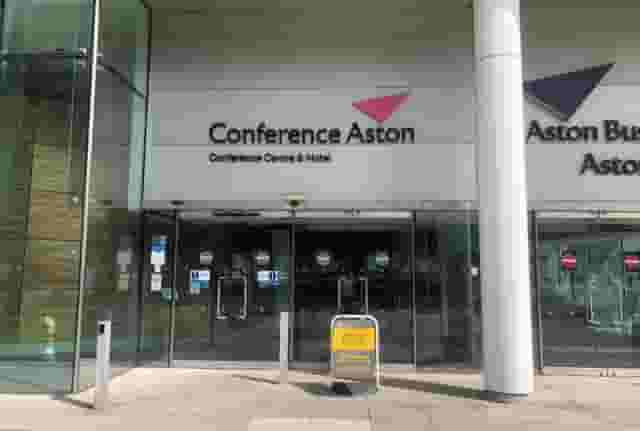
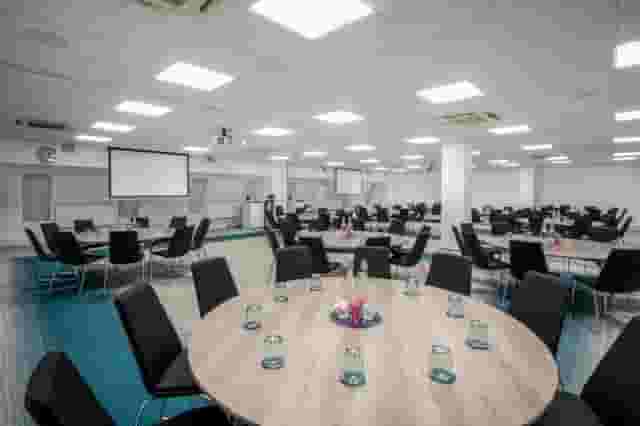
Venues like Conference Aston and Aloft Birmingham Eastside integrate contemporary presentation hardware directly into their meeting suites, reducing the risk of technical delays during short corporate sessions.
| Facility Requirement | Standard Inclusions | Points to Verify Before Arrival |
|---|---|---|
| Visual display | Wall-mounted 4K screen or ceiling projector | Screen size relative to back-row viewing distance |
| Audio connectivity | Integrated TV speakers or desktop soundbar | External microphone coverage for hybrid video calls |
| Cables and ports | Hardwired HDMI lead at the table | Availability of USB-C and DisplayPort adaptors |
| Working surfaces | Main boardroom or workshop tables | Portable whiteboards, flipchart paper and fresh pens |
| Network access | Standard venue guest Wi-Fi | Dedicated bandwidth limits and sign-in splash screens |
What a half-day package costs and how to compare quotes
Budgeting for a half-day meeting involves looking beyond the headline room hire rate. Across Digbeth and the surrounding central Birmingham districts, indicative pricing sits at £38 to £61 per head. This estimate is based on 8 quotes from the venues on this page for about 20 guests, assuming that typical group size.
Understanding where your booking falls within that range depends on the pricing structure you select and the level of service required.
| Indicative Meeting Spend (20 Guests) | Cost |
|---|---|
| Low end | £38 per head (£760 total) |
| High end | £61 per head (£1,220 total) |
Room hire versus delegate packages
Venues typically charge using one of two structures:
- Half-day room hire plus catering bolt-ons: Under this model, you pay a flat fee for the room block (usually 08:30 to 12:30 or 13:00 to 17:00), then add refreshments per person. This structure often works out cheaper if your group is small or if you only need a single round of morning coffee without food.
- Half-day delegate rate (DDR): A per-person rate that bundles room hire, standard AV, continuous or scheduled tea and coffee, water and a mid-morning snack. Some packages also incorporate a working sandwich lunch.
Towards the £38 end of the range, quotes generally cover a basic room hire allocation with standard presentation screen access, filtered tap water and a single tea and coffee break with biscuits. Towards the £61 end, you can expect an inclusive half-day delegate package that adds continuous bean-to-cup coffee, morning pastries, an upgraded cold buffet or sandwich lunch served either in the room or a private lounge, alongside on-site technical support during morning setup. Hire Space 360 is enterprise venue and hotel procurement for companies spending £1m or more a year on meetings and events: a managed meetings and events programme, the kind procurement teams call strategic meetings management. It puts every venue booking, contract and hotel stay under a single supplier agreement with consolidated invoicing. This ensures reservations adhere to company event policy while giving finance teams live spend reporting, with more detail on how Hire Space 360 works for procurement.
What to scrutinise in your quote
To compare venue proposals accurately, check what is included in the base figure and what incurs an extra invoice line:
- VAT: Confirm whether the quoted figure includes or excludes VAT, as standard commercial rates add 20 percent to the bottom line.
- Refreshment refills: Some venues charge per serving. If your team stays for four hours, two rounds of tea and coffee can quickly inflate a low room-hire rate. Look for packages where hot drinks and water are included continuously.
- AV hire charges: Screens and Wi-Fi are standard in most modern meeting rooms, but whiteboards, flipchart pads, conference phones and technical call-out assistance may carry supplementary charges.
- Access windows: A half-day session starting at 09:00 requires access from 08:30 for the organiser to test laptops and lay out collateral. Confirm that early setup time is permitted within the agreed rate rather than billed at an hourly overtime rate.
| Package Component | Lower End (£38 per head) | Upper End (£61 per head) |
|---|---|---|
| Room hire duration | Morning or afternoon block (up to 4 hours) | Four hours plus early 30-minute access for testing |
| Refreshments | Arrival tea, filter coffee and biscuits | Continuous hot drinks, fresh pastries and fruit |
| Catering | No lunch included (or basic light snacks) | Working deli lunch with hot options or sandwiches |
| AV equipment | Wall display screen and basic HDMI lead | Presentation display, video bar, adaptors and flipchart |
| Technical support | Self-service setup with reception check-in | Dedicated on-site technician during morning arrival |
Transport, arrival logistics and local practicalities
Digbeth's position directly east of Birmingham's retail core makes it accessible for both regional commuters and local team members, but navigating the district requires clear instructions.
Rail, walking routes and local transport
For team members arriving by train, Birmingham New Street and Birmingham Moor Street stations are the main arrival hubs:
- Moor Street Station: Located approximately 10 to 12 minutes on foot from the heart of Digbeth, this is the most convenient railway station for guests arriving from London Marylebone, the West Midlands or Warwickshire.
- New Street Station: Birmingham's primary intercity rail station is a 15 to 20 minute walk away. The route passes through the Bullring and Moor Street Queensway before entering Digbeth via Digbeth High Street.
- Birmingham Coach Station: Situated directly on Digbeth High Street, this terminal provides national coach connections within a short stroll of venues in the immediate area.
Organisers should inform attendees about ongoing construction work around the Eastside Metro extension. Infrastructure projects across Digbeth and the neighbouring Eastside district can result in pedestrian diversions, closed pavements and temporary road closures. Sharing a pin drop of the venue entrance, rather than just the general postcode, helps avoid arrival confusion on the day.
Selecting practical meeting venues on the district fringe
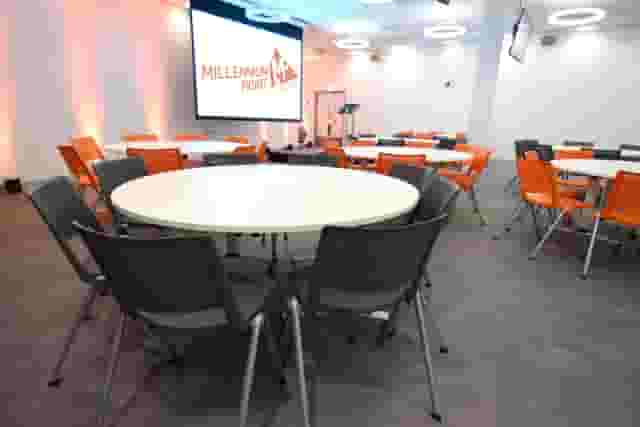
If your attendees require straightforward step-free access or proximity to central parking, several facilities sit conveniently between Digbeth and the central transport hubs. Millennium Point in Eastside features modern meeting spaces like the CONNECT Event Space, benefiting from adjacent multi-storey parking and dedicated event reception desks.
Similarly, The Priory Rooms Meeting and Conference Centre in the city centre offers fully accessible ground-floor meeting rooms such as the William Penn room, providing a practical option for teams prioritising step-free transit. Further south, the Humanitarian Academy for Development (HAD) provides quiet, professional meeting facilities away from busy transport thoroughfares, making it well suited for structured training mornings.
Running a smooth half-day schedule
To keep a four-hour meeting productive, structure the morning to minimise cognitive fatigue:
- 08:30 to 09:00 | Organiser setup and arrival: Test the laptop connections, open presentation slide decks, check sound levels and ensure water carafes and glasses are set on tables.
- 09:00 to 10:30 | Core agenda session: Run the main strategic review or briefing while attendee attention is highest.
- 10:30 to 10:50 | Refreshment break: Step away from the screen. Encourage attendees to stand up, grab fresh tea or coffee and step outside for fresh air if the venue allows.
- 10:50 to 12:30 | Workshop and actionable conclusions: Transition into small-group breakout discussions, project assignments and agreed action points.
- 12:30 onwards | Working lunch or departure: Wrap up promptly to allow attendees to travel back to the office or continue informal networking over a working lunch.
Once the hard work is done, Digbeth offers an exceptional selection of independent cafes, bakeries and craft taprooms along the Custard Factory complex and surrounding railway arches. Transitioning from a morning boardroom session straight into an informal team lunch down the street is one of the strongest reasons to choose Digbeth for your next company off-site.
What our customers say
Inspiration and planning guides
8 of the Coolest Meeting Rooms in London
Looking for the coolest meeting rooms in London? From stylish interiors to unique settings, here are 8 venues that will definitely elevate your next meeting!

Sneak Peek: The Salters' Hall Refurbishment
Located in the heart of the City, Salters’ Hall combines the rich heritage of the salt trade of medieval London with contemporary surroundings. Rebuilt in 1972 by Basil Spence and now a Grade II listed building, it is a rare example of a post-war livery building and has remained largely untouched until now... Architects de Metz Forbes Knight [http://www.dmfk.co.uk/projects/load/salters-hall] (dMFK) were tasked with the project to upgrade the building whilst retaining its sense of history and al

Venue Review: Anomalous Space
Creative ventures across the artistic spectrum are accommodated and embraced at Anomalous Space [https://hirespace.com/Venues/London/1551/Anomalous-Space], situated stunningly close to Angel Station on Pentonville Road. The venue's name captures its uniqueness, in that it deviates from the standard, unoriginal function space that's all too common. Anomalous Space combines the most contemporary of technological facilities with Art-Deco features, all set within an authentic Georgian townhouse.
One supplier. Every venue. Full visibility on what you spend.
Multiple venues and events. One agreement.